Clear Sky Science · en
TMEM184A promotes progression and drug resistance in colorectal cancer: a bioinformatics and clinical study
Why some colorectal cancers stop responding to treatment
Many people with colorectal cancer initially respond well to chemotherapy and targeted drugs, only to find that their tumors stop shrinking and begin to grow again. This study asks a simple but pressing question: what changes inside tumor cells and their surroundings allow them to shrug off treatment, spread to lymph nodes, and shorten patients’ lives? By tracing cancer cells one by one and matching lab data to real patient samples, the researchers home in on a single membrane protein, TMEM184A, as a new player in drug resistance.
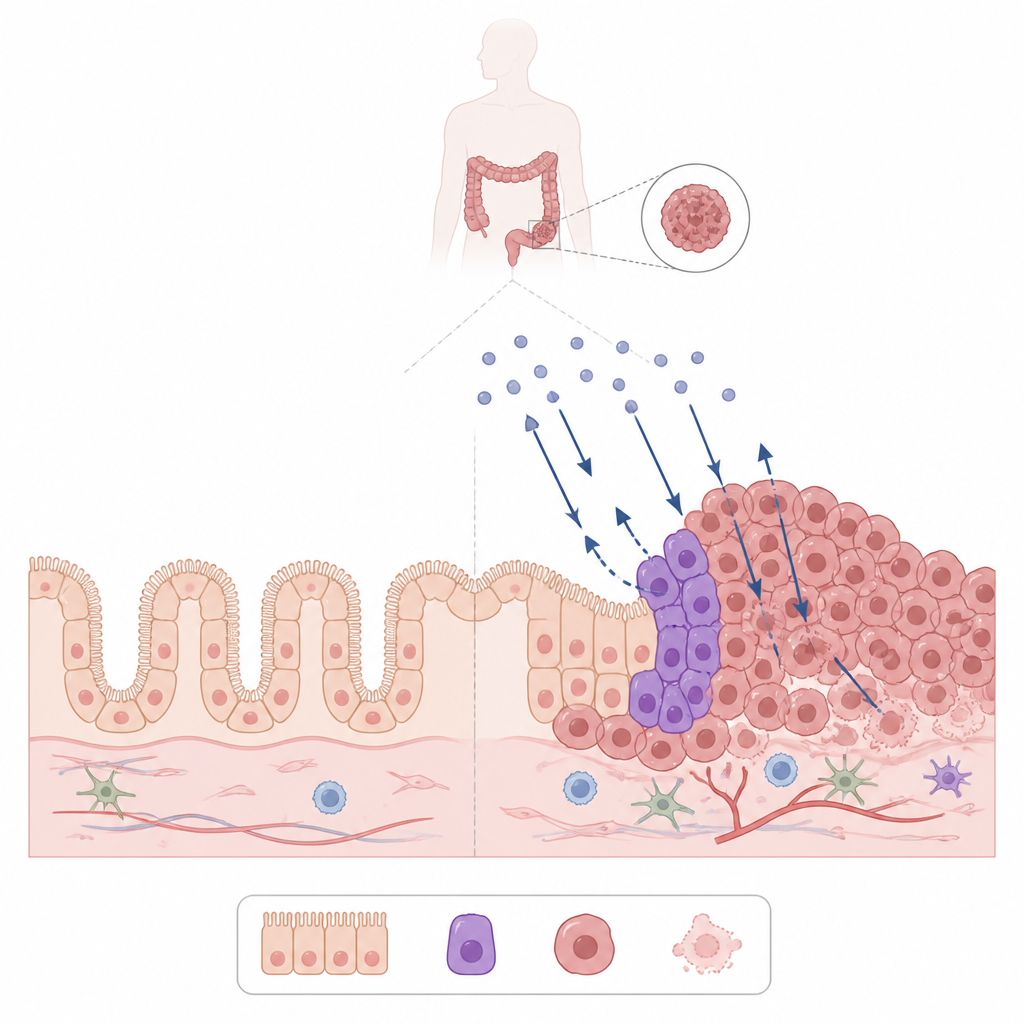
Looking at tumors cell by cell in their home tissue
Rather than treating a tumor as a single mass, the team broke colorectal cancers down into thousands of individual cells and read out which genes each cell was using. With single-cell and spatial transcriptomics, they mapped how cancer cells, immune cells, and support cells are arranged and talk to each other in both normal colon tissue and tumors. They found that tumor tissue contained many more epithelial cells (the cells that line the gut and give rise to most colorectal cancers) and fewer killer T cells, hinting at a weakened immune attack. Communication signals sent by tumor epithelial cells were stronger than in normal tissue, while helpful immune and support cells played a quieter role.
Finding a small but stubborn pocket of resistant cells
Zooming in on the epithelial cells, the researchers discovered that they are far from uniform. Using clustering and lineage tracing, they identified several subgroups, including a particularly worrisome one that scored high for known resistance and immune-suppression gene programs. These cells also activated stress and survival pathways tied to inflammation, low oxygen, and DNA damage, all of which are known to help tumors endure harsh conditions. Patterns of chromosome changes suggested that these resistant cells likely arise from a highly unstable ancestor group, gaining traits that favor survival and spread even when drugs are present.
TMEM184A stands out as a key troublemaker
To pin down which genes matter most for patients, the team compared gene activity between the resistant cell group and a highly dividing, but more drug-sensitive group. They then tested which of these genes tracked with poorer survival in large cancer patient databases and used machine learning to narrow the list. Among a handful of candidates, TMEM184A, a protein that spans the cell membrane, emerged as especially important. TMEM184A was more active in colorectal tumors than in nearby healthy tissue, and higher levels were linked to larger tumors, distant spread, and worse overall survival. In tissue samples from 180 patients, tumors, especially those in the rectum, showed more TMEM184A protein than adjacent normal tissue, and patients whose tumors expressed more TMEM184A had a lower five-year survival rate.
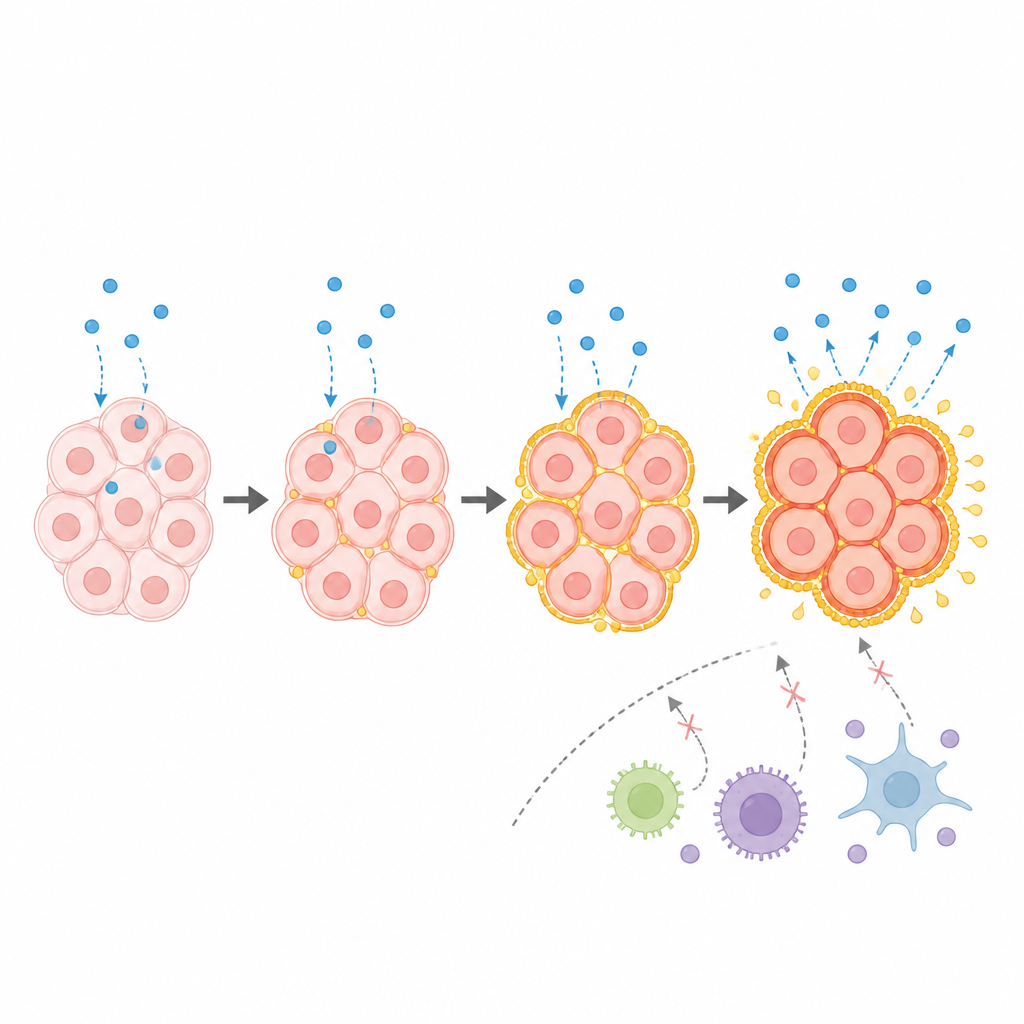
How fat handling and the immune setting fit into the story
Genes that tend to rise and fall with TMEM184A pointed toward changes in how tumor cells process fats in their membranes. Pathway analyses showed enrichment of fatty acid and other lipid metabolism routes, suggesting that TMEM184A may help rewire the cell surface and its signaling in ways that blunt drug entry or action. Tumors with high TMEM184A were more often of the microsatellite-stable type, a common form of colorectal cancer that usually responds poorly to modern immunotherapies. These tumors showed a “low immune, low stroma” landscape: fewer helpful immune and support cells overall, but a relative increase in regulatory T cells and other immune cell types that dampen attack. This pattern resembles an immune desert, where cancer cells can thrive with little opposition.
Clues toward future treatment choices
Finally, by combining drug-response data and computer docking of molecules onto the TMEM184A structure, the authors found that tumors with high TMEM184A tend to resist several standard chemotherapies, yet may be more vulnerable to certain drugs that target the EGFR signaling family, such as cetuximab and specific tyrosine kinase inhibitors. Docking simulations suggested that these drugs can bind well to TMEM184A, hinting they might interfere with its activity. While these predictions will require careful lab and clinical testing, the work positions TMEM184A as a potential marker to identify patients at higher risk of resistance and as a possible handle for therapies aimed at both tumor metabolism and its shielded immune environment.
What this means for patients and clinicians
In plain terms, this study suggests that a single membrane protein, TMEM184A, helps colorectal cancer cells harden themselves against drugs by reshaping how they use fats and by fostering a quiet, suppressive immune setting. Tumors with more of this protein are more likely to spread to lymph nodes, occur in the rectum, and be linked to poorer outcomes. If future experiments confirm these findings, testing tumors for TMEM184A could help flag patients who are likely to develop resistance and guide the choice of targeted drugs that might better overcome it.
Citation: Bai, X., Bai, Z., Bu, P. et al. TMEM184A promotes progression and drug resistance in colorectal cancer: a bioinformatics and clinical study. Sci Rep 16, 15900 (2026). https://doi.org/10.1038/s41598-026-46674-9
Keywords: colorectal cancer, drug resistance, TMEM184A, lipid metabolism, tumor microenvironment