Clear Sky Science · en
Small-molecule PCSK9 inhibition enhances BBB amyloid-β clearance and suppresses microglial inflammation in Alzheimer’s disease models
Why clearing the brain’s waste matters
Alzheimer’s disease slowly robs people of memory and independence, and much of the damage is linked to the build up of a sticky protein called amyloid beta and ongoing brain inflammation. This study explores whether a pill like compound that blocks a protein named PCSK9 can help the brain flush out amyloid beta more efficiently while also calming overactive immune cells, using laboratory models that mimic key features of Alzheimer’s.
A traffic jam at the brain’s border
The brain is protected by a tightly controlled border called the blood brain barrier, which decides what gets in and out. One of its jobs is to move amyloid beta from the brain into the blood, using a “gatekeeper” protein known as LRP1. PCSK9 can reduce the number of these gatekeepers, a problem in Alzheimer’s where amyloid beta already overwhelms the system and chronic inflammation harms nerve cells. The researchers asked whether turning down PCSK9 with a small molecule inhibitor, SBC-115,076, could reopen this exit route and tackle inflammation at the same time.
Zebrafish reveal whole brain benefits
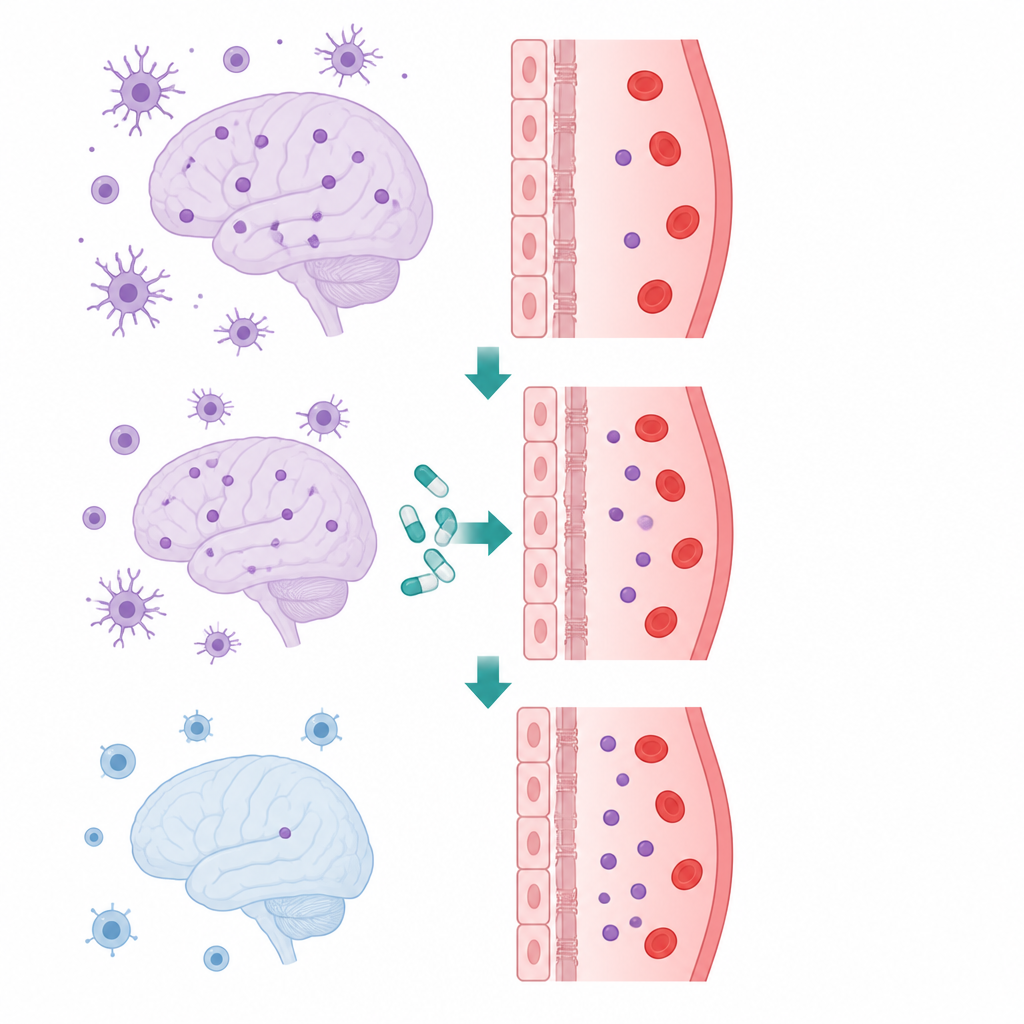
To watch these effects in a living organism, the team used tiny transparent zebrafish larvae exposed to aluminum chloride, a treatment that triggers memory related problems, amyloid like deposits, oxidative stress, and inflammation similar to those seen in Alzheimer’s models. Larvae given SBC-115,076 swam farther and faster and responded better to changes between light and dark, signs of improved brain function. When the researchers examined their brains, they found less amyloid beta, fewer dying neurons, lower levels of damaging oxidative chemicals, and more balanced activity of acetylcholinesterase, an enzyme that controls a key memory related messenger.
Helping the brain pump out waste
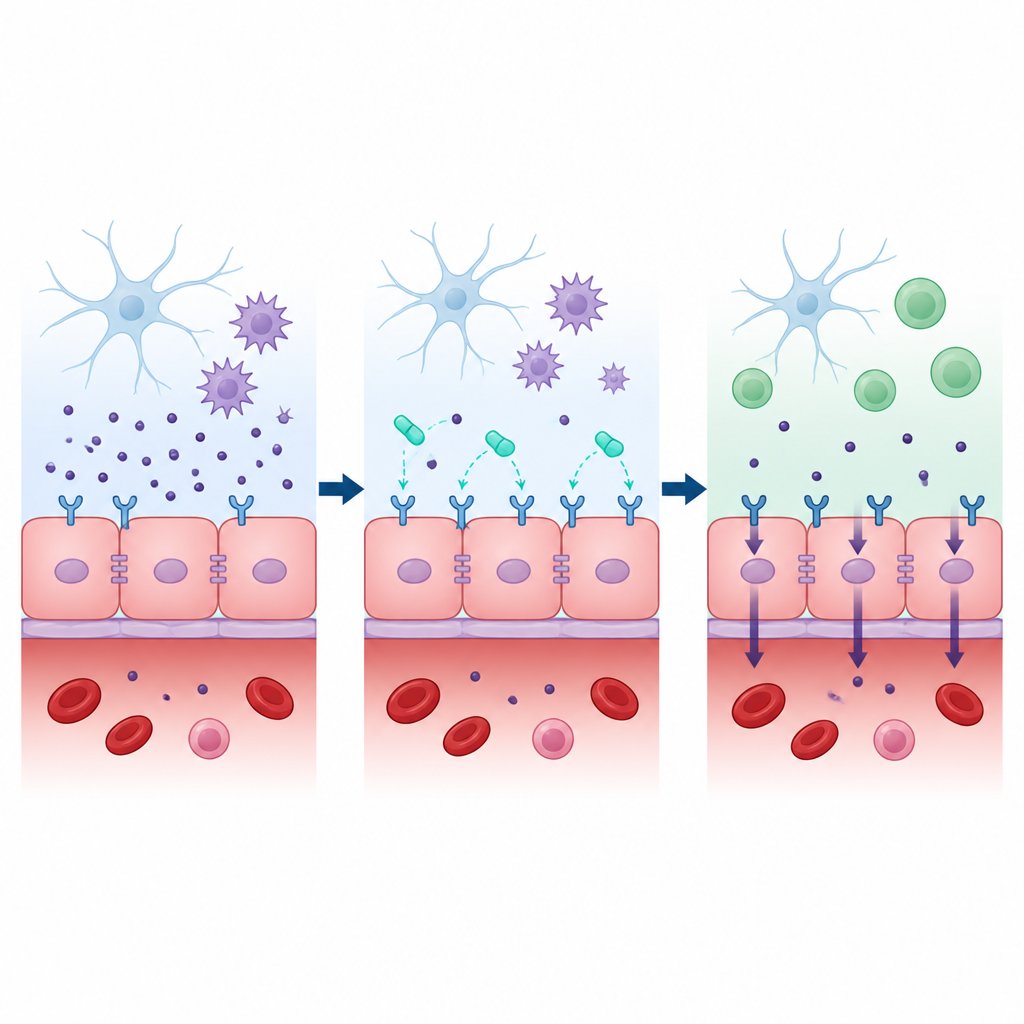
The scientists then turned to cultured cells that line brain blood vessels to zoom in on how SBC-115,076 changes traffic across the blood brain barrier. In these cells, amyloid beta normally ramps up PCSK9 and cuts down LRP1. Treatment with SBC-115,076 reversed this pattern, lowering PCSK9 and boosting LRP1. The cells pulled in more fluorescently tagged amyloid beta, routed more of it into their internal recycling centers, and pushed it from the brain facing side to the blood facing side of a lab made barrier. Importantly, this boost in transport was one way: it favored removal from the brain side without increasing influx from the blood.
Cooling the brain’s immune response
Another piece of the puzzle involves microglia, the brain’s resident immune cells. When these cells encounter amyloid beta, they can switch into a hostile state that releases inflammatory molecules and further injures neurons. In microglial like cells, SBC-115,076 lowered PCSK9 levels and reduced the abundance of two important receptors, CD36 and TLR4, that help drive this harmful response. The treated cells shifted away from an aggressive, “M1 like” profile toward a more nurturing, “M2 like” one and released fewer pro inflammatory cytokines, suggesting a calmer, more protective immune environment in the brain.
What this could mean for future treatments
Taken together, the findings suggest that blocking PCSK9 with a small molecule such as SBC-115,076 can both unclog the brain’s waste disposal routes and soothe damaging inflammation in Alzheimer’s like models. By gently enhancing the brain’s own ability to clear amyloid beta at the blood brain barrier, rather than directly attacking plaques, this strategy might avoid some side effects associated with antibody drugs that bind amyloid inside the brain. While more work in mammalian models and humans is needed, the study points to PCSK9 as a promising control switch that links blood vessel health, immune balance, and the brain’s capacity to stay clear of toxic protein build up.
Citation: Miao, J., Wang, J., Zhou, W. et al. Small-molecule PCSK9 inhibition enhances BBB amyloid-β clearance and suppresses microglial inflammation in Alzheimer’s disease models. Sci Rep 16, 15780 (2026). https://doi.org/10.1038/s41598-026-46671-y
Keywords: Alzheimer’s disease, amyloid beta clearance, blood brain barrier, PCSK9 inhibitor, neuroinflammation