Clear Sky Science · en
Association of IL-6 rs1800795 (− 174G > C) polymorphism with depression risk: a comprehensive meta-analysis
Why this study matters to everyday life
Depression touches millions of people worldwide, yet the reasons some individuals develop it while others do not remain unclear. Many scientists have wondered whether small differences in our genes might tip the scales. This study looks at one such genetic difference in a molecule involved in inflammation, asking a simple question with big implications: does a common change in the interleukin-6 gene make a person more likely to develop depression? 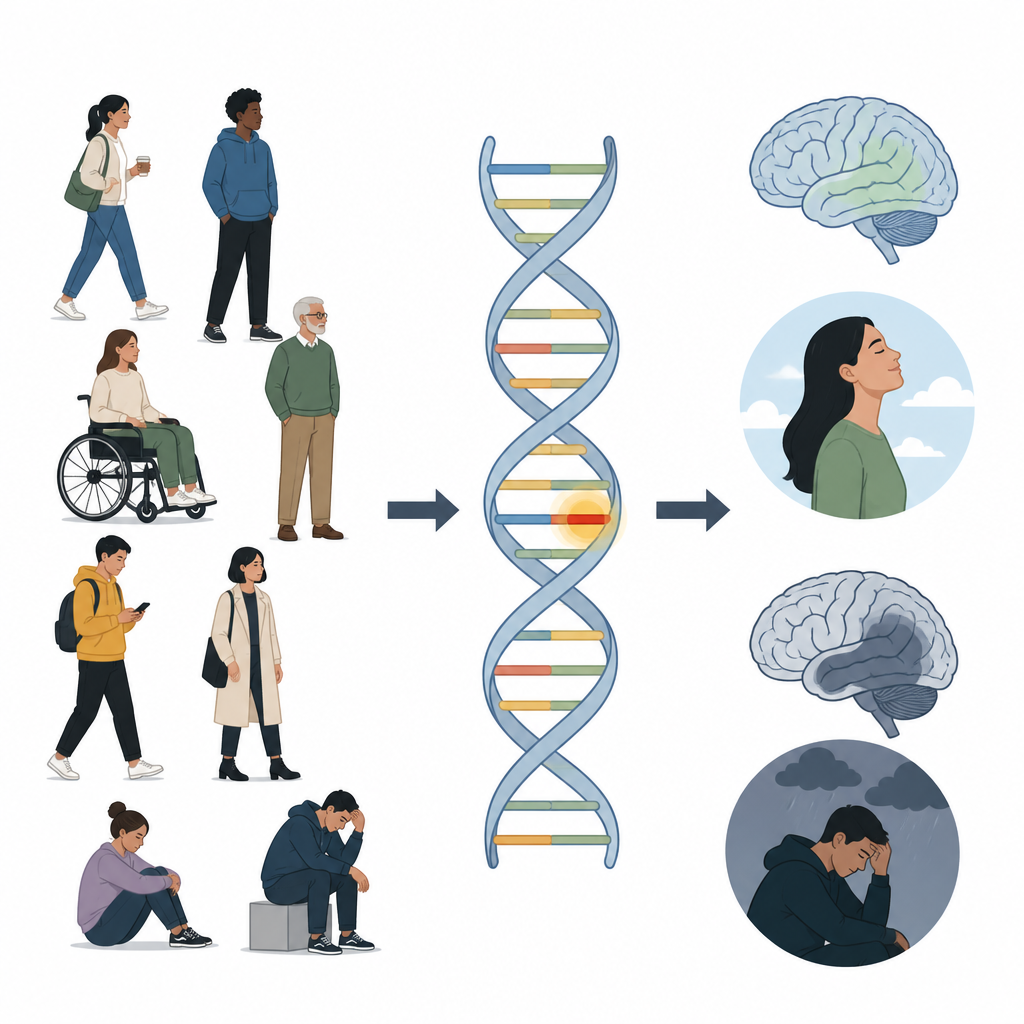
A closer look at a tiny genetic change
The research centers on interleukin-6, or IL-6, a messenger molecule that helps control the body’s immune response. A specific spot in the IL-6 gene, known as rs1800795, can vary slightly between people. Earlier studies disagreed on whether this tiny change was linked to depression, with some suggesting higher risk and others seeing no connection at all. Because each individual study was relatively small and used different patient groups, it was hard to draw a firm conclusion.
Bringing many studies together
To cut through the noise, the authors carried out a meta-analysis, a method that combines data from several separate studies to get a clearer overall picture. They searched major medical databases and carefully screened more than 1,800 papers, eventually including eight case-control studies with over 3,200 participants. Seven of these studies provided the detailed genetic information needed for pooled calculations of how common each version of the IL-6 gene was in people with and without depression.
What the combined data revealed
When the researchers crunched the numbers across all studies and under several different genetic comparison methods, they consistently found no meaningful link between the IL-6 rs1800795 variant and the chance of having depression. They also split the data by how the comparison groups were recruited, such as from hospitals or from the general population, and by whether participants had other medical problems like heart disease or kidney failure. Even in these subgroups, the genetic difference did not reliably separate people with depression from those without it. Sensitivity checks and tests for publication bias suggested that the overall finding was stable. 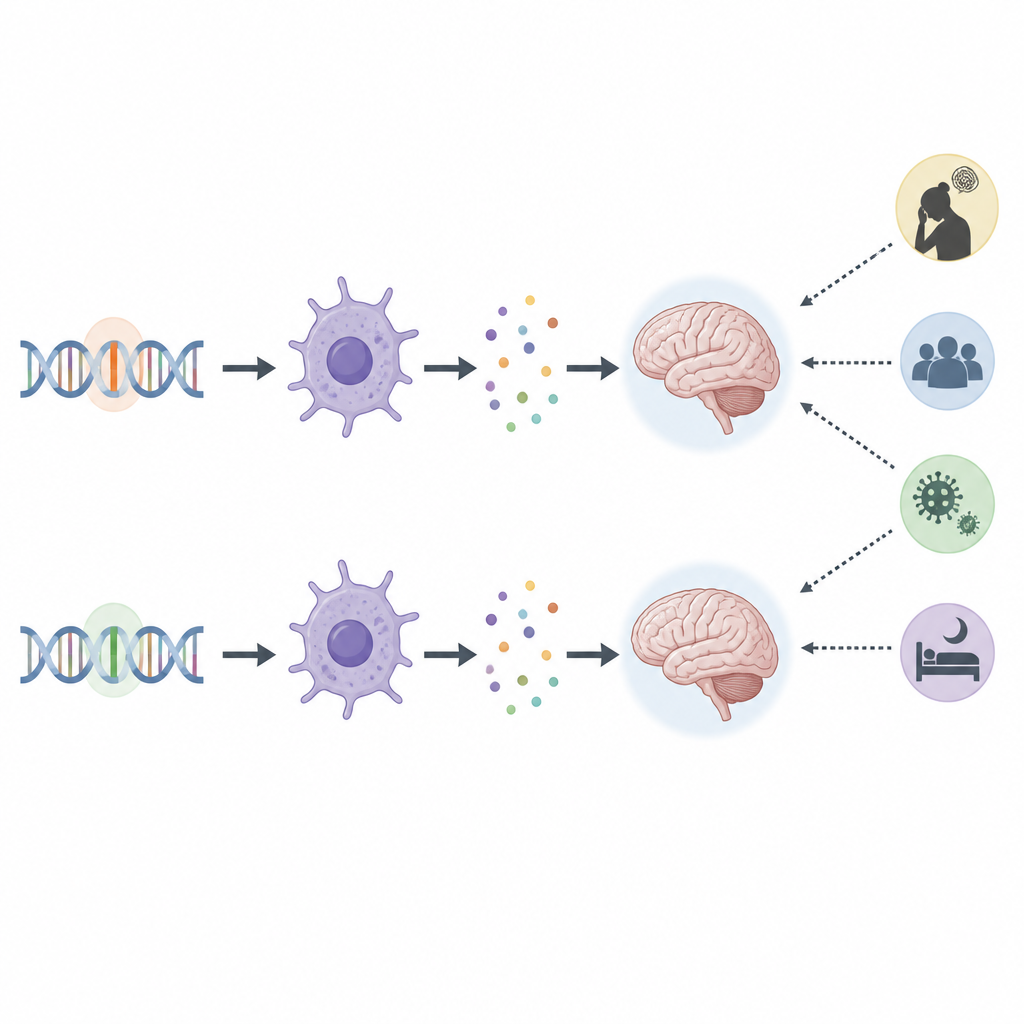
Inflammation, mood, and the bigger picture
Importantly, the lack of a clear signal from this one genetic change does not mean IL-6 is unimportant for mood. Other research shows that people with depression often have higher IL-6 levels in blood or spinal fluid, and that inflammation can influence brain regions and stress hormones tied to emotional health. The new results instead suggest that this particular IL-6 variation, on its own, does not act as a simple on-off switch for depression. Its effects may depend on a person’s life experiences, stress levels, physical illnesses, and other genes working together in complex ways.
What this means for the future
For patients and clinicians, the message is that testing for this single IL-6 gene change is unlikely to help predict who will develop depression. The study points toward a more nuanced picture in which depression risk arises from the interaction of many genes with environmental pressures rather than from one isolated DNA change. Future work, the authors argue, should focus on how gene patterns combine with stress, illness, and social factors to shape mood, which may eventually guide more tailored prevention and treatment strategies.
Citation: Wang, X., Cheng, Y., Bai, Y. et al. Association of IL-6 rs1800795 (− 174G > C) polymorphism with depression risk: a comprehensive meta-analysis. Sci Rep 16, 15325 (2026). https://doi.org/10.1038/s41598-026-46667-8
Keywords: depression, interleukin-6, genetic polymorphism, inflammation, meta-analysis