Clear Sky Science · en
Life cycle externalities and abatement costs of public transport electrification using fuel cell and battery electric buses in Putrajaya city
Cleaner city buses and why they matter
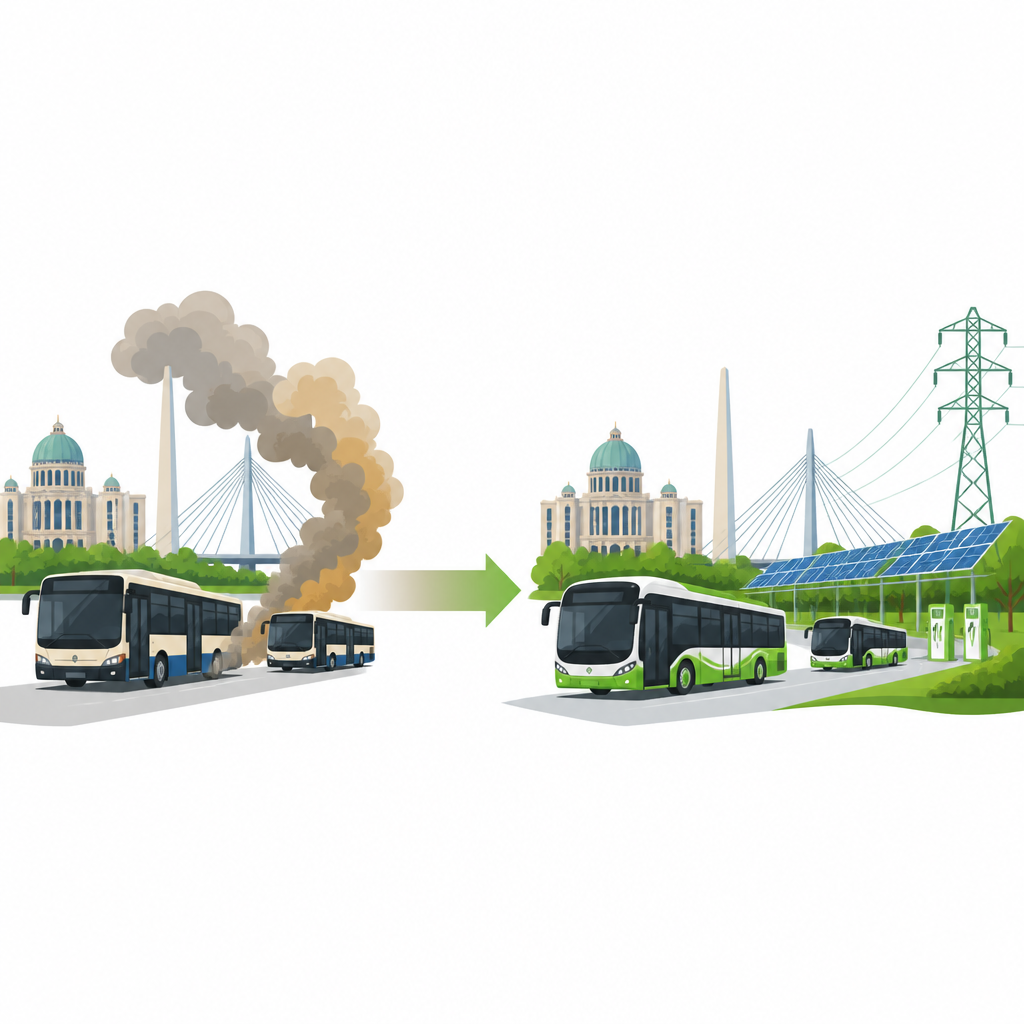
City buses may not look glamorous, but they are workhorses of urban life. Because they run all day in crowded streets, the way we power them has a big effect on air quality, climate pollution, and public budgets. This study asks a simple question with big consequences for Malaysian cities like Putrajaya: should future bus fleets run on batteries or on hydrogen fuel cells? By tracking both environmental impacts and long-term costs from factory to scrapyard, the authors show which option delivers more climate benefit for each ringgit spent.
Two different roads to cleaner buses
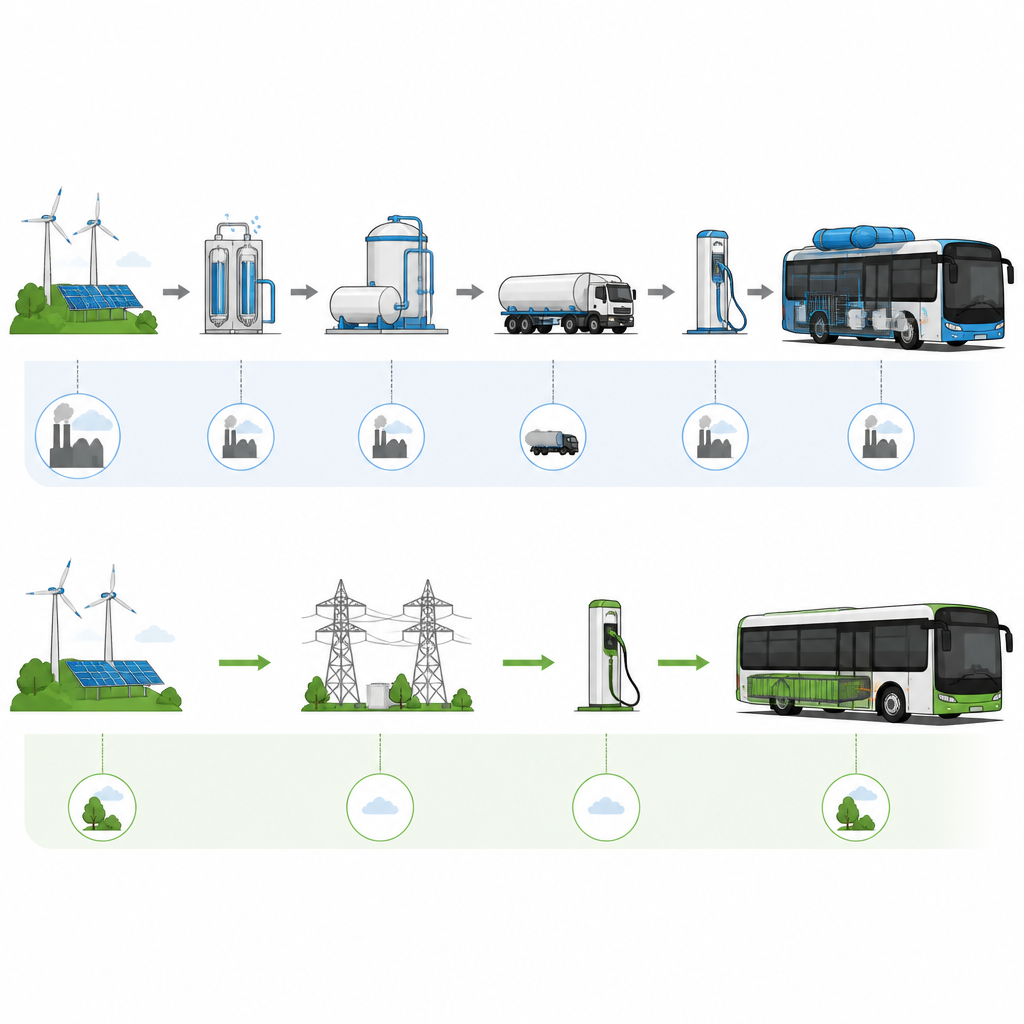
The research compares battery electric buses, which store power in large onboard batteries, with fuel cell electric buses, which make electricity from hydrogen carried in pressurized tanks. Both eliminate tailpipe exhaust in city streets, but their hidden footprints differ. For fuel cell buses, emissions and costs shift to the entire hydrogen chain: making hydrogen from natural gas, solar power, or biomass, moving it by truck, and compressing it at refuelling stations. For battery buses, impacts come mainly from electricity used to charge them and from producing and replacing heavy lithium-ion battery packs.
Following impacts from cradle to grave
To compare fairly, the authors use a life cycle approach that includes bus manufacturing, shipping from China to Malaysia, fifteen years of operation on Putrajaya’s seven urban routes, and end-of-life recycling. They simulate real driving patterns using GPS-based speed profiles to estimate energy use instead of relying on rough averages. For fuel cells, they test several hydrogen sources available or plausible in Malaysia: conventional natural gas reforming, the same process with carbon capture, solar-powered water splitting, gasifying oil palm waste, and an emerging method that converts biomethane into hydrogen and solid carbon on site at the depot.
What the numbers say about pollution
Across almost all environmental measures, battery buses perform best. Over their full life, they emit about 58 kilograms of carbon dioxide per 100 kilometers on Malaysia’s current fossil-heavy grid, far below the cleanest fuel cell case at about 121 kilograms. Fuel cell buses look somewhat better when hydrogen is made from solar power or palm residues, but they still carry extra burdens such as fine particles from biomass gasification or metal-intensive solar hardware. When all types of damage are converted into an approximate money value, battery buses have the lowest environmental “price tag,” at around 830,000 US dollars in external costs over the service life of one bus, while every fuel cell option is higher.
What the numbers say about money
The study also adds up everything an operator would actually pay over fifteen years, including the buses themselves, charging or refuelling stations, electricity or hydrogen, and replacements of batteries or fuel cell stacks. Battery buses come out clearly cheaper, with a total cost of ownership of about 8.9 million US dollars for the Putrajaya fleet, or roughly 53 dollars per 100 kilometers per bus. The best fuel cell case, with on-site hydrogen production from biomethane, still costs around 21.6 million dollars, mainly because producing and delivering hydrogen is expensive. When costs are divided by the amount of climate pollution avoided compared with diesel buses, battery buses cut emissions at about 0.39 dollars per kilogram of carbon dioxide, while fuel cell options are several times more costly per unit of benefit.
What this means for future city travel
For today’s conditions in Putrajaya and similar Malaysian cities, the message is clear: battery electric buses give more climate and environmental benefit for less money than fuel cell buses. That does not mean hydrogen buses are useless; they could still play a role later, especially for longer routes or to help jump-start a national hydrogen industry. But as a practical first step to clean up city transport and stretch limited climate funds, the study suggests that planners should focus on battery buses, while continuing to improve hydrogen supply chains so fuel cell buses can become more competitive in the future.
Citation: Chong, J.W., Hanafiah, M.M. Life cycle externalities and abatement costs of public transport electrification using fuel cell and battery electric buses in Putrajaya city. Sci Rep 16, 15312 (2026). https://doi.org/10.1038/s41598-026-46665-w
Keywords: battery electric buses, hydrogen fuel cell buses, public transport, life cycle assessment, greenhouse gas emissions