Clear Sky Science · en
Analysis of climate changes, habitat fragmentation and germination behavior in Muscari gussonei, Petagnaea gussonei and Poterium spinosum, three Mediterranean plants of conservation interest
Why these small plants matter
On the rocky coasts and cool mountain gorges of Sicily grow three little known wild plants that exist almost nowhere else. This study shows how rising temperatures and shrinking natural habitats are quietly tightening the window in which their seeds can sprout, turning the early life of these plants into a high stakes race against climate and land change.
Seeds that like it cool
The researchers focused on Muscari gussonei, a dune bulb with grape like flower clusters, Petagnaea gussonei, a relic herb of shaded mountain ravines, and Poterium spinosum, a thorny shrub of dry coastal scrub. All three rely on seeds that germinate best at surprisingly low temperatures between 10 and 15 degrees Celsius. In the laboratory, the team tested how often seeds sprouted and how fast they did so at four constant temperatures from 5 to 20 degrees, using material collected from several wild populations across eastern Sicily.
Different strengths, same narrow window
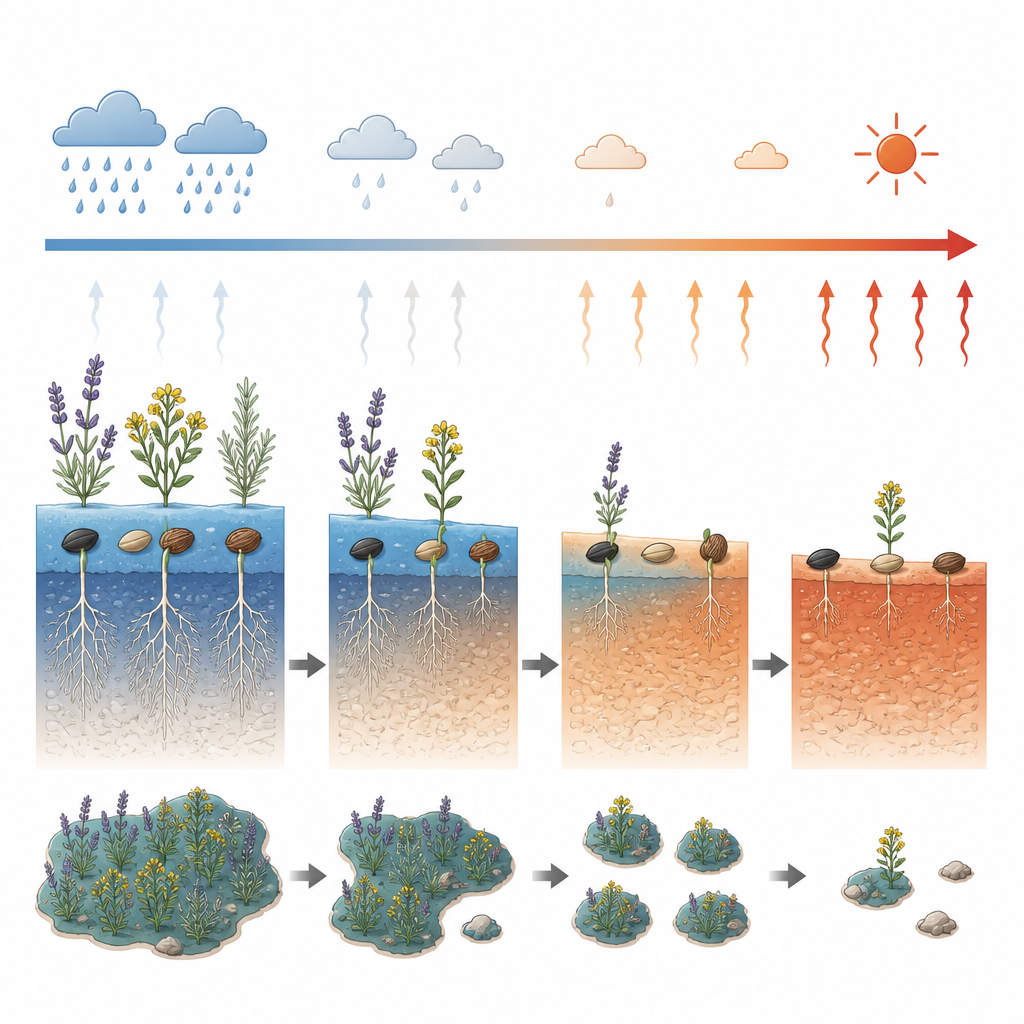
The three species did not behave in exactly the same way. Muscari gussonei showed very high germination, with most seeds sprouting when kept at 10 to 15 degrees. Petagnaea gussonei, by contrast, had much poorer success and needed both cool conditions and a special growth medium with a plant hormone to reach modest germination rates. For Poterium spinosum, seeds taken out of their spongy fruits tended to germinate better at the warmer end of the tested range than intact fruits, hinting that the fruit tissues may hold back sprouting when it is too warm. Yet across all three plants the pattern was clear: they share a narrow comfort zone for starting life, and performance drops sharply at higher or lower temperatures.
Warming, drying, and a changing countryside
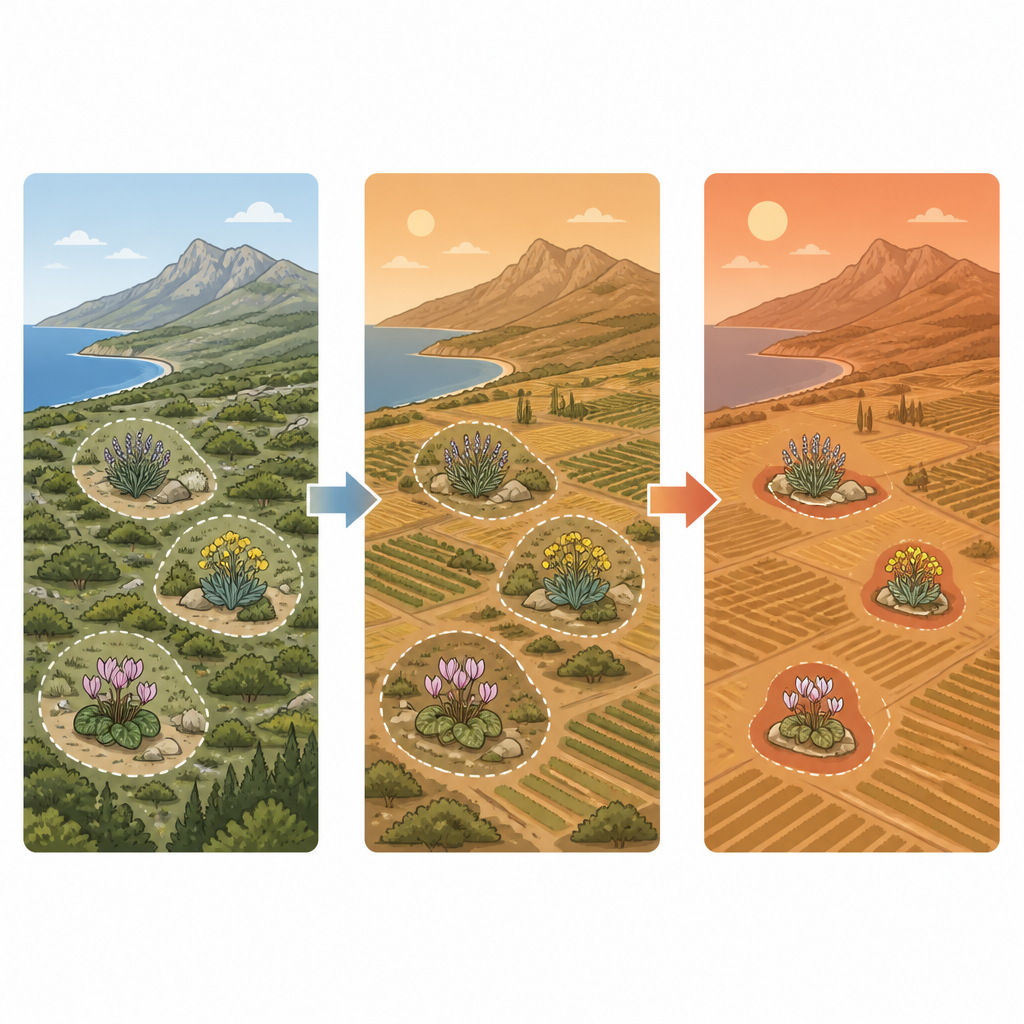
To see how this narrow germination window fits into the broader setting, the authors examined nearly ninety years of weather records across the regions where these plants grow. Over the period from 1931 to 2020, average temperatures climbed by up to about two degrees, while rainfall first declined and then only partly recovered, leaving many areas warmer and somewhat drier overall. At the same time, detailed land cover maps from 2000 to 2018 showed that natural and semi natural areas shrank, while agricultural land expanded within the ranges of all three species. The result is a patchwork landscape in which cool, moist microhabitats are harder to find and are increasingly cut off from one another.
Fragmented homes and stressed seedlings
The study also revealed that seed behavior varies from one population to another, suggesting some genetic flexibility that might help these plants adjust to shifting conditions. Still, the combination of rising temperatures and habitat fragmentation poses a serious challenge. As the countryside fills with fields and orchards, natural patches become smaller and more isolated, limiting the movement of pollen and seeds between groups. This makes it harder for the plants to track the climate by shifting to slightly cooler or wetter spots within their native region.
What this means for saving these species
For conservation workers, these findings offer both a warning and a guide. Knowing that the seeds of these Mediterranean plants need a tight band of cool temperatures to germinate, and that this band is being squeezed by warming and land change, helps identify which wild populations are under greatest stress. The authors suggest that actions such as reinforcing existing populations or carefully reintroducing plants to better sites should be planned together with detailed climate and land use analyses. In simple terms, saving these plants will require not only protecting their remaining patches of habitat, but also making sure that future seedlings can still find the cool, connected corners of the landscape where life for them can begin.
Citation: Bonanno, G., Veneziano, V. Analysis of climate changes, habitat fragmentation and germination behavior in Muscari gussonei, Petagnaea gussonei and Poterium spinosum, three Mediterranean plants of conservation interest. Sci Rep 16, 15373 (2026). https://doi.org/10.1038/s41598-026-46658-9
Keywords: Mediterranean plants, seed germination, climate warming, habitat fragmentation, plant conservation