Clear Sky Science · en
ELF3 drives glioblastoma multiforme progression through the regulation of MXRA8 expression
Why this brain cancer study matters
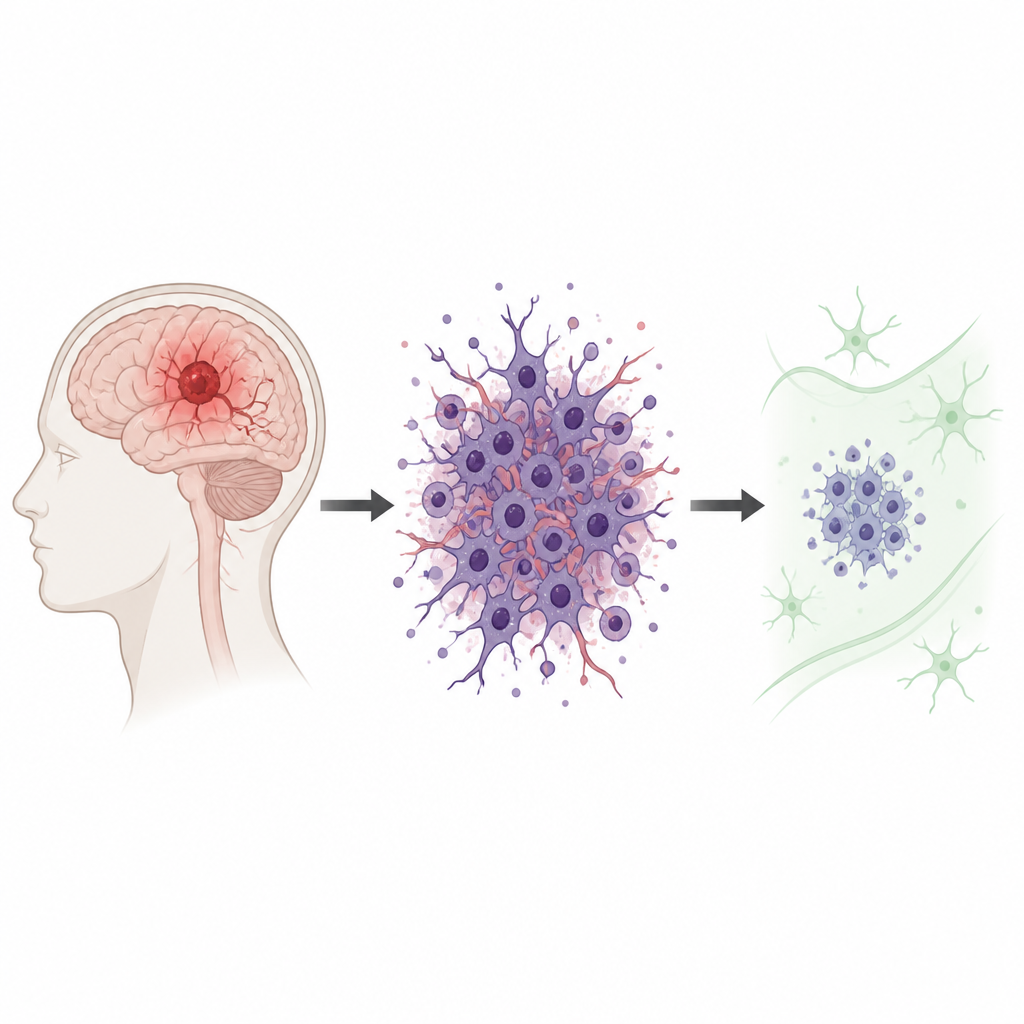
Glioblastoma is one of the deadliest brain cancers, with most patients living little more than a year after diagnosis. Standard treatments like surgery, radiation, and chemotherapy often fail because the tumor grows back and spreads through the brain. This study asks a simple but crucial question: what hidden switches inside tumor cells keep glioblastoma growing, and could turning them off slow the disease?
A closer look at a deadly brain tumor
Glioblastoma stands out for its speed and stubbornness. Tumor cells divide quickly, invade nearby brain tissue, and often resist drugs. To understand what drives this behavior, the researchers focused on a little-known surface protein called MXRA8 and a gene regulator called ELF3. They first turned to large public cancer databases to see how strongly these molecules appear in glioblastoma tissue compared with normal brain. They also checked whether their levels tracked with how long patients survived.
Finding a telltale surface protein
Across several datasets, MXRA8 levels were clearly higher in glioblastoma than in healthy brain tissue, regardless of a patient’s age, sex, or a common mutation in the TP53 gene. Patients whose tumors made more MXRA8 tended to have shorter survival times, suggesting this protein might mark especially aggressive disease. The team confirmed this pattern in real tumor samples collected from patients, and in multiple glioblastoma cell lines grown in the lab, where MXRA8 was abundant compared with normal brain cells.
What happens when the switch is turned down
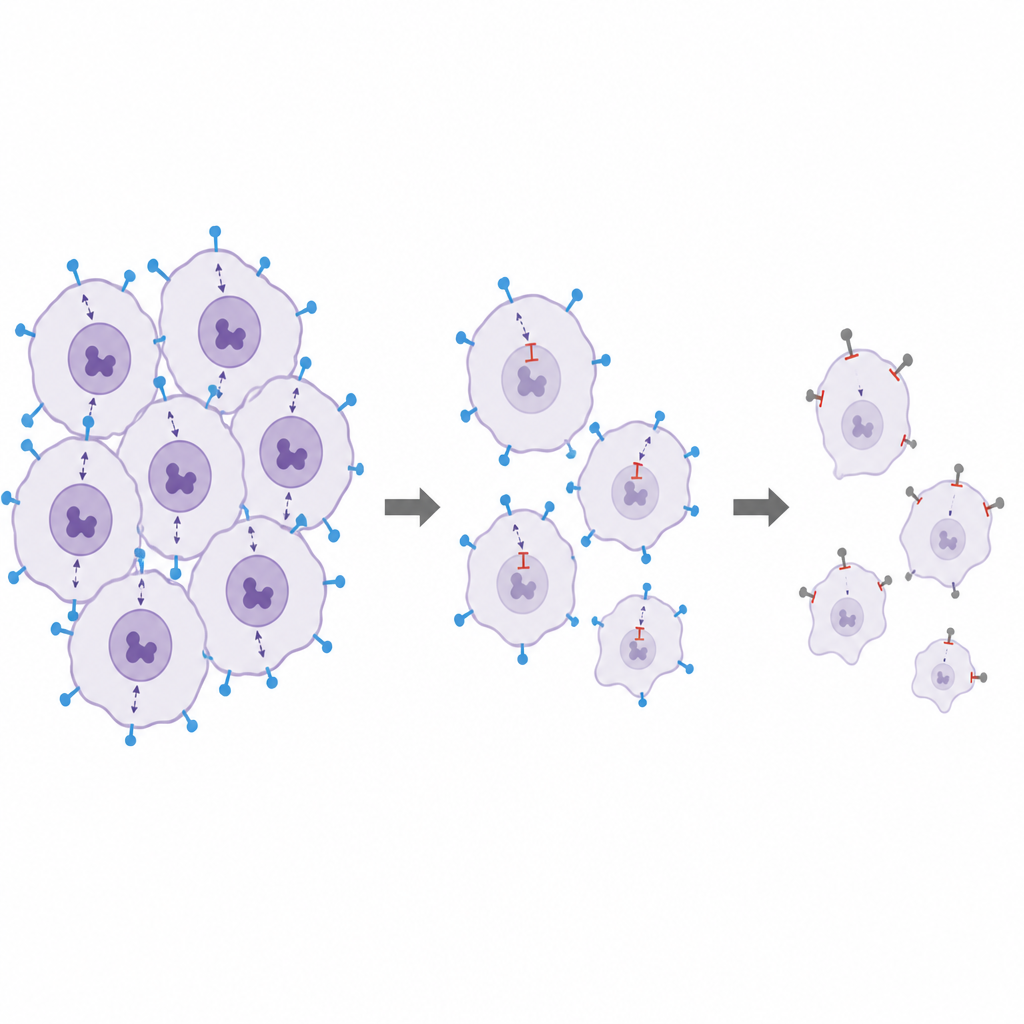
Next, the scientists asked what MXRA8 actually does inside glioblastoma cells. Using genetic tools, they lowered MXRA8 levels in several cell lines and watched how the cells behaved. Tumor cells with reduced MXRA8 grew more slowly, formed fewer colonies, and were less able to move and invade through artificial barriers. Markers of active cell division dropped as well. In mice, glioblastoma cells lacking MXRA8 produced much smaller tumors that contained fewer rapidly dividing cells, pointing to a strong role for this protein in fueling tumor growth in living organisms.
Uncovering the master control gene
The study then turned upstream to find out what turns MXRA8 on. By combining prediction databases with patient survival data, the researchers pinpointed a transcription factor called ELF3 as a promising controller. Like MXRA8, ELF3 was present at higher levels in glioblastoma than in normal brain, and tumors with more ELF3 tended to do worse. Detailed experiments showed that ELF3 binds directly to a specific site in the MXRA8 gene’s control region, boosting its activity. When ELF3 was reduced, MXRA8 levels fell at both the RNA and protein level, and tumor cells became less able to grow, divide, and invade.
Proving the link between ELF3 and MXRA8
To test whether MXRA8 is a key outlet for ELF3’s tumor-promoting power, the team performed “rescue” experiments. They first dampened ELF3, which slowed cell growth and movement, then forced tumor cells to make extra MXRA8. Restoring MXRA8 largely reversed the calming effect of ELF3 loss: cells recovered their ability to divide, form colonies, and invade. In mouse experiments, knocking out either ELF3 or MXRA8 shrank tumors and reduced signals of rapid cell division, without obvious harm to the animals. Together, these results sketch a simple chain of events: ELF3 turns on MXRA8, and MXRA8 helps glioblastoma cells thrive.
What this means for future treatment
For patients, these findings do not yet translate into a new therapy, but they highlight a promising path. The work identifies a linked pair of molecules, ELF3 and MXRA8, that are consistently high in glioblastoma and appear to drive key malignant traits such as fast growth and invasion. In plain terms, ELF3 acts like a master switch that boosts MXRA8, and MXRA8 helps tumor cells spread and resist control. Targeting this ELF3–MXRA8 axis, either by blocking ELF3’s control over MXRA8 or by directly dampening MXRA8 on tumor cells, could complement existing treatments and may one day help slow this aggressive brain cancer.
Citation: Wang, M., Bo, H., Chen, D. et al. ELF3 drives glioblastoma multiforme progression through the regulation of MXRA8 expression. Sci Rep 16, 15380 (2026). https://doi.org/10.1038/s41598-026-46657-w
Keywords: glioblastoma, brain tumor biology, ELF3, MXRA8, cancer targets