Clear Sky Science · en
Genetic diversity of indigenous carambola (Averrhoa carambola L.) accessions based on fruit morphometric and biochemical traits
Why Star Fruit Diversity Matters
Star fruit, with its golden color and striking star-shaped slices, is more than just an eye-catching garnish. It is a nutritious, medicinally valuable fruit that is still underused in world markets. This study explores the hidden variety of wild and village-grown star fruits in Mizoram, a hilly state in northeast India, to find especially good types for eating, processing, and future farming. Understanding and preserving this diversity can help breeders create better fruits for taste, nutrition, and climate resilience.
Hunting for Special Trees in the Hills
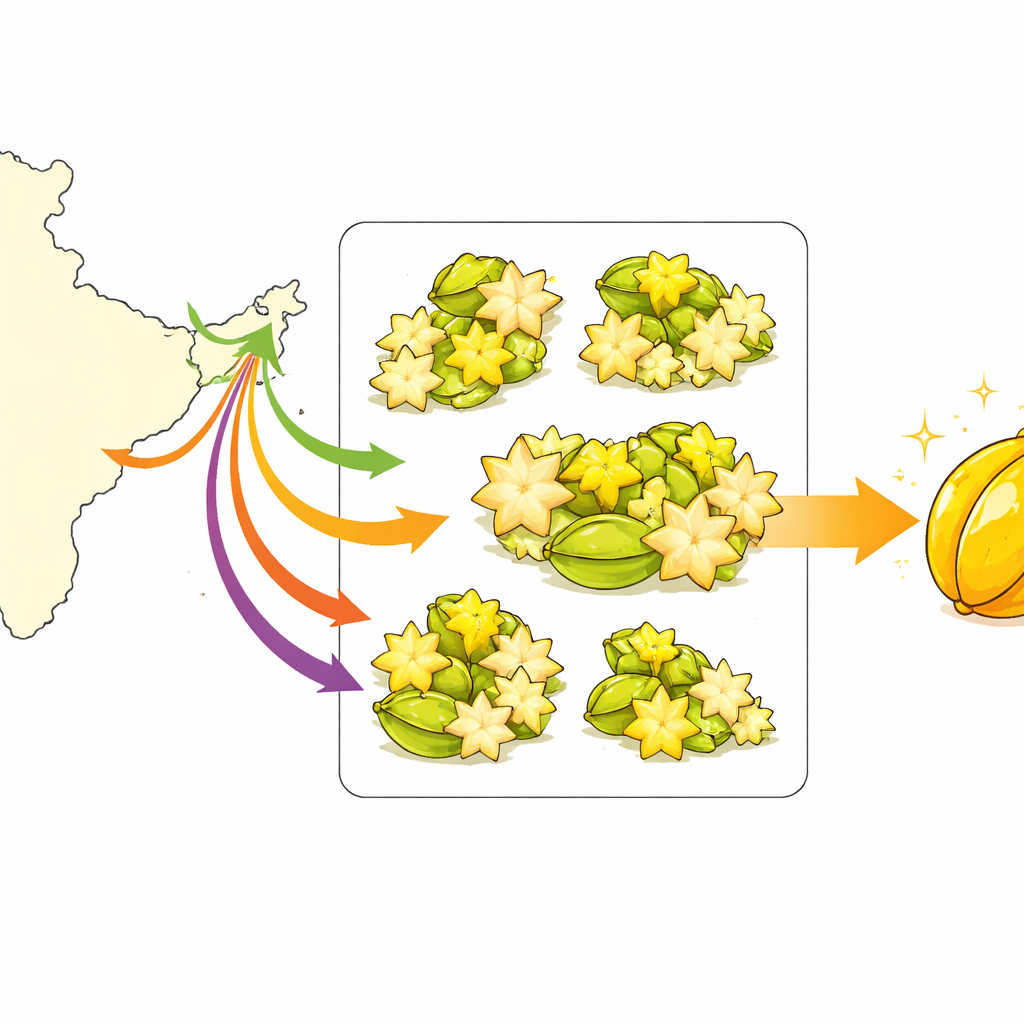
The researchers traveled across five districts of Mizoram during the 2020–21 fruiting season, locating 25 different seed-grown star fruit trees in farmers’ fields and homesteads. For each tree, they recorded its exact location with GPS and collected fruit samples once the fruits had reached full size and characteristic color. Back in the laboratory, they measured simple physical traits such as fruit weight, length, diameter, the size of the ridges that give star fruit its shape, and how much of each fruit was actually edible. They also noted how many seeds the fruits had and how heavy those seeds were, providing a picture of how the trees differ in overall fruit form.
Measuring Sweetness, Juiciness, and Goodness
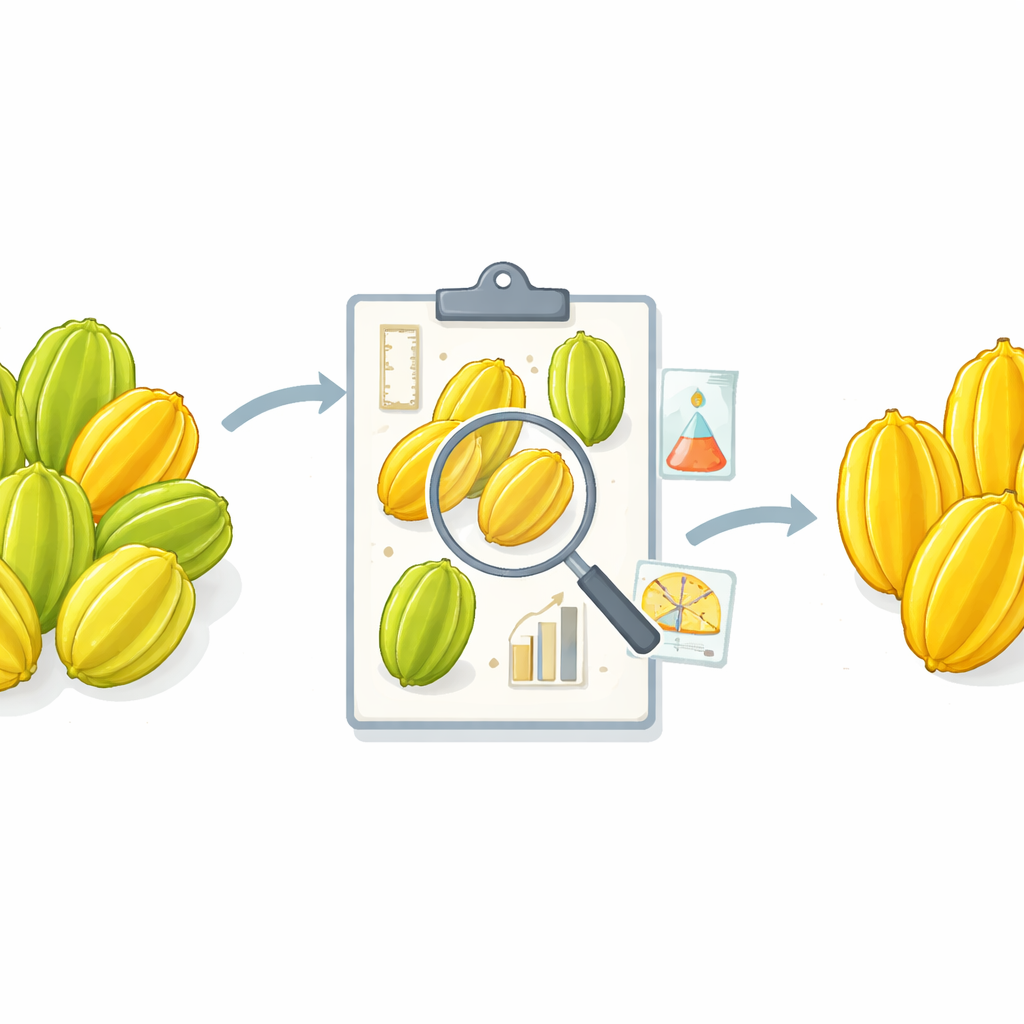
Beyond appearance, the team focused on what matters to consumers and the food industry: juice content, sweetness, acidity, and vitamin C. They squeezed the fruits to see how much juice they produced, measured natural sugars and acids, and calculated ratios that reflect how sweet or tart the fruits taste. They also quantified ascorbic acid, better known as vitamin C, which adds to the fruit’s health benefits. The results showed wide differences among trees: some produced heavier fruits with more edible flesh, others had higher juice content, and still others stood out for sweetness, low acidity, or high vitamin C.
Finding Patterns Inside the Diversity
To make sense of so many measurements, the researchers used statistical tools that reveal patterns in complex data. One method, principal component analysis, grouped traits that tend to vary together and showed that just a few underlying dimensions captured more than four-fifths of all variation across the 25 trees. Another method, cluster analysis, sorted the trees into three main groups based on overall similarity. One group was rich in juice and acidity and may be well suited for processing into drinks and preserves. Another group represented more average, baseline material. A third small group contained the highest-performing trees, combining large fruits, a big share of edible portion, abundant juice, high natural sweetness, and low acidity.
Spotlighting Elite Star Fruit Trees
Within this standout group, three trees labeled CS-7, CS-9, and CS-11 emerged as especially promising. They produced relatively large fruits with generous edible portions, high juice yield, and attractive sweetness-to-acidity balance, making them potentially excellent for fresh markets. Other trees, including CS-1, CS-2, and CS-22, also showed strong overall performance in both physical and biochemical traits. Together, these six accessions form a pool of “elite” germplasm that breeders can use as parents when developing new star fruit varieties tailored to consumer preferences and industry needs.
What This Means for Farmers and Future Fruits
For non-specialists, the message is straightforward: even within a single region, star fruit trees can differ greatly in size, taste, juiciness, and nutritional value. By carefully measuring and comparing these differences, scientists in Mizoram have pinpointed several superior local trees that could be multiplied, shared with growers, and used to breed improved varieties. At the same time, the study warns that conserving this rich local diversity is urgent. Losing unique trees would mean losing future options for better-tasting, more nutritious, and more resilient star fruits that could benefit both farmers and consumers.
Citation: Hazarika, T.K., Lalmuankima, F., Debbarma, P. et al. Genetic diversity of indigenous carambola (Averrhoa carambola L.) accessions based on fruit morphometric and biochemical traits. Sci Rep 16, 10855 (2026). https://doi.org/10.1038/s41598-026-46636-1
Keywords: star fruit, plant breeding, genetic diversity, fruit quality, tropical horticulture