Clear Sky Science · en
Generation of a novel Dysferlin microdeletion knock-in mouse model mimicking muscular dystrophy–like pathology
Why tiny changes in genes can reshape muscle health
Some people develop slow but relentless weakness in the muscles around their hips and shoulders, making it hard to climb stairs or rise from a chair. One cause is a rare inherited condition where a muscle repair protein is missing or faulty. This study describes a new mouse model built to closely copy a subtle gene change seen in Taiwanese patients, giving scientists a powerful way to watch how such a small DNA mistake can gradually damage muscle and to test future treatments.
A closer look at a family of muscle wasting diseases
Limb girdle muscular dystrophy is not a single disease but a collection of inherited disorders that mainly affect the muscles of the hips and shoulders. People with these conditions often first notice trouble with everyday movements such as lifting objects or getting off the floor, and some later develop heart or breathing problems. There is no cure, and care usually focuses on exercise programs, assistive devices, and monitoring for complications. The many subtypes arise from faults in different genes that normally help muscle cells keep their structure, handle stress, and repair everyday wear and tear.
The missing repair worker in muscle cells
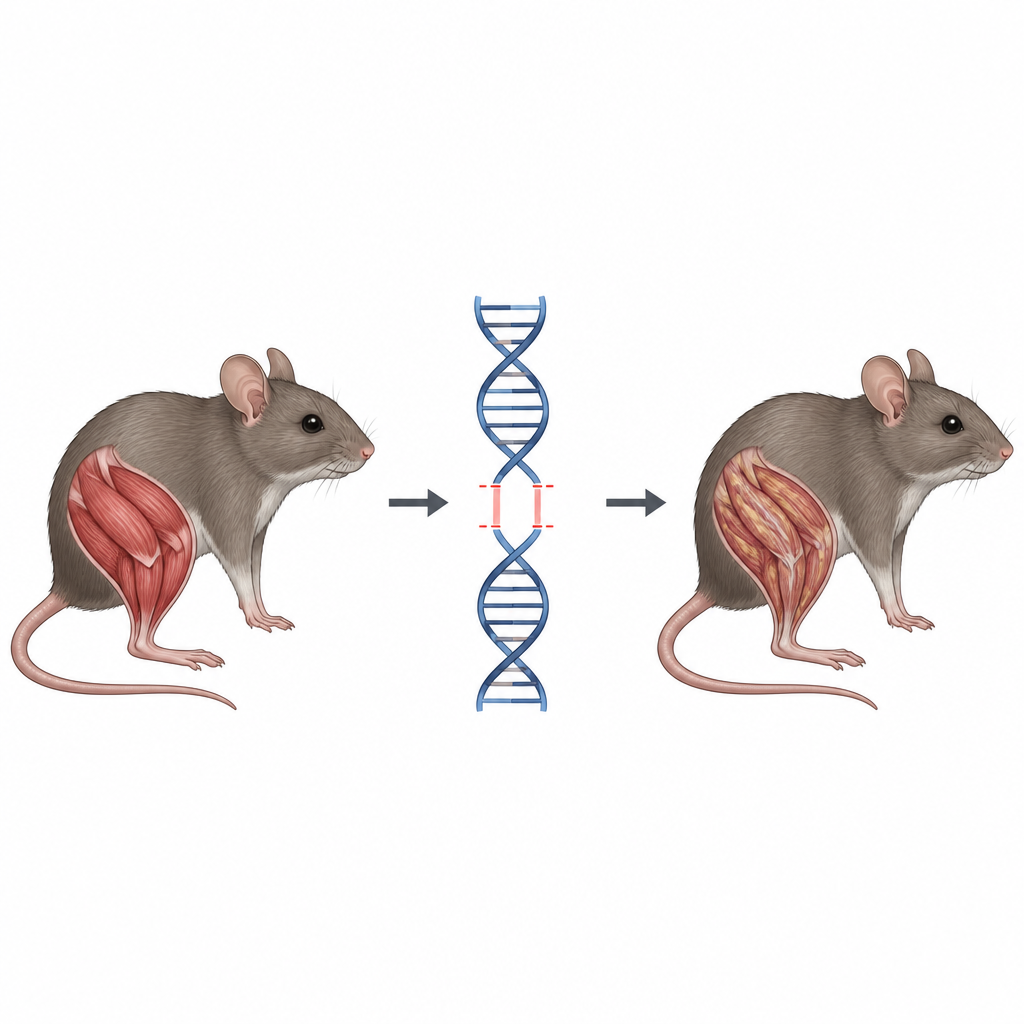
One important player in muscle health is a protein called dysferlin, which sits in the outer membrane of muscle cells and helps seal tiny tears that occur during every contraction. When the gene for dysferlin is damaged, this repair system falters, leading to a form of limb girdle muscular dystrophy known as LGMD-R2. The research team had previously identified a small five-letter deletion in the dysferlin gene in several Taiwanese patients, predicted to cut the protein short. To study what this specific change does inside living tissue, they used precise genome editing to create mice with the matching microdeletion in the mouse version of the gene.
How the new mouse model mirrors human muscle disease
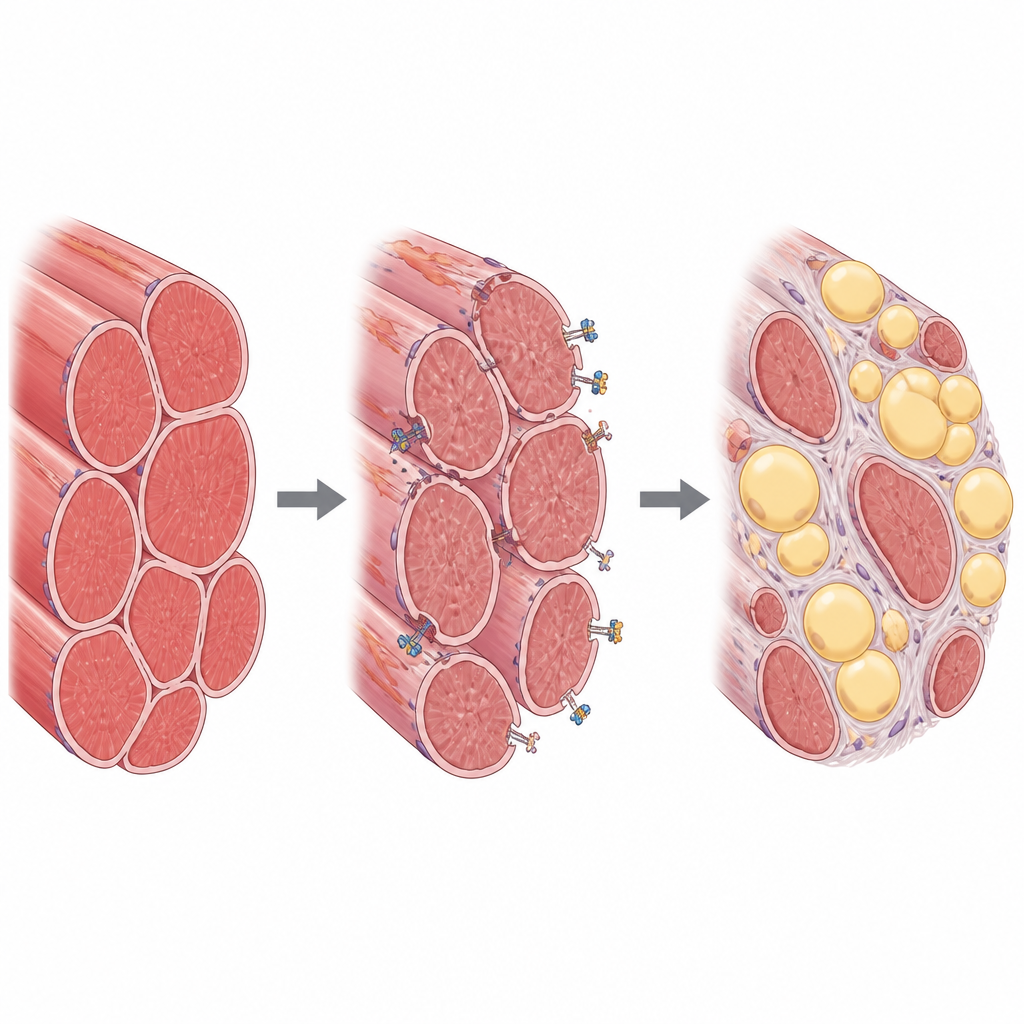
Tests confirmed that mice carrying two copies of the edited gene made almost no detectable dysferlin in their skeletal muscles. When followed into old age, these mice showed clear problems with balance and coordination on a rotating rod, suggesting weaker or less well controlled muscles than their healthy littermates. Microscopic examination of leg muscles revealed classic signs of ongoing damage and repair, including muscle fibers with centrally placed nuclei, areas of scarring, and patches of fat cells replacing normal tissue. Staining experiments showed that key support proteins at the cell surface were no longer neatly arranged, hinting at a fragile and disorganized muscle membrane. The muscles also contained clusters of immune cells known as macrophages, pointing to a simmering, long term inflammatory response.
What the muscle protein landscape reveals
To gain a broader view of how the missing repair protein reshapes muscle biology, the scientists measured more than two thousand different proteins in the leg muscles of diseased and healthy mice. In muscles lacking dysferlin, hundreds of proteins involved in breaking down and handling fats were increased, while many proteins that form the contractile machinery and internal scaffolding of muscle fibers were reduced. This pattern fits with the tissue images, which showed a shift from strong, densely packed fibers toward a mix of damaged fibers, scar tissue, and fat. Together, the microscopic and protein level changes paint a picture of muscles caught in repeated cycles of injury and imperfect healing.
Why this mouse matters for future treatments
By engineering a mouse that carries the same tiny gene deletion found in Taiwanese patients, the researchers have created a living model that faithfully reproduces many features of human dysferlin related muscle disease, from loss of the repair protein to weakness, scarring, fat buildup, and chronic inflammation. This model provides a realistic testing ground for new ideas to restore membrane repair, calm harmful immune responses, or slow the shift toward fatty and fibrotic muscle, bringing scientists a step closer to targeted therapies for people living with these slow moving but debilitating conditions.
Citation: Chen, YL., Lin, WN., Pan, PY. et al. Generation of a novel Dysferlin microdeletion knock-in mouse model mimicking muscular dystrophy–like pathology. Sci Rep 16, 15322 (2026). https://doi.org/10.1038/s41598-026-46635-2
Keywords: limb girdle muscular dystrophy, dysferlin, mouse model, muscle degeneration, proteomics