Clear Sky Science · en
Absence of synergistic effects by CDK12/13 inhibition in combination with cisplatin or olaparib in ovarian cancer cells
Why this research matters
Ovarian cancer is often diagnosed late and frequently comes back after treatment, leaving patients with few good options. Doctors usually rely on platinum-based chemotherapy and newer drugs called PARP inhibitors, but many tumors eventually stop responding. This study explores whether blocking a particular cellular switch, called CDK12/13, could both slow ovarian cancer cell growth and make existing drugs work better. The findings help clarify where this strategy may help and where its limits lie, guiding future research toward more effective combinations.
A new switch to target in cancer cells
The researchers focused on a small molecule drug called SR-4835, which blocks the activity of CDK12 and CDK13, proteins that help cancer cells manage the reading and repair of their DNA. Because DNA repair is crucial for cell survival, especially in rapidly dividing cancer cells, turning down this repair machinery might make tumors more vulnerable. The team tested SR-4835 in several ovarian cancer cell lines grown in the lab, including pairs that were either sensitive or resistant to the standard chemotherapy drug cisplatin. They wanted to know how well SR-4835 slowed cell growth on its own and whether resistant cells might be especially vulnerable.
How the new drug affects cancer growth and genes
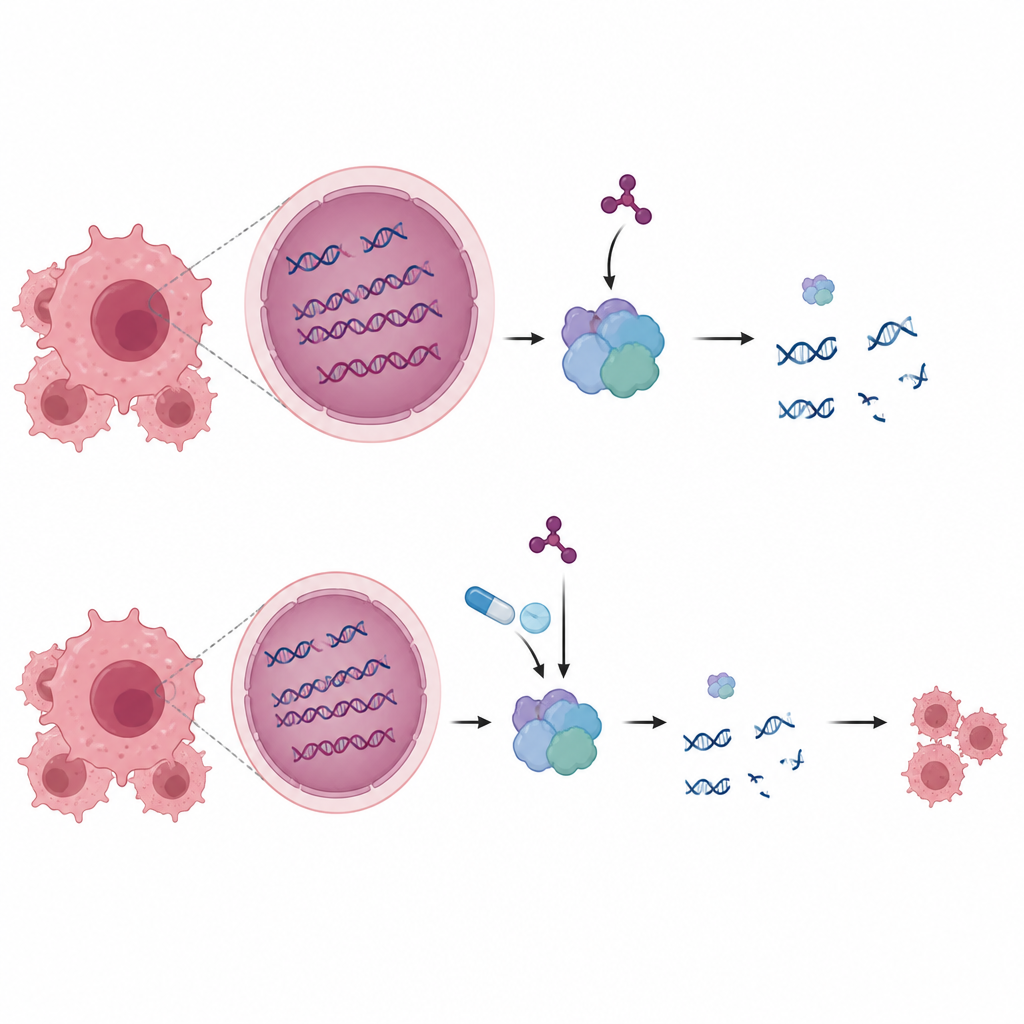
SR-4835 showed strong anti-cancer activity in most of the ovarian cancer cell lines, working at very low concentrations. Interestingly, some cisplatin-resistant cells were slightly more sensitive to SR-4835 than their original, cisplatin-sensitive counterparts, hinting at a possible weakness in resistant disease. When the team looked at gene activity, they found that SR-4835 caused large shifts across thousands of genes. Many genes were turned down, especially long genes involved in how cells sense and repair DNA damage. This was traced back to changes in how pieces of genetic messages are stitched together, leading to shorter and less useful versions of key repair instructions.
Forcing cancer cells into a "BRCA-like" repair problem
A central goal was to see whether SR-4835 could mimic the effect seen in tumors with faults in BRCA genes, a state sometimes called "BRCAness," where DNA repair is compromised. The researchers measured several important DNA repair genes and found that SR-4835 reduced the activity of ATM, ATR and BRCA1 in most of the cell lines at both the message and protein levels. Since tumors with weak BRCA-related repair are often especially sensitive to PARP inhibitors, this raised the hope that pairing SR-4835 with existing drugs might create a more powerful one-two punch against ovarian cancer cells.
Testing drug combinations in the lab
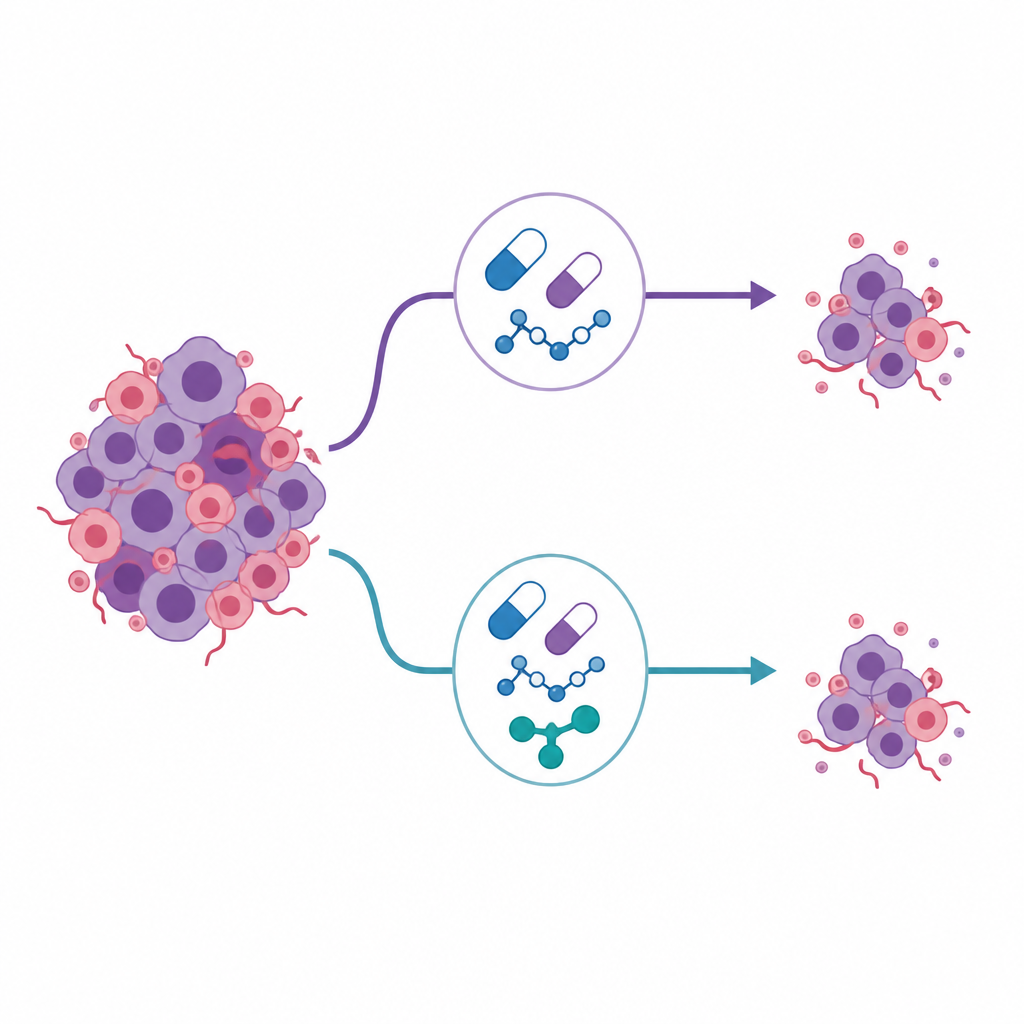
To explore this, the team combined SR-4835 with cisplatin or with the PARP inhibitor olaparib and measured cell survival and cell death using several independent methods. While adding SR-4835 usually improved the overall effect compared with cisplatin or olaparib alone, careful statistical tests that distinguish between simple add-on benefits and true synergy told a clearer story. Across a wide range of doses, the drug pairs behaved mostly in an additive way: the combined impact matched what would be expected from stacking the individual effects, rather than exceeding it. In some settings, the combinations even showed a slight opposing effect instead of cooperation.
What this means for future ovarian cancer treatment
This work shows that blocking CDK12/13 with SR-4835 can strongly slow ovarian cancer cell growth and push cells into a BRCA-like state with weaker DNA repair. However, in these lab models, combining SR-4835 with cisplatin or with olaparib did not produce the hoped-for synergy; the drugs worked together, but only by simply adding their effects. For patients, this suggests that CDK12/13 inhibitors may still hold promise as single agents or in carefully selected contexts, but they are unlikely to transform the performance of current platinum or PARP treatments on their own. The study helps refine which strategies are most realistic and underscores the need to keep searching for drug partners that truly amplify one another in ovarian cancer.
Citation: Santer, F.R., Hovdar, L., Handle, F. et al. Absence of synergistic effects by CDK12/13 inhibition in combination with cisplatin or olaparib in ovarian cancer cells. Sci Rep 16, 15362 (2026). https://doi.org/10.1038/s41598-026-46634-3
Keywords: ovarian cancer, CDK12/13 inhibitor, DNA repair, platinum resistance, PARP inhibitor