Clear Sky Science · en
Dietary restriction and aerobic exercise alleviate obesity-related skeletal muscle impairment via the miR-130/PPARγ axis and IGF-1/Akt/mTOR signaling activation
Why this matters for everyday health
As waistlines grow worldwide, doctors worry not only about extra fat but also about what obesity does to our muscles. Skeletal muscles in our legs and arms help us move, burn sugar and fat, and stay independent as we age. This study in rats asks a practical question with real-world echoes: can eating less and doing regular aerobic exercise rescue muscles harmed by a high fat diet, and what tiny molecular switches inside muscle cells control this recovery? 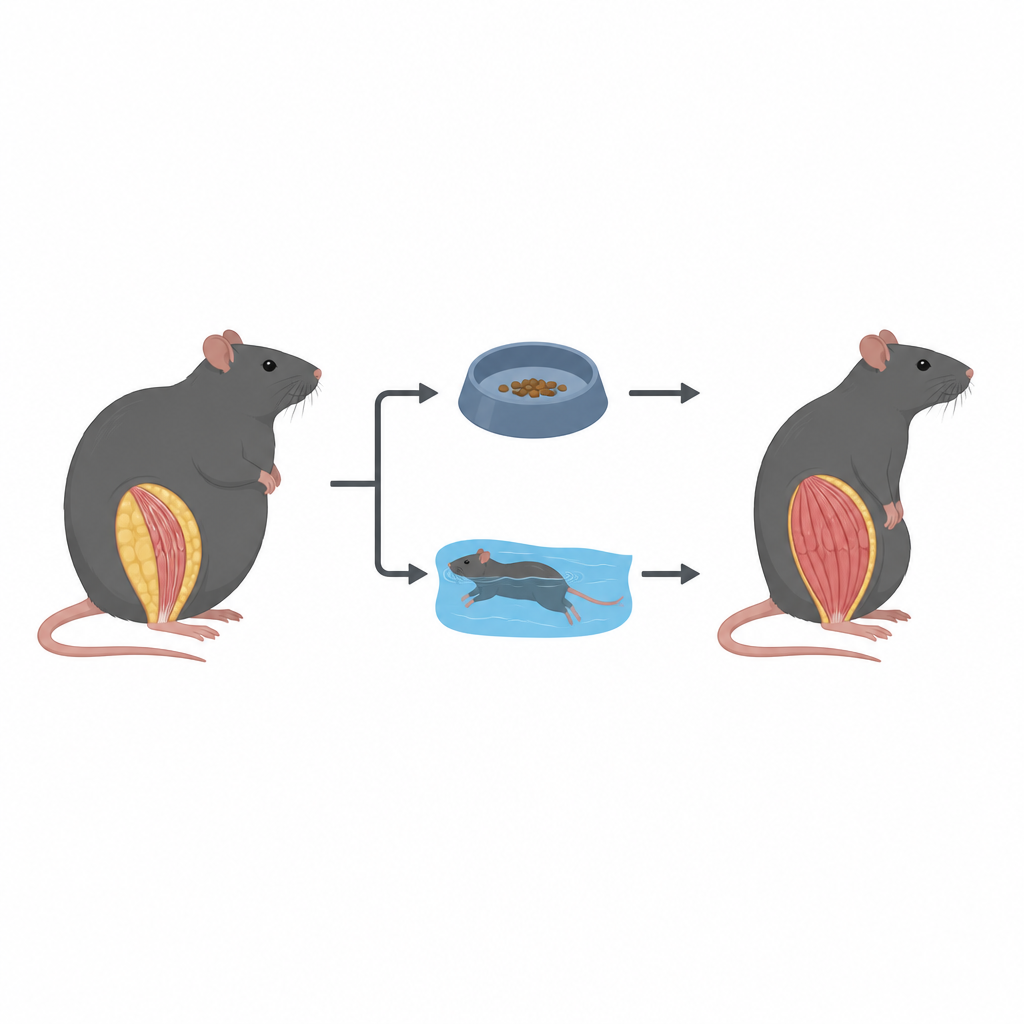
How extra weight can weaken muscles
Obesity is more than stored fat; it quietly reshapes muscle tissue. In this work, rats fed a high fat diet developed smaller leg muscle fibers, more fat droplets inside the muscle, and more stiffening tissue between fibers. Together these changes point to weaker, less flexible muscles that do a poorer job of using sugar and fat. The findings echo human studies showing that obesity slows the building of new muscle proteins and can lead to muscle loss and reduced strength, especially in older adults.
Testing food cutbacks and aerobic exercise
The researchers divided obese rats into groups: one stayed on the high fat diet, one ate fewer calories, one did regular swimming exercise, and one combined both strategies. After eight weeks, both the diet change and the exercise program improved muscle structure compared with the obese group. Muscle fibers were larger, overall protein content in the muscle rose, and fat and scar-like tissue within the muscle were reduced. Surprisingly, doing diet restriction and exercise together did not give a clear extra boost beyond doing either one alone, hinting that these approaches may tap into many of the same internal repair systems.
A closer look inside muscle signals
To understand those repair systems, the team measured key growth signals inside the muscle. A hormone called IGF-1 normally tells muscle cells to grow and make new proteins, working through a chain of signals often referred to as the Akt and mTOR pathway. In obese rats, IGF-1 levels in muscle fell and this pathway was less active. Both eating less and exercising restored IGF-1 and reactivated this growth chain, bringing levels closer to those in normal rats. At the same time, the treatments reduced a small regulatory molecule called miR-130 and helped recover the levels of a protein called PPARγ, which supports healthy metabolism in muscle cells.
Tiny RNA switches that shape muscle cells
The study went further by moving from whole animals to muscle cells grown in dishes. When the researchers artificially boosted miR-130 in two types of rat muscle cells, the cells divided more slowly and matured into muscle fibers less effectively. Markers of muscle development, such as creatine kinase activity and a protein called myogenin, dropped. The team also showed that miR-130 directly latches onto the genetic message for PPARγ and blocks its production. When PPARγ was restored in the cells, their growth and maturation improved, and the same IGF-1 and mTOR signals were strengthened. This suggests that miR-130 acts like a brake on muscle health by shutting down PPARγ and, in turn, weakening growth pathways. 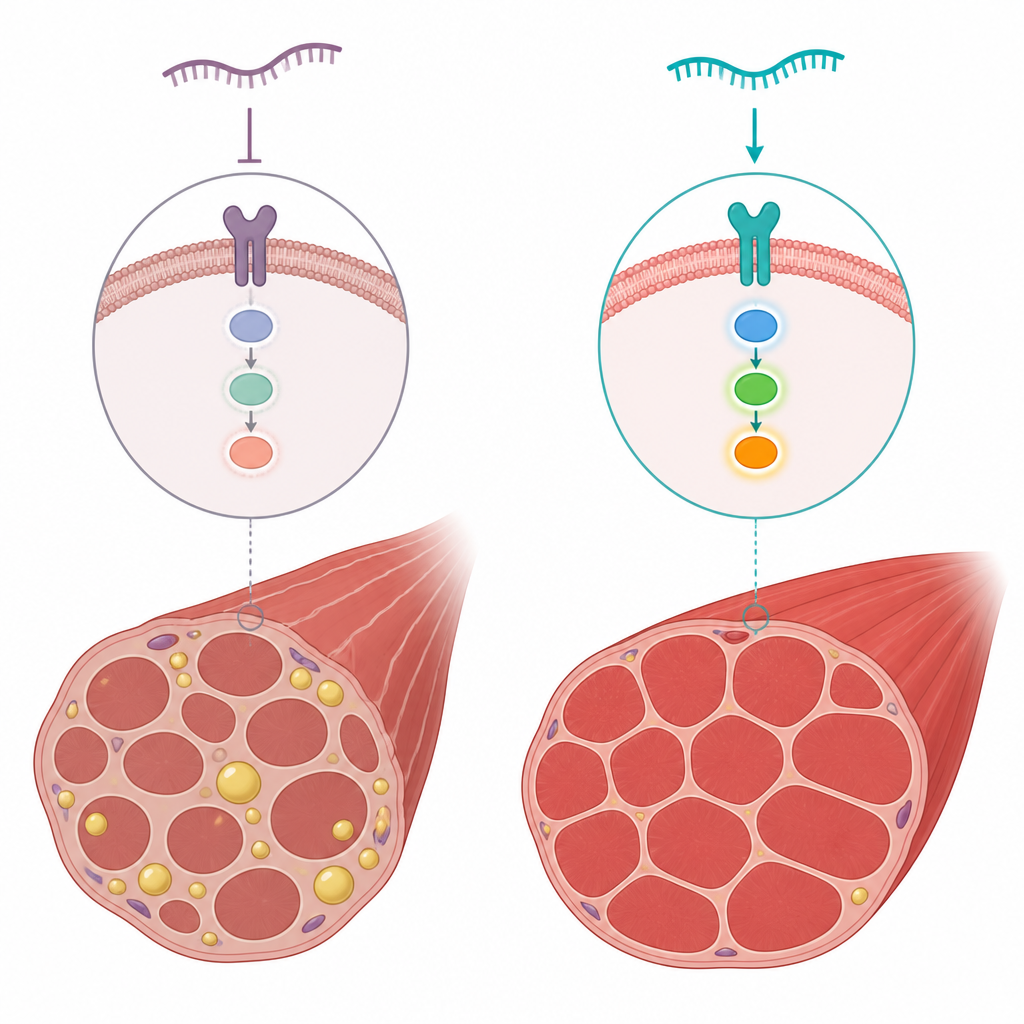
What this means for fighting obesity-related muscle loss
Put simply, this work suggests that cutting calories and doing regular aerobic exercise can help rescue muscles damaged by a fatty diet, at least in rats, by dialing down the miR-130 brake and reviving growth signals driven by IGF-1, Akt, and mTOR. While combining diet and exercise did not give supercharged benefits in this model, both were clearly better than staying inactive on a high fat diet. The discovery that a tiny RNA switch and the PPARγ protein sit at the heart of this process offers scientists new clues for designing future strategies to protect muscle in people living with obesity.
Citation: Zhang, Q., Liu, T. & He, X. Dietary restriction and aerobic exercise alleviate obesity-related skeletal muscle impairment via the miR-130/PPARγ axis and IGF-1/Akt/mTOR signaling activation. Sci Rep 16, 15639 (2026). https://doi.org/10.1038/s41598-026-46630-7
Keywords: obesity, skeletal muscle, dietary restriction, aerobic exercise, microRNA