Clear Sky Science · en
Effects of cotton waste fibers on the strength development and flexural toughness of densified high-strength concrete
Turning waste into stronger building blocks
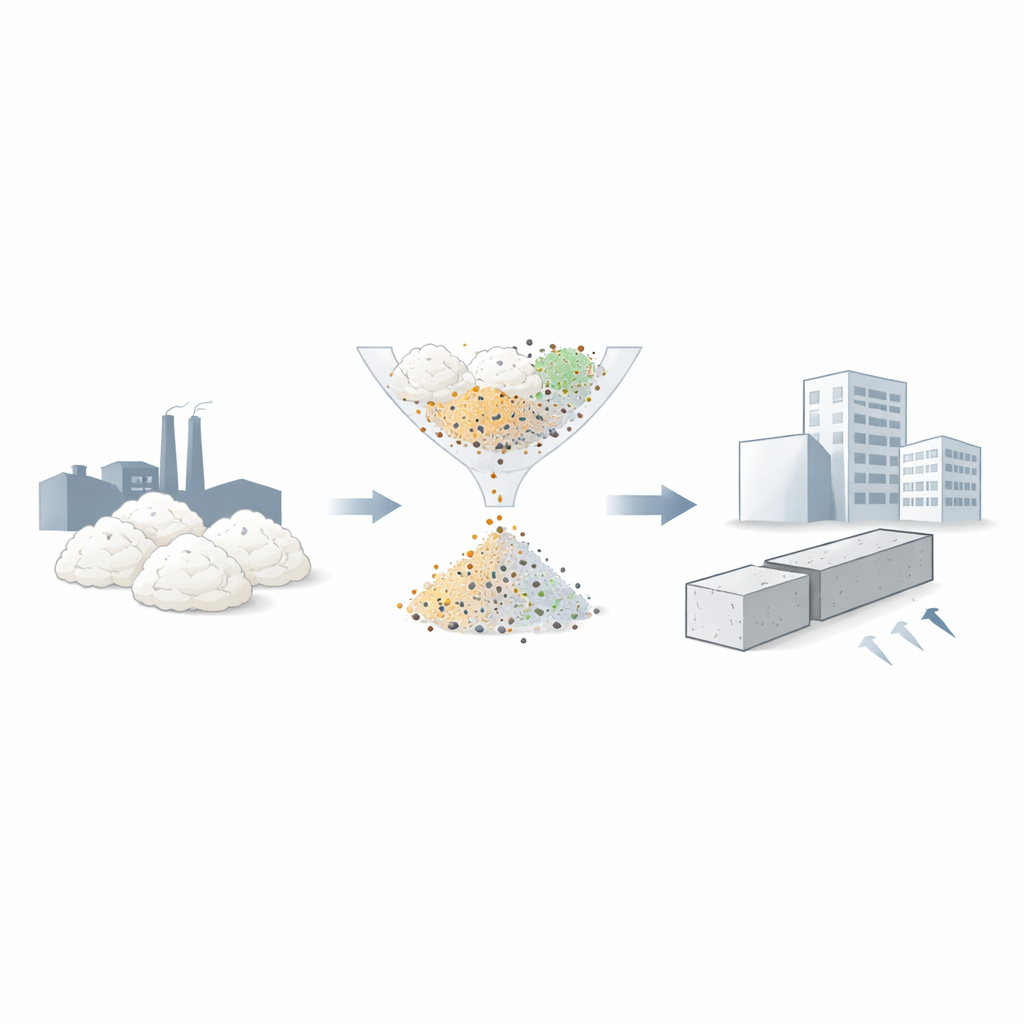
Every year, textile factories generate mountains of cotton scraps that mostly end up in landfills. This study explores a simple but powerful idea: can some of that soft, unwanted cotton be turned into tiny fibers that help concrete resist cracking and use waste more wisely at the same time?
Why cotton fibers in concrete matter
Conventional concrete is strong in compression but tends to crack suddenly when pulled or bent. Once the first crack forms, the material quickly loses its ability to carry more load. Engineers often add fibers to concrete so that, instead of snapping, it can bend and hold together after cracking. The authors focus on reusing sorted cotton waste fibers from textile factories as a new type of micro reinforcement, turning an environmental burden into a useful ingredient in high-strength concrete.
Building a denser, smarter concrete mix
To give the cotton fibers the best chance to work, the team used a special way of choosing the sizes and proportions of sand and stone so that the particles pack together very tightly. This approach, called densified mix design, aims to fill the tiny gaps between grains, leaving less empty space and creating a denser, stronger concrete. The researchers made a series of mixes with the same cement, water, and packed aggregates but with increasing amounts of cotton fibers, from none up to 1.5 percent of the cement weight, then tested how easy the mixes were to place and how their strength evolved over time.
How the fibers changed strength and cracking
Adding cotton fibers did make the fresh concrete stiffer and harder to work with, because the fine fibers absorb water and tangle, but this effect stayed within practical limits up to about three-quarters of a percent fiber content. At this level, the concrete still achieved a small slump suitable for manual placement. More importantly, the packed mix combined with the fibers raised the 28-day compressive strength slightly above the already high strength of the control concrete. Even more striking were the gains in splitting tension and bending strength, which both increased markedly at moderate fiber contents, showing that the waste cotton threads help the concrete resist pulling and bending forces better than before.
From brittle breaks to tougher bending
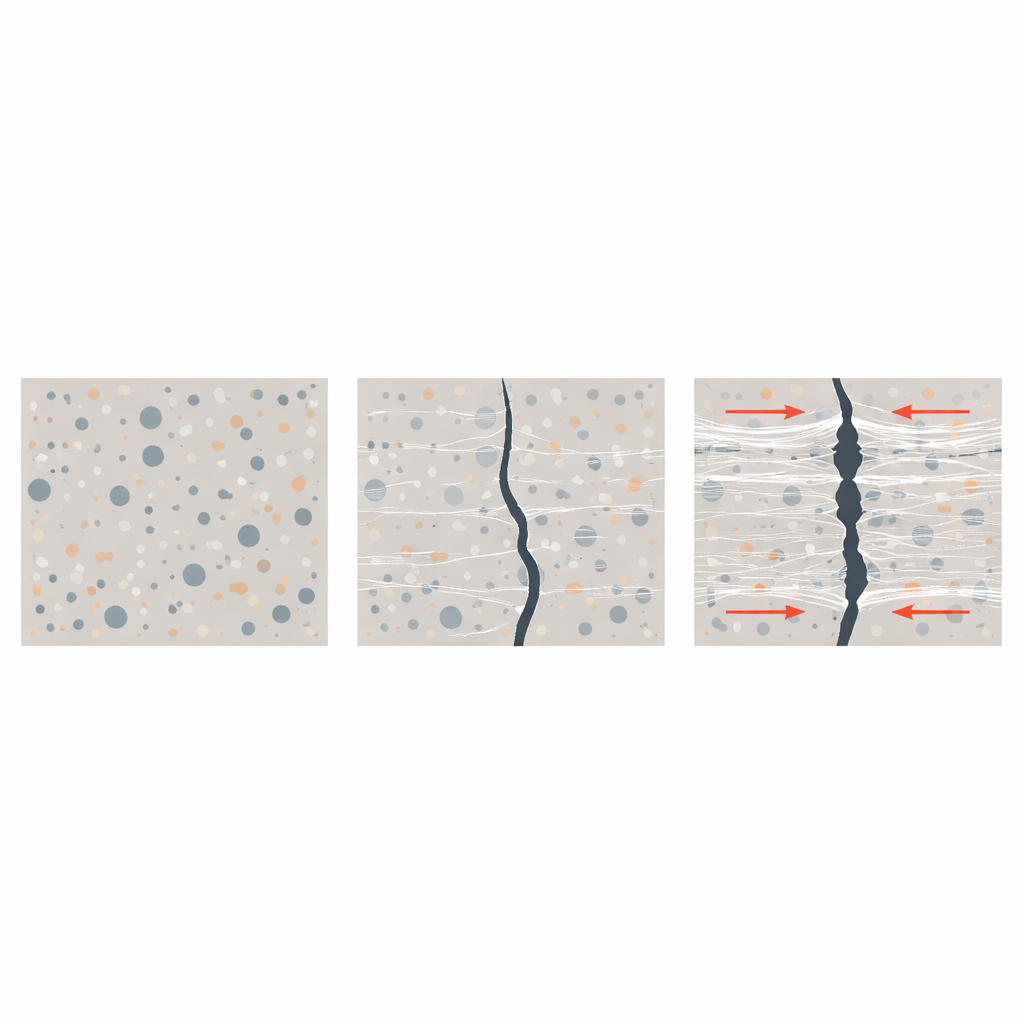
To understand how the concrete behaved after it started to crack, the team tested notched beams in three-point bending and tracked both the opening of the crack and the midspan deflection. Plain concrete beams showed sharp, brittle failure once the crack formed, with no real ability to carry further load. Beams with cotton fibers, in contrast, showed slower crack opening, larger deflections, and significant energy absorption before failure. At about 0.75 percent fiber content, the energy needed to drive a crack through the beam more than doubled compared with plain concrete, indicating a much tougher material. The study also compared two common test standards and found that a newer method gives practical post-crack toughness values, while the older one can still help estimate pre-crack behavior.
What this means for real structures
For everyday readers, the main message is that finely sorted cotton waste, when added in the right amount to a carefully packed high-strength concrete, can slightly boost compressive strength and strongly enhance resistance to cracking and bending. The fibers act like countless tiny stitches that hold cracks back, turning a brittle material into one that fails more gradually and safely. While large-scale use will need better ways to collect and process the fibers, the work shows a clear pathway for transforming textile waste into tougher, more sustainable structural concrete.
Citation: Musyoka, J.K., Gathimba, N., Abuodha, S.O. et al. Effects of cotton waste fibers on the strength development and flexural toughness of densified high-strength concrete. Sci Rep 16, 14668 (2026). https://doi.org/10.1038/s41598-026-46627-2
Keywords: cotton waste fibers, fiber reinforced concrete, high strength concrete, flexural toughness, textile waste reuse