Clear Sky Science · en
Development of gut microbiota composition in captive Asian elephants: a year-long analysis
Why baby elephants’ bellies matter
For Asian elephant calves, survival in captivity is far from guaranteed, with many dying before they are weaned. This study looks inside an unexpected player in their health: the trillions of microbes living in the gut. By tracking these tiny partners month by month through a calf’s first year, researchers show how diet, milk, and close contact with mothers help shape a healthy intestinal community that may support growth and resilience.
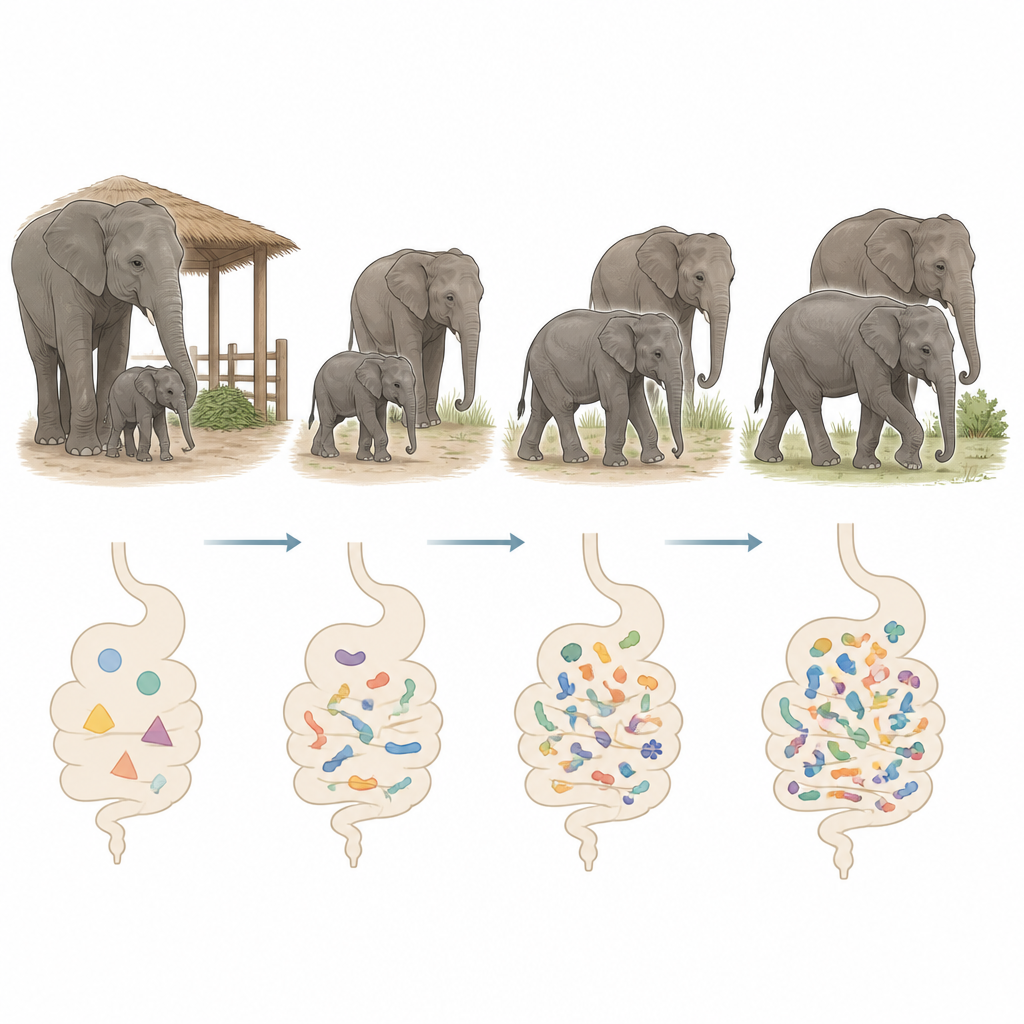
The first year inside a young elephant
The team followed five captive Asian elephant calves in tourist camps in northern Thailand, all housed with their mothers and kept away from tourists during the study. They collected a first stool sample called meconium shortly after birth, then fresh fecal samples every month for a year, along with samples from the mothers when calves were three months old. Using DNA sequencing, the scientists identified which bacteria and other microbes were present and how the community changed as calves moved from an all-milk diet toward grass, leaves, and other solid foods.
Ups and downs in microbial variety
Newborn calves started life with a surprisingly rich and even mix of gut microbes in their meconium. Over the next few months, that richness dipped, reaching a low point between three and six months of age. After that, the number and balance of different microbial species climbed again, approaching the levels seen in adult elephants by about ten to twelve months. Analyses of community similarity showed rapid reshuffling of the gut community during the first six to eight months before it settled into a more stable pattern that more closely resembled the mothers’ gut microbiota.
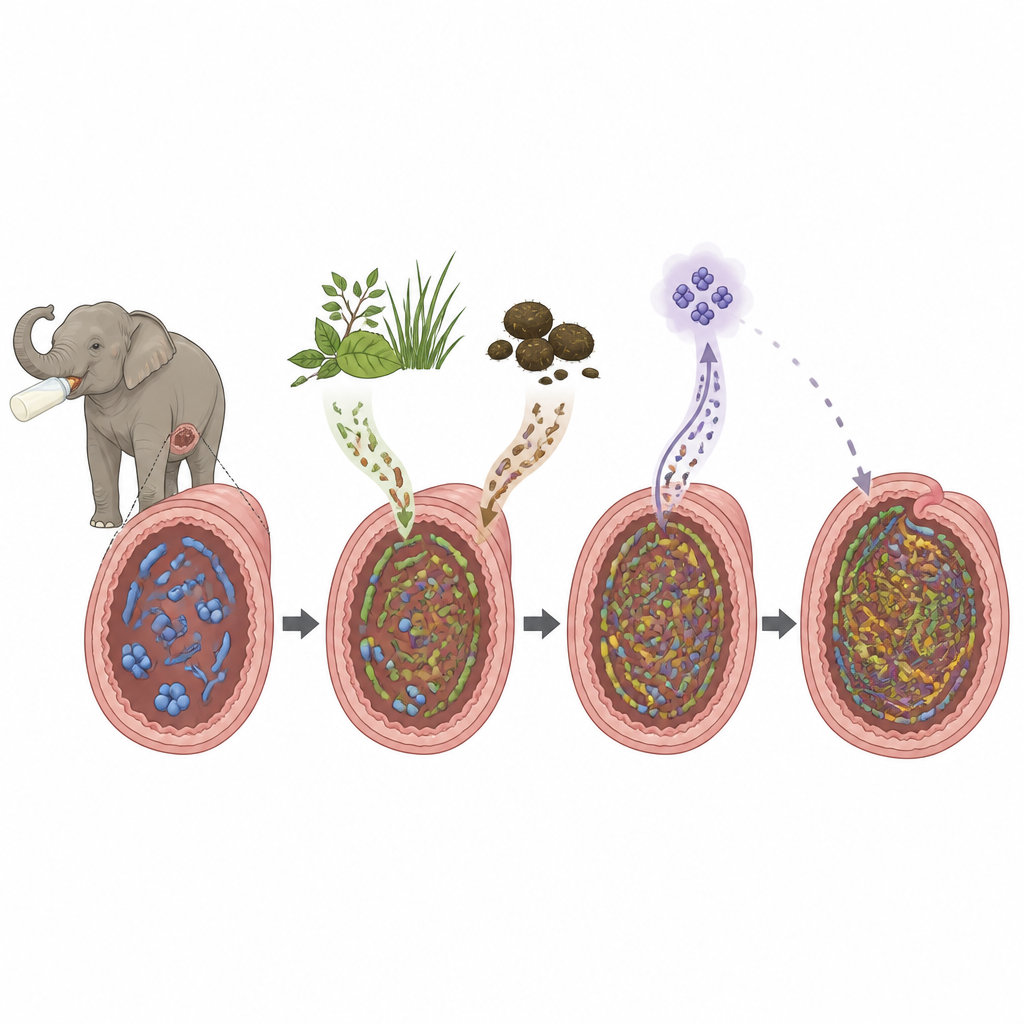
Milk, mothers, and first bites of plants
Early in life, microbes that thrive on milk sugars were especially abundant in the calves’ guts. These included groups similar to those found in human babies and thought to be supported by the unusually high levels of complex sugars in elephant milk. Around four to six months, when calves begin sampling their mothers’ dung and nibbling plant material, the gut community shifted again. Bacteria linked to breaking down tough plant fibers became more common, and a group of methane-producing microbes briefly surged between seven and eight months before declining by the end of the first year. Throughout this period, each calf’s gut community more closely matched its own mother’s than that of other adult females, pointing to a strong maternal influence through close contact, nursing, and shared environment.
Invisible helpers adjusting their jobs
The researchers also examined what these microbes were likely doing, based on known functions of related species. Early on, the gut community was geared toward simple tasks like fermentation and nitrate reduction, echoing patterns seen in human infants. As calves aged and ate more fibrous food, functions related to methanogenesis and fiber breakdown became more prominent, suggesting a shift toward a gut system optimized for extracting energy from grasses and other plants. By around one year, the calves’ gut functions and overall community structure looked broadly similar to those of adult elephants, even though they had not yet reached full microbial diversity.
What this means for young elephants
This work shows that the gut microbiota of captive Asian elephant calves follows a clear developmental path during the first year, driven by milk, gradual introduction of solid plant foods, and close contact with mothers. By twelve months, calves host gut communities that resemble adult elephants but are still building full diversity. Because these microbes help digest food and may support immune defenses, carefully managing diets, nursing, and housing during this critical window could improve calf health and survival, offering zoos and camps new tools to support this endangered species.
Citation: Klinhom, S., Kunasol, C., Sriwichaiin, S. et al. Development of gut microbiota composition in captive Asian elephants: a year-long analysis. Sci Rep 16, 15411 (2026). https://doi.org/10.1038/s41598-026-46586-8
Keywords: elephant calves, gut microbiome, maternal milk, fiber digestion, captive conservation