Clear Sky Science · en
Machine learning–based risk stratification identifies heart failure with preserved ejection fraction as an independent predictor of adverse outcomes in hypertrophic cardiomyopathy
Why this heart study matters
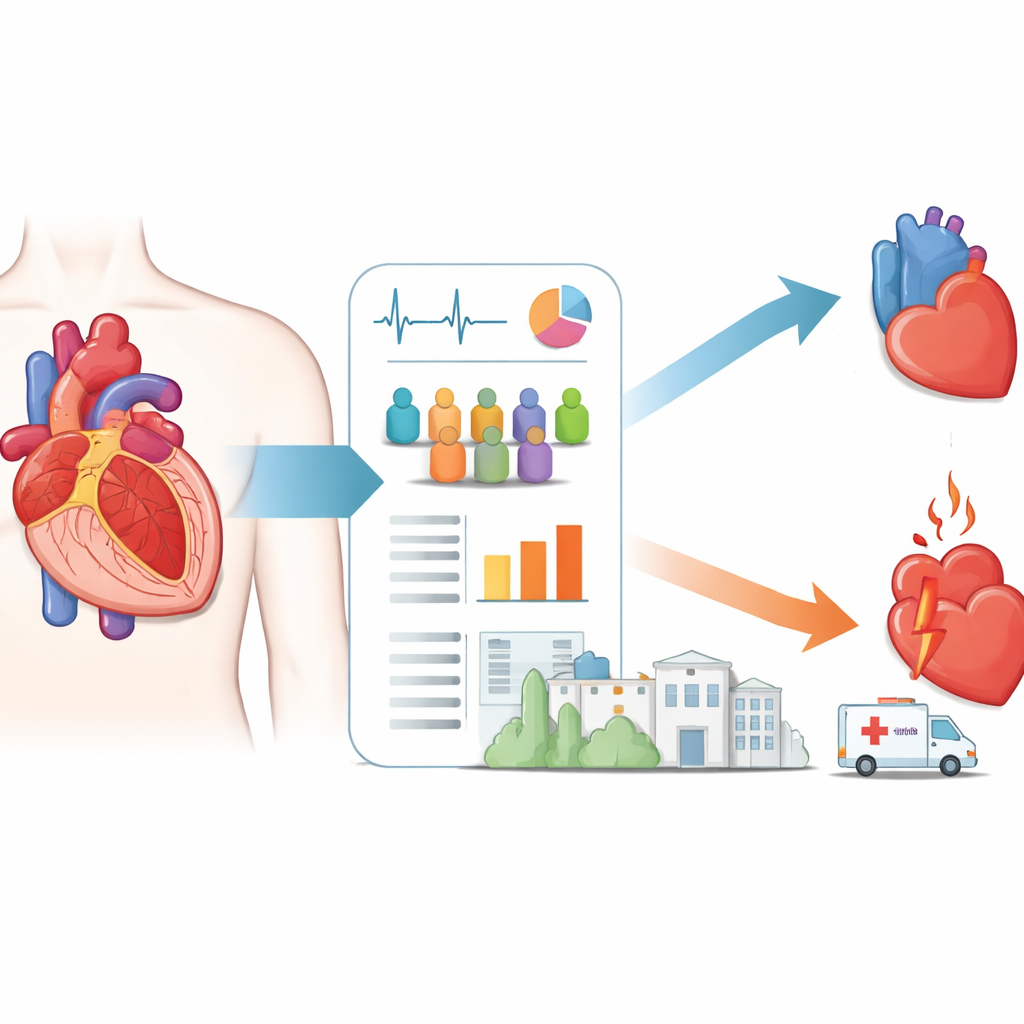
Many people think of heart failure as a weak heart that barely squeezes, but for a large group of patients the heart actually pumps well while still failing them. This study looks at such patients who also have a thickened heart muscle, a condition called hypertrophic cardiomyopathy. By following thousands of people over time and using modern data tools, the researchers show that this form of heart failure is common, dangerous, and can be predicted more precisely than before—insights that could eventually help doctors target care to those who need it most.
A thick but struggling heart
Hypertrophic cardiomyopathy is an inherited disease in which the heart muscle, especially the main pumping chamber, becomes abnormally thick. Even though the squeeze of the heart remains strong, the stiff muscle has trouble relaxing and filling with blood. Many patients develop a type of heart failure in which the measured pumping strength looks normal on scans, yet they feel breathless, tired, or dizzy. This study focused on that pattern, known as heart failure with preserved ejection fraction, asking how often it appears in people with thickened hearts and what it means for their future health.
Who was studied and how
The team analyzed records from 2,651 adults with hypertrophic cardiomyopathy treated at three major hospitals in China over more than a decade. They carefully defined who truly had this preserved-pumping form of heart failure, using not just symptoms but ultrasound measurements showing a stiff, overfilled heart and enlarged upper chamber. Nearly half of all patients met these criteria. To make a fair comparison, the researchers used a matching technique to pair each affected patient with a similar patient who did not have this type of heart failure, balancing factors such as age, other illnesses, and heart structure.
Higher risk that grows with severity
Over several years of follow-up, patients with preserved-pumping heart failure experienced far more problems—deaths or hospital stays for worsening heart failure—than their matched peers. Even after adjusting for other risk factors, they were more than twice as likely to suffer an adverse event. The researchers went beyond a simple yes-or-no label by applying a scoring system that summarizes how strongly a person fits this heart failure pattern. People in the higher-risk tier of that score did markedly worse than those in the lower-risk tier, supporting the idea that this condition exists along a spectrum, and that heavier burden means higher danger.
Signals in the blood and patterns in the data
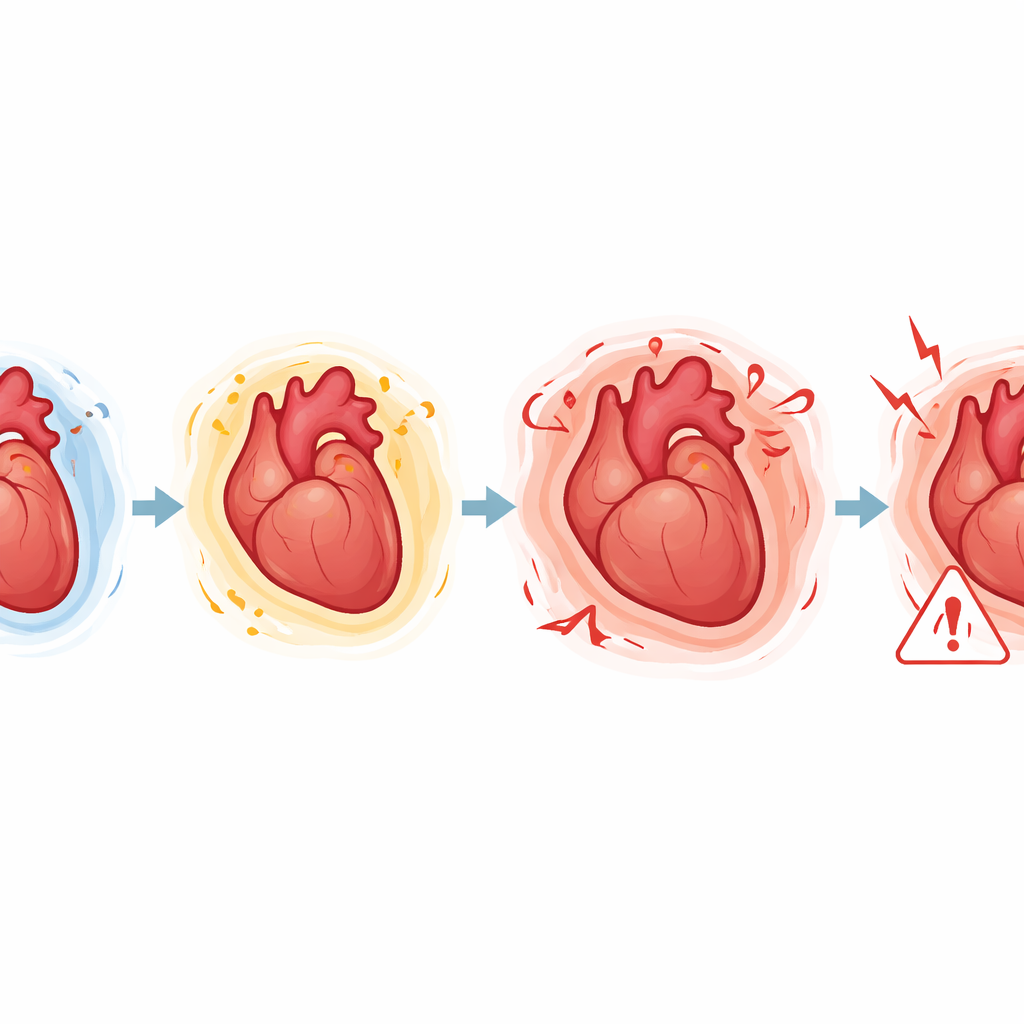
The investigators also examined a blood marker called B-type natriuretic peptide, which reflects how much strain the heart is under. They found that risk did not rise in a straight line: modest increases in this marker added some risk, but once levels became very high, the chance of bad outcomes climbed steeply. To capture such complex patterns, the team built several computer models, including a random forest model, to predict which patients would run into trouble. This model performed best and, when opened up with an explanation technique, highlighted two features as especially important: having preserved-pumping heart failure and having high levels of the strain marker, alongside irregular heart rhythm and kidney problems.
What this means for patients and care
For people living with hypertrophic cardiomyopathy, this study shows that having heart failure despite a seemingly “normal” pumping measure is both common and serious. It is not just a matter of feeling short of breath on a bad day; it reflects a deeper stress on the thickened heart that strongly predicts future hospitalizations and death. By combining careful clinical assessment, a graded score, a sensitive blood test, and interpretable machine learning, the authors outline a more personalized way to gauge risk. With further testing in other hospitals and countries, these tools could help doctors identify high-risk patients earlier, monitor them more closely, and tailor treatments to prevent the worst outcomes.
Citation: Zhang, W., Zhao, H., Tian, Z. et al. Machine learning–based risk stratification identifies heart failure with preserved ejection fraction as an independent predictor of adverse outcomes in hypertrophic cardiomyopathy. Sci Rep 16, 12885 (2026). https://doi.org/10.1038/s41598-026-46573-z
Keywords: hypertrophic cardiomyopathy, heart failure with preserved ejection fraction, cardiac risk prediction, B-type natriuretic peptide, machine learning in cardiology