Clear Sky Science · en
Longer leukocyte telomere length increases the odds of premature rupture of membranes: a cross-sectional study based on UK Biobank
Why tiny caps on our DNA matter in pregnancy
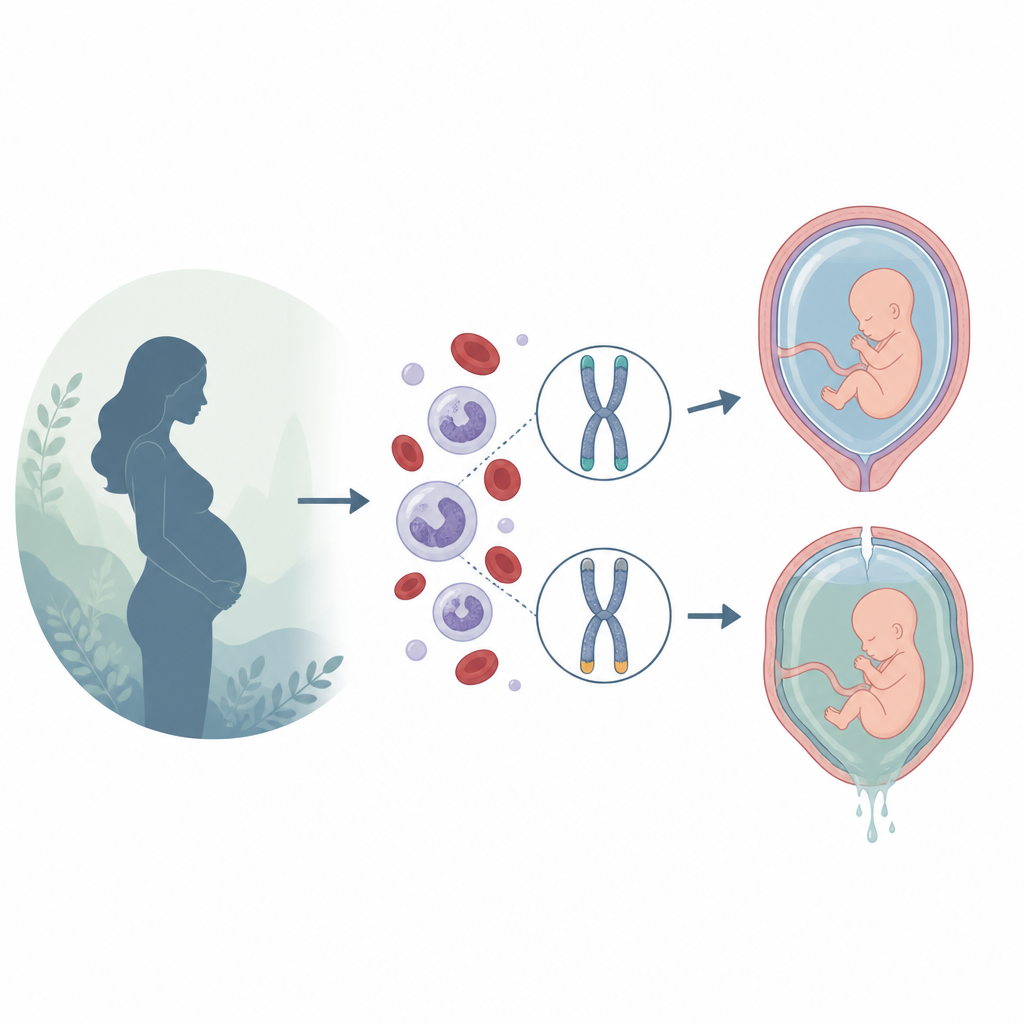
Pregnancy may feel far removed from molecular biology, but the health of a baby’s fluid filled sac could be linked to microscopic structures at the ends of our chromosomes. This study looks at whether the length of these protective caps, measured in white blood cells, is connected to a serious pregnancy complication known as premature rupture of membranes, when the “water breaks” earlier than it should.
A closer look at a common pregnancy complication
Premature rupture of membranes happens when the sac surrounding the baby breaks before labor begins. It affects around one in ten to one in five pregnancies worldwide and can trigger preterm birth, infections, breathing problems, and even brain injury in newborns. Mothers are also at higher risk of serious infections and other complications. Finding early warning signs for this condition could help doctors identify women who need extra monitoring or care.
The protective caps at chromosome ends
Telomeres are like plastic tips on shoelaces, shielding chromosome ends from damage. Over time they usually shorten, and their length is often used as a marker of cellular aging and overall health. In this study, the researchers focused on leukocyte telomere length, measured from white blood cells in a large UK health resource called the UK Biobank. Earlier work has linked shorter telomeres to heart disease, diabetes, and some pregnancy problems, and longer telomeres to higher risks of certain cancers and reproductive disorders.
What the UK Biobank data revealed
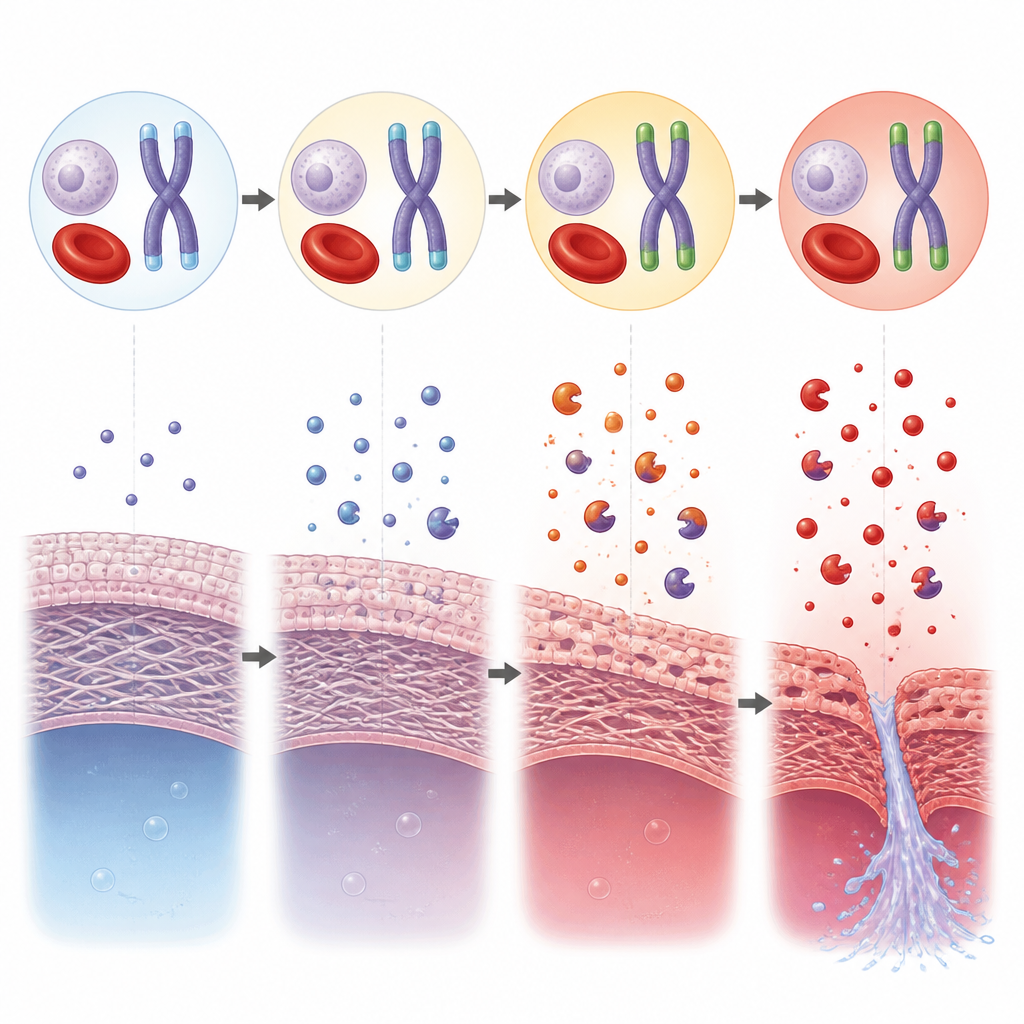
The team analyzed data from 170,841 women who had ever been pregnant. They compared those who reported premature rupture of membranes with those who did not, while also considering age, body size, lifestyle habits, and education. Using flexible statistical models, they found a clear but non simple curve shaped relationship between telomere length and the odds of membrane rupture. Overall, women with longer telomeres in their white blood cells were more likely to have experienced premature rupture of membranes than women with shorter telomeres, even after adjusting for many other factors.
Who is most affected by this link
When the researchers examined different subgroups, they found that age and education level changed how strongly telomere length was related to the risk of premature rupture. The positive link between longer telomeres and membrane rupture was especially marked among women aged 45 years or older and among certain education categories. Other traits, such as smoking, drinking, weight, and general health ratings, did not show the same clear modifying effect. These patterns suggest that biological aging, life course, and social factors may interact in complex ways.
Possible biological pathways behind the pattern
The study did not test mechanisms directly, but the authors discuss several ideas. Longer telomeres have been associated with higher levels of oxidative stress and chronic inflammation in some research. During pregnancy, heightened inflammatory activity around the fetal membranes can weaken their structure. Other work has linked telomere length with estrogen levels, and estrogen may influence enzymes that break down supporting tissue in the membranes and promote cell death. Together, these processes could thin and weaken the sac, making it more likely to rupture too early.
What this means for expecting families
In simple terms, the findings suggest that women whose white blood cells have longer chromosome caps may face somewhat higher odds of their water breaking too early, and that this pattern depends partly on age and education. The work does not mean telomere length causes premature rupture or that testing telomeres should guide pregnancy care today. Instead, it highlights a new biological clue that may help scientists untangle why the membranes sometimes fail and could eventually point to better ways to predict or prevent this complication.
Citation: Xiao, C., Su, Y., Peng, C. et al. Longer leukocyte telomere length increases the odds of premature rupture of membranes: a cross-sectional study based on UK Biobank. Sci Rep 16, 15320 (2026). https://doi.org/10.1038/s41598-026-46566-y
Keywords: telomere length, premature rupture of membranes, pregnancy complications, leukocytes, UK Biobank