Clear Sky Science · en
Association between platelet count and 30-day mortality in community-acquired pneumonia patients receiving systemic glucocorticoids therapy
Why a simple blood count matters
When people with weakened immune systems develop pneumonia, doctors need quick ways to judge who is at highest risk of dying soon after admission. This study suggests that a routine blood test, the platelet count, may offer a simple clue to short term survival in adults with community-acquired pneumonia who are already taking steroid medicines.
A common lung infection in vulnerable patients
Community-acquired pneumonia is a lung infection caught outside the hospital and remains a major cause of illness and death worldwide. Many people who develop it also live with long term diseases such as chronic lung problems, kidney disease, or autoimmune disorders. To control these conditions, doctors often prescribe systemic glucocorticoids, a class of steroid drugs that dampen the immune system. While steroids help control harmful inflammation, they can also weaken defenses against infection, making pneumonia more dangerous and harder to predict with standard risk scores.
Platelets as tiny helpers in infection
Platelets are best known for helping blood to clot when we are injured, but they also play roles in inflammation, immune defense, and keeping blood vessels healthy. Because platelet count is measured in almost every hospitalized patient, researchers wondered whether it might act as a simple signal of the body’s ability to respond to infection in people whose immune systems are suppressed by steroids. Earlier work in other diseases had linked unusually low or high platelet counts to worse outcomes, but the specific situation of steroid treated pneumonia had not been closely examined.
How the study was carried out
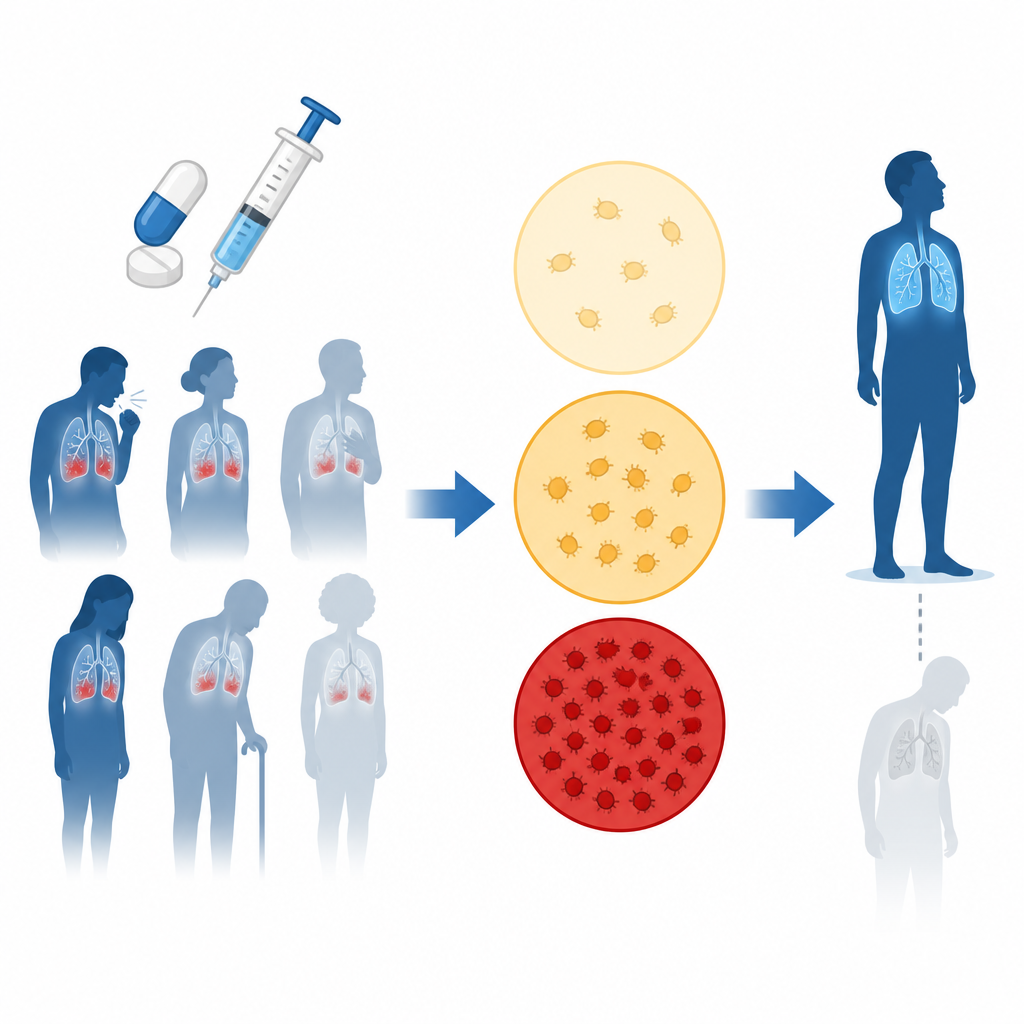
The team used detailed data from 614 adults in six hospitals in China who had community-acquired pneumonia and had been taking systemic glucocorticoids before admission. Everyone had a platelet count measured within 24 hours of arrival. Researchers divided patients into three groups based on how low, medium, or high their platelet counts were. They then tracked who survived in the first 30 days and used statistical models to compare death rates between groups while adjusting for age, other illnesses, lung function, kidney function, signs of infection, and intensive care treatments.
Higher platelet count linked to better survival
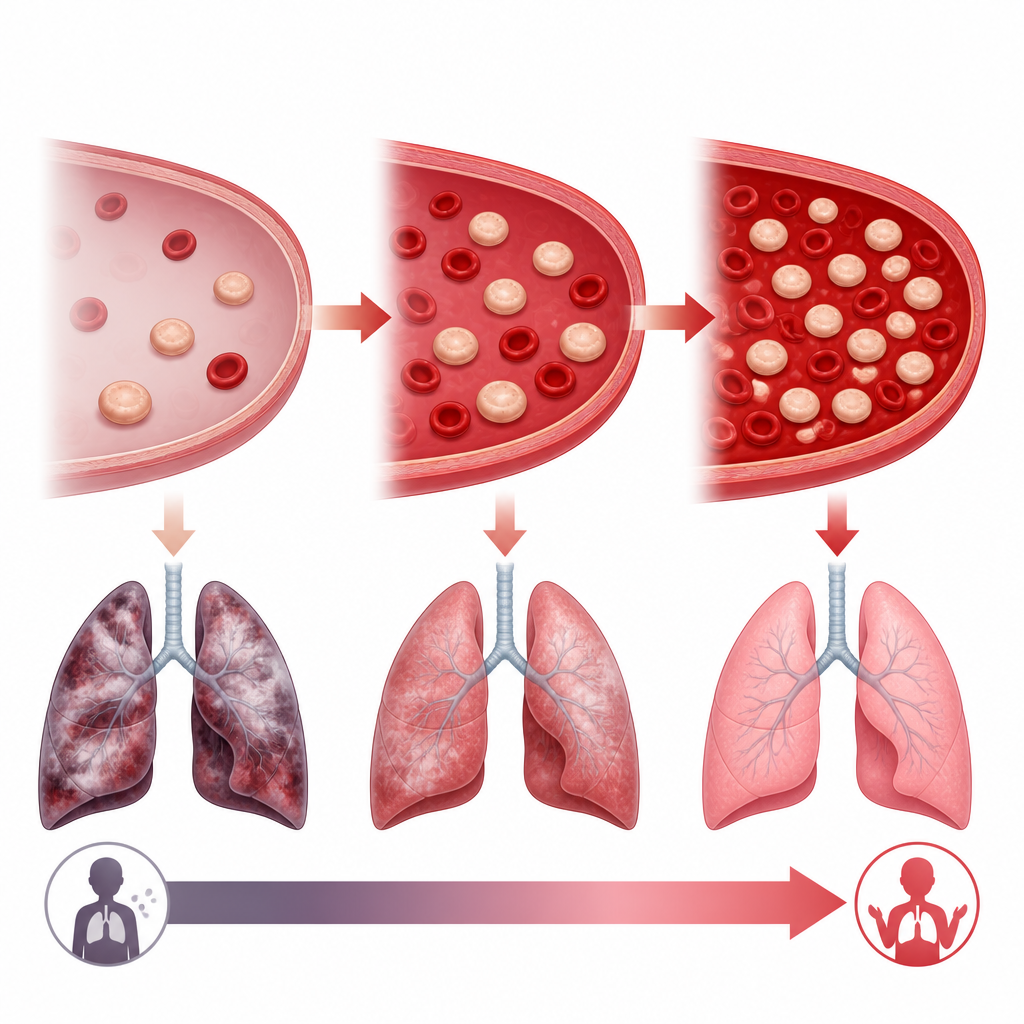
The results showed a clear pattern: patients who arrived with higher platelet counts were less likely to die within 30 days. When platelets were treated as a continuous measure, every modest step up in count was tied to a small but meaningful drop in the risk of death. Compared with those in the lowest third, patients in the highest third of platelet counts had about half the 30 day mortality. Survival curves over time also separated early, with the high platelet group maintaining the best survival. Analyses that allowed for curved relationships instead of straight lines still supported a simple, steady link between more platelets and lower risk in this steroid treated population.
Who benefited the most
The protective link between higher platelet count and lower death risk appeared across many subgroups, including men and women, older and younger adults, and people with or without diabetes or kidney disease. An important exception was the presence of chronic lung disease. In patients with long standing lung problems, each rise in platelet count was strongly associated with better survival, while in those without chronic lung disease the association was weaker and not clearly different from no effect. Sensitivity tests that removed patients with liver cirrhosis or leukemia, conditions that strongly affect blood counts, did not change the overall message.
What this could mean for patients
For adults who arrive at the hospital with pneumonia while taking systemic steroids, a simple platelet count at admission may help doctors judge short term risk in addition to existing scoring tools. In this group, a higher platelet count seems to signal a more resilient blood and immune system and is associated with a better chance of surviving the first month. While the study cannot prove cause and effect and involves a specific patient group, it points to platelet count as an accessible marker that could support early decisions about monitoring and treatment in vulnerable people with pneumonia.
Citation: Li, C., Ao, T., Huang, Y. et al. Association between platelet count and 30-day mortality in community-acquired pneumonia patients receiving systemic glucocorticoids therapy. Sci Rep 16, 15605 (2026). https://doi.org/10.1038/s41598-026-46565-z
Keywords: platelet count, community-acquired pneumonia, glucocorticoids, mortality risk, prognostic marker