Clear Sky Science · en
New forms of foreign trade and county-level air pollution
Why cleaner air and online trade belong in the same story
Air pollution is not just a city skyline problem; it seeps into daily life, raising health risks for millions. This study looks at a surprising ally in the fight for cleaner air: new forms of foreign trade built around cross-border online shopping and digital platforms. By tracking how these digital trade zones roll out across China’s counties, the researchers ask a simple but important question: can smarter ways of moving goods around the world also make the air we breathe safer?
From smokestacks to screens
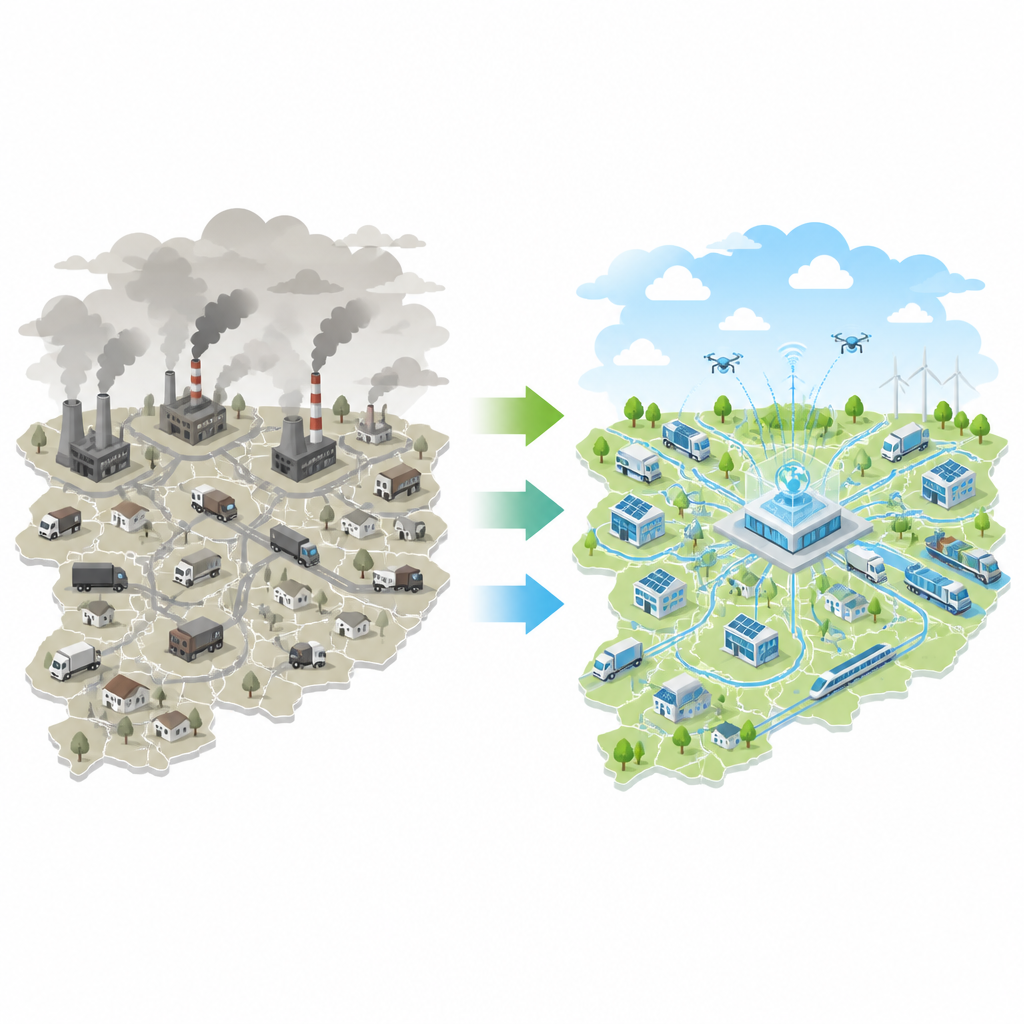
China’s rapid growth has come with heavy air pollution, especially tiny particles known as PM2.5 that can lodge deep in the lungs and bloodstream. At the same time, a new style of trade has emerged, driven by internet platforms that connect small businesses directly with overseas buyers. These cross-border e-commerce pilot zones concentrate digital services, logistics hubs, tax rules, and customs reforms in specific cities, and their influence spills over to surrounding counties. Unlike traditional trade built on bulk shipments and energy-hungry factories, this new system relies on data, software, and leaner supply chains. The study explores whether this digital model can ease the pollution burden at the county level, where people actually live and work.
Following the rollout across thousands of counties
To test the link between new trade and air quality, the authors assemble data from 1,786 Chinese counties between 2000 and 2021. Some counties fall under the influence of cross-border e-commerce pilot zones at different times, creating a natural setting to compare “before” and “after” against similar places that are not yet affected. Using a statistical approach called difference-in-differences, they track changes in PM2.5, focusing not just on average levels but also on how wildly pollution spikes from day to day. This variability matters because sudden surges in dirty air can trigger acute health problems even when annual averages move only slightly.
How online trade reshapes factories and ideas
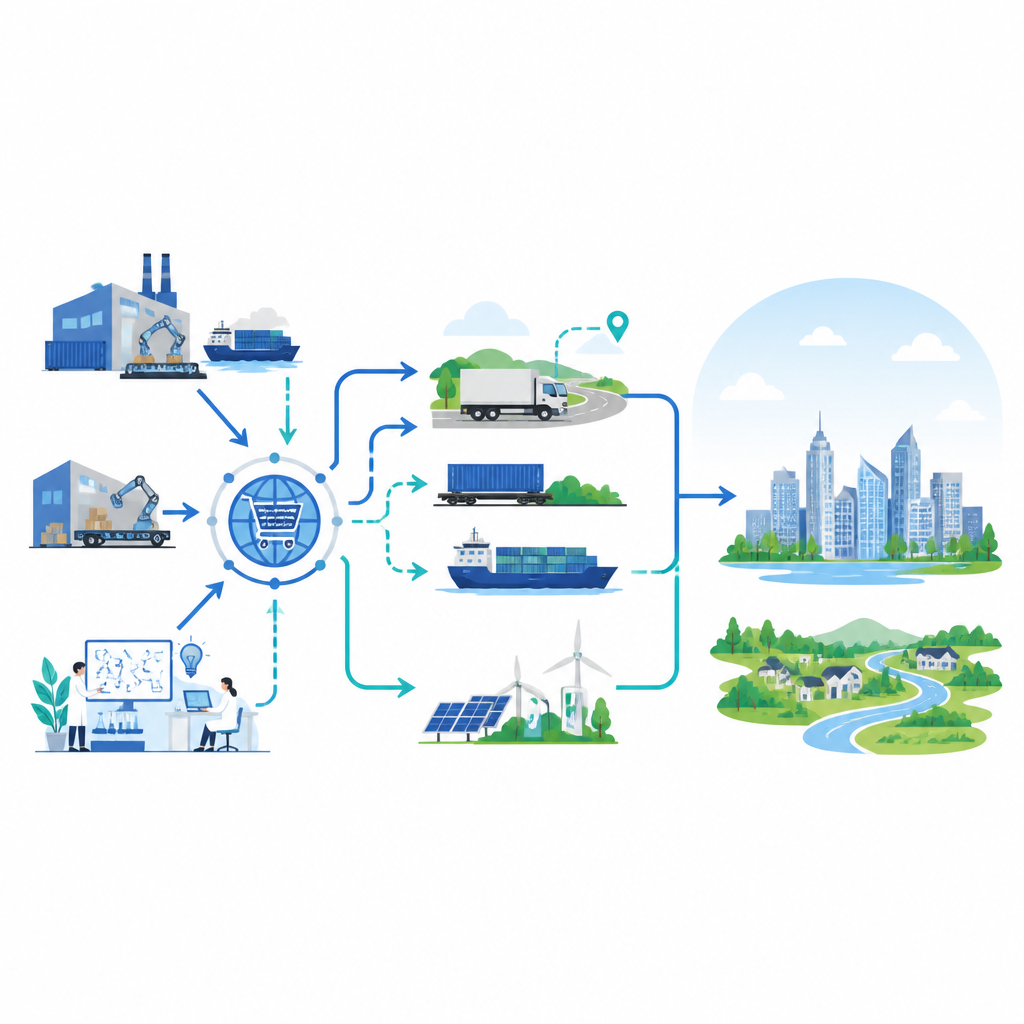
The results show that counties touched by the new trade zones experience a clear decline in PM2.5, and the effect lasts over time. The study then asks why. One pathway is export growth combined with a shift toward cleaner, higher value products. Digital platforms lower the cost of finding foreign buyers, handling payments, and clearing customs, letting more efficient and better-run firms expand. These firms are more likely to afford cleaner equipment and meet stricter standards abroad, so the pollution produced per unit of output tends to fall. A second pathway is technological innovation. The pilot zones foster clusters of logistics providers, financial services, and data specialists, and firms respond by filing more patents, especially for practical, quickly adopted technologies that improve energy efficiency and pollution control.
Why rules can help or hinder clean trade
Pollution does not fall in a policy vacuum, so the authors examine how different types of environmental rules interact with the new trade model. They distinguish between strict command-and-control rules, price-based tools like pollution taxes, and the softer pressure of public concern. The clean-air benefits of digital trade are strongest where formal orders and public pressure are relatively low, but market-based incentives such as higher pollution taxes are strong. In those settings, firms have room to innovate while still feeling a financial push to cut emissions. When heavy-handed regulations or multiple strong rule systems overlap, however, the extra environmental gains from the new trade model tend to vanish, as businesses focus on basic compliance rather than deeper upgrades.
What this means for everyday air
For a non-specialist reader, the takeaway is that how we trade goods across borders can either worsen or relieve the smog outside our window. This study finds that when cross-border e-commerce is combined with smart, market-based environmental incentives, counties can enjoy more exports and cleaner air at the same time. But if regulations become too rigid or layered, they can unintentionally smother the environmental potential of new business models. Designing the right mix of digital trade policies and environmental rules could therefore play a quiet yet important role in helping communities move closer to the health goals set out in the United Nations Sustainable Development Agenda.
Citation: Li, M., Zhong, S. New forms of foreign trade and county-level air pollution. Sci Rep 16, 15408 (2026). https://doi.org/10.1038/s41598-026-46561-3
Keywords: air pollution, cross-border e-commerce, PM2.5, environmental regulation, technological innovation