Clear Sky Science · en
The epigenetic role of ADRB3 DNA methylation in post-bariatric energy expenditure for women with obesity: a longitudinal observational study
Why this study matters for women with obesity
Many women who undergo weight loss surgery wonder why some people keep weight off more easily than others. This study looks inside the body at tiny chemical tags on a gene that helps control how much energy we burn at rest. By following women before and after gastric bypass surgery, the researchers show that weight loss is linked not only to changes on the scale, but also to subtle shifts in how our genes are switched on or off, which may help explain differences in recovery and long term success.
Weight loss surgery and everyday energy burn
Obesity is a major health challenge worldwide and is especially common among women. When lifestyle changes are not enough, bariatric surgery, such as Roux-en-Y gastric bypass, can offer large and lasting weight loss. This operation reshapes the stomach and small intestine, which reduces food intake and alters digestion and hormone signals. Because resting metabolic rate makes up most of the calories we burn each day, the authors focused on how this surgery affects that baseline energy use and related blood markers in women with severe obesity.

Following women through surgery and recovery
The team studied sixteen women with severe obesity before and six months after gastric bypass. They measured body weight, waist size, body fat and lean mass, blood fats and sugar, and resting metabolic rate with a device that tracks oxygen use and carbon dioxide release while the person lies quietly. Blood samples were used to examine chemical marks on DNA, focusing on a gene called ADRB3, which helps control fat breakdown and heat production in fat tissue. The researchers also looked at several other genes involved in energy use to see whether changes were broad or focused.
What changed in body and blood
Six months after surgery, the women had striking improvements in their physical and metabolic health. Body weight fell by more than 20 percent, moving them on average from very severe to milder obesity. Waist size and body fat dropped sharply, while the share of lean tissue in the body rose. Fasting blood sugar, total cholesterol, and triglycerides all improved, even though these markers had not been seriously abnormal before surgery. As expected, the number of calories burned at rest went down in absolute terms, because smaller bodies need less energy. However, when resting metabolism was divided by body weight, it actually increased, suggesting that each kilogram of body tissue was now burning slightly more energy than before.
Gene switches that shift after surgery
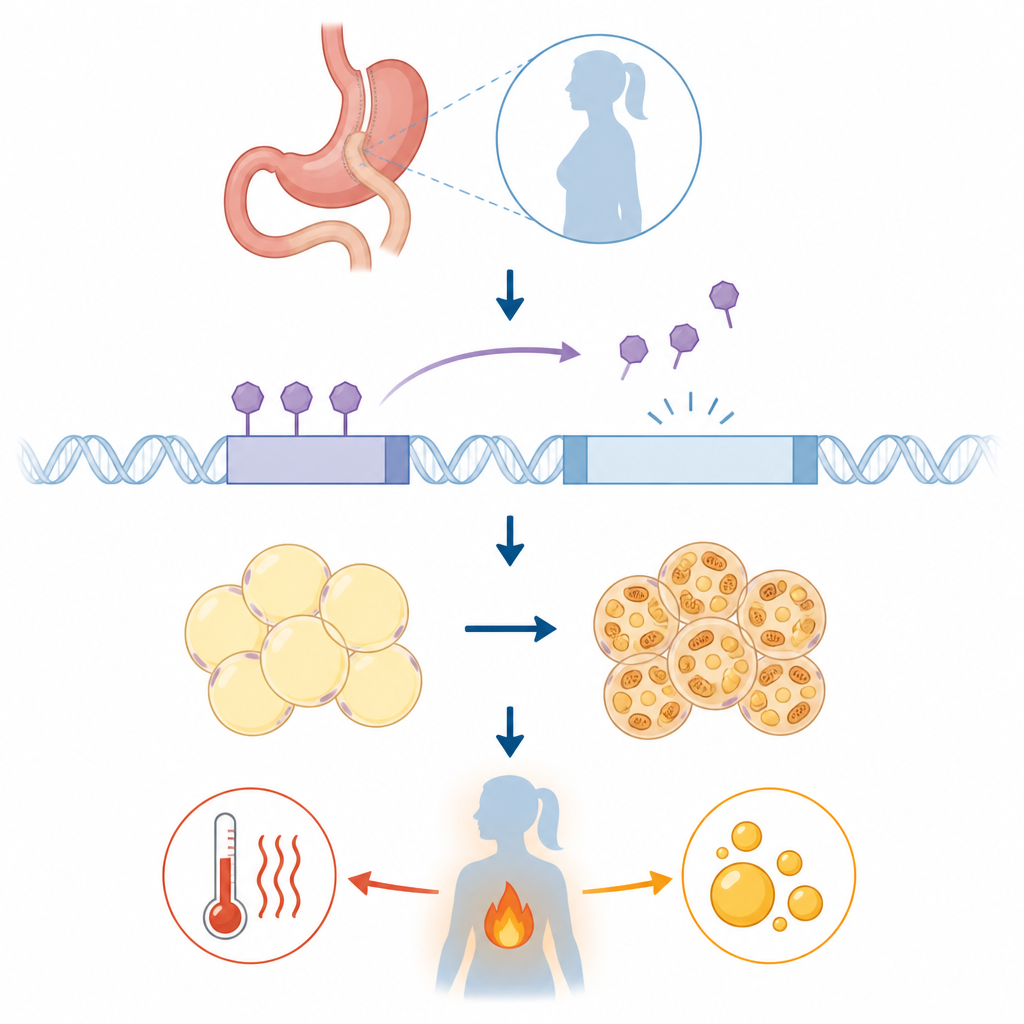
The most novel findings came from the DNA analysis. Within the ADRB3 gene, two specific sites showed altered chemical tagging after surgery, and overall the gene became less methylated, a pattern often linked with greater gene activity. Other energy related genes examined did not show consistent changes, pointing to a selective effect on ADRB3. After surgery, women with lower methylation of ADRB3 tended to have higher oxygen use, higher carbon dioxide production, and higher resting metabolic rate. Statistical models suggested that variation in ADRB3 methylation explained more than one third of the differences in resting metabolism between women, hinting that these tiny chemical shifts may meaningfully shape how their bodies burn energy.
What this could mean for future obesity care
To a lay reader, the main message is that gastric bypass surgery does more than reduce stomach size. It also appears to “retune” a key gene involved in fat burning in women, which in turn relates to how many calories they burn at rest after weight loss. While the study is small and limited to blood samples from women only, it suggests that epigenetic markers on ADRB3 could one day help doctors understand who is most likely to benefit from surgery or who might need extra support to maintain weight loss. In simple terms, the work links changes in body shape, blood tests, and invisible switches on DNA into one picture of how surgery reshapes metabolism.
Citation: Diani, L.M., Watanabe, L.M., Noronha, N.Y. et al. The epigenetic role of ADRB3 DNA methylation in post-bariatric energy expenditure for women with obesity: a longitudinal observational study. Sci Rep 16, 15555 (2026). https://doi.org/10.1038/s41598-026-46559-x
Keywords: bariatric surgery, women obesity, resting metabolic rate, DNA methylation, ADRB3 gene