Clear Sky Science · en
Engineering novel ceramic metal oxides with residual carbon for efficient sequestration of Auramine O from wastewater
Why cleaning up colored water matters
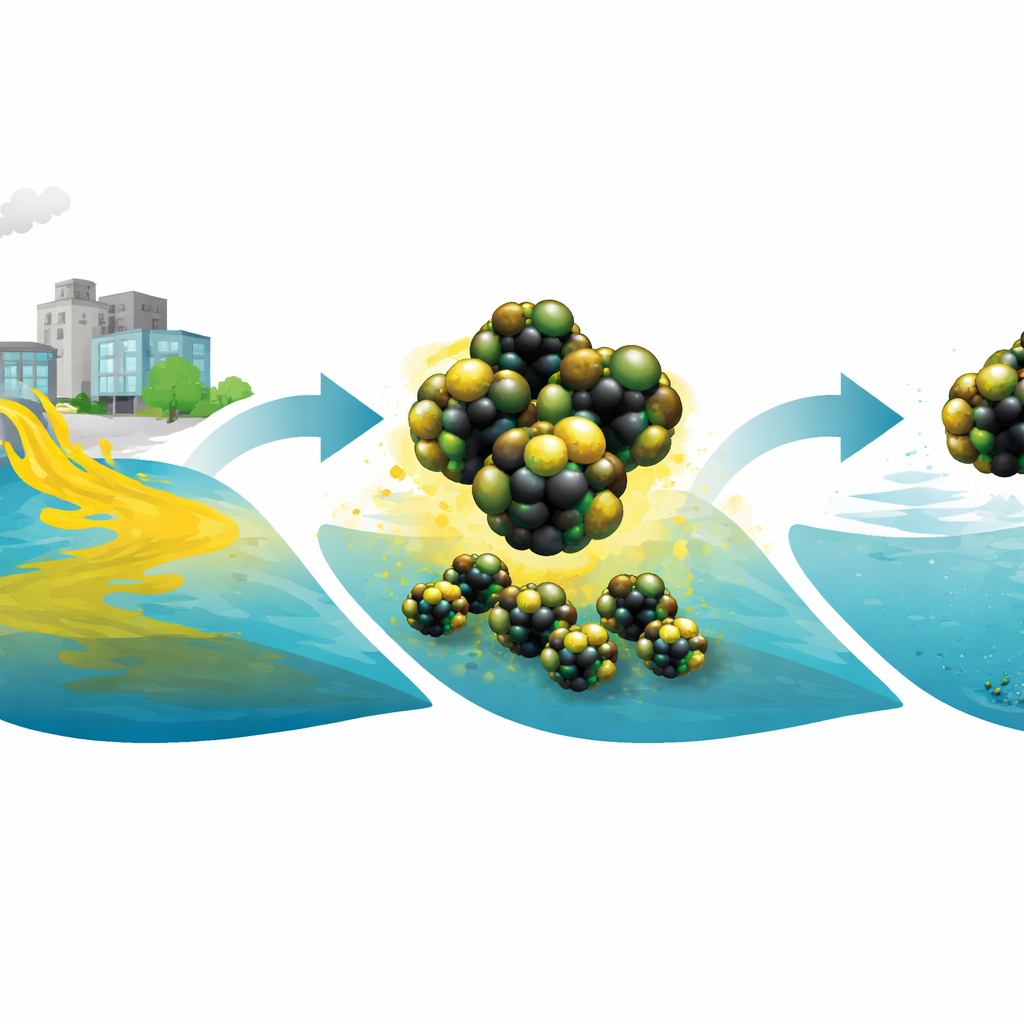
Brightly colored wastewater from factories and laboratories may look like just an eyesore, but the dyes that give it that color can quietly damage rivers, lakes, and even our health. One such dye, Auramine O, is widely used for textiles and biological stains and is notoriously hard to break down once it reaches the environment. This study explores a new family of tiny ceramic–carbon particles designed to pull Auramine O out of water efficiently, offering a simple and reusable way to make polluted water safer.
A stubborn dye in our water
Auramine O is a positively charged yellow dye that lingers in water, blocks sunlight, and disrupts the balance of oxygen that aquatic plants and animals need. It can build up in living organisms and is linked to irritation and damage to organs in humans and animals. Conventional wastewater treatments—such as biological degradation, filtration membranes, or advanced chemical oxidation—often struggle with such resilient dyes, or they demand costly equipment and chemicals. Among the available options, “adsorption,” where pollutants stick to the surface of a solid material and can later be stripped off, stands out as a straightforward and flexible approach, especially if we can design solids that hold a lot of dye and survive many cleaning cycles.
Building smart cleaning grains
The researchers used a chemistry route called a Pechini sol–gel method to build complex, nanoscale ceramic grains containing copper, magnesium, chromium oxides, and a touch of carbon. By carefully mixing metal salts with organic molecules and then heating the resulting gel, they created two related materials. One, heated to 600 °C, contained copper oxide and a stable spinel phase called magnesium chromite plus residual carbon (named MCC600). The other, heated to 800 °C, added magnesium oxide to this mix (MCC800). Detailed imaging and structural tests showed that MCC600 consists of finer, more porous clusters of tiny particles, while MCC800 has larger, more compact grains with fewer open pores and less carbon. This difference in texture and composition turned out to strongly influence how well each material captures dye.
How the tiny grains grab dye
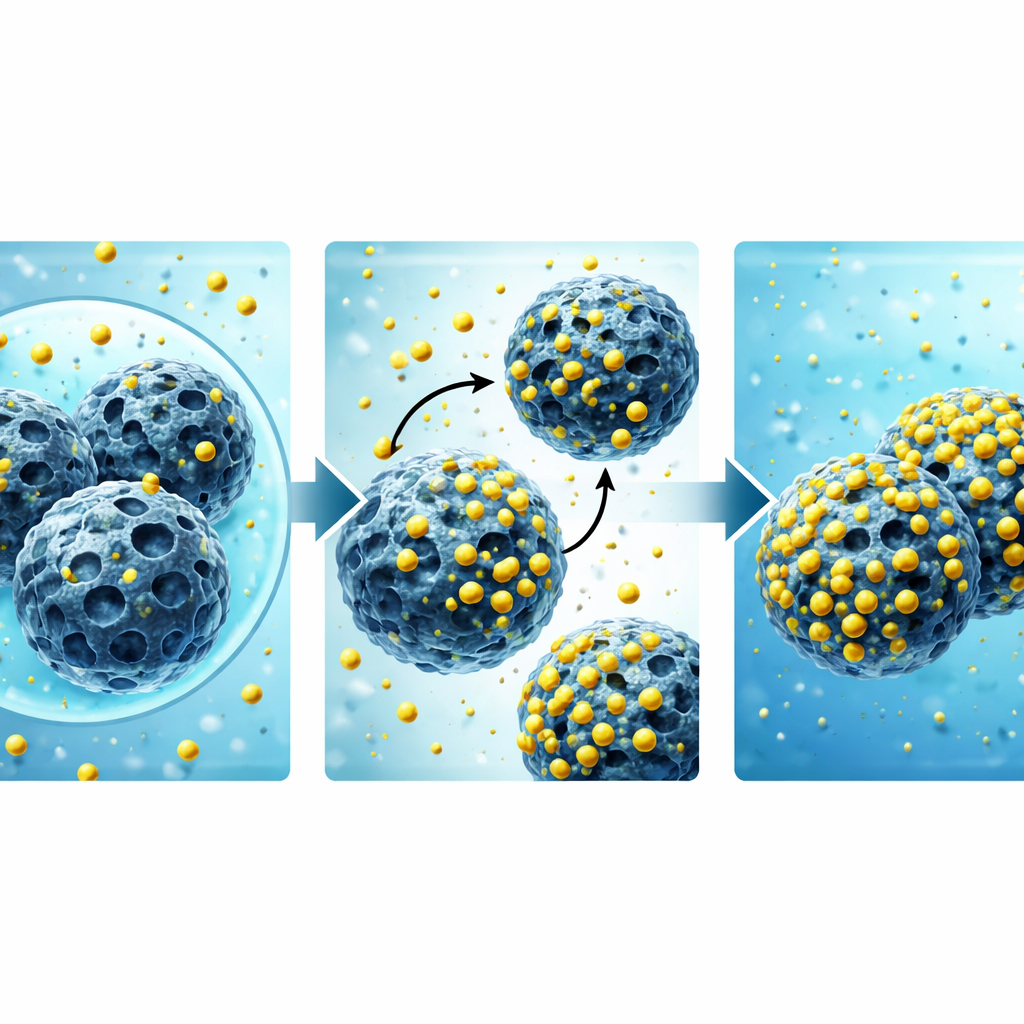
To see how these powders clean water, the team stirred them with Auramine O solutions and tracked how much dye disappeared from the liquid. MCC600 could hold up to about 442 milligrams of dye per gram of material, while MCC800 reached roughly 299 milligrams per gram—both far higher than most previously reported adsorbents for this dye. The dye removal worked best in alkaline water (around pH 10), where the particle surfaces become negatively charged and strongly attract the positively charged dye. Spectroscopic fingerprints showed that the dye’s aromatic rings interact with carbon domains, and its charged groups interact with oxygen-containing sites on the oxides. In simple terms, the grains rely mainly on electrostatic attraction, gentle physical binding, and stacking between flat carbon regions and the dye’s ring-shaped structure, rather than permanent chemical reactions.
Performance under real-world conditions
Beyond ideal lab solutions, the materials were tested in the presence of common salts and other dyes, and even in genuine laboratory wastewater fortified with Auramine O. Competing ions like sodium, calcium, and sulfate had only modest effects, and even when another cationic dye was present, the new particles still removed large amounts of Auramine O. Importantly, the captured dye could be almost completely washed off using a simple acid rinse, allowing the same batch of particles to be reused at least five times with only a small drop in performance. Structural checks after cycling confirmed that the ceramic framework stayed intact and did not leach its metal components into the water.
What this means for cleaner water
This work shows that carefully engineered ceramic–carbon nanohybrids can act like highly efficient, reusable sponges for stubborn dyes in water. By combining multiple oxide phases with residual carbon in one particle and tuning the heating conditions, the researchers created a material (MCC600) that offers exceptional dye uptake, works in realistic wastewater, and can be refreshed with a straightforward acid wash. For non-specialists, the key message is that smartly designed microscopic grains can deliver powerful, low-waste cleanup of colored pollutants, pointing toward more practical and scalable solutions for keeping our water clear and safe.
Citation: Alghanmi, R.M., Abdelrahman, E.A. Engineering novel ceramic metal oxides with residual carbon for efficient sequestration of Auramine O from wastewater. Sci Rep 16, 11643 (2026). https://doi.org/10.1038/s41598-026-46542-6
Keywords: wastewater treatment, dye pollution, nanomaterials, adsorption, Auramine O