Clear Sky Science · en
Harnessing natural sunlight indoors: sensor-regulated therapeutic approach to enhance vitamin D status in humans
Why bringing sunlight indoors matters
Many people know vitamin D as the “sunshine vitamin,” yet even in very sunny places like the United Arab Emirates, blood tests often show low levels. Modern life keeps us inside air‑conditioned buildings, away from the very light our skin needs to make vitamin D. This study explores a simple but clever idea: using mirrors and sensors to redirect real sunlight indoors in a safe, controlled way, to nudge vitamin D levels upward without heat, sunburn, or the need to go outside.
A quiet worldwide problem
Vitamin D does far more than protect bones. It helps the body absorb calcium and phosphorus, supports muscles, and influences immune defenses and other body systems. Yet global surveys show that many people fall below commonly accepted vitamin D levels, even in countries flooded with sunshine. In the Gulf region, including the UAE, cultural clothing, intense heat, indoor work, air pollution, and low use of supplements all combine to keep skin out of direct sun. Traditional fixes such as pills, fortified foods, or advice to spend more time outdoors can help, but they often run into problems of cost, habit, and comfort.
Turning outdoor light into indoor therapy
To tackle this, the researchers built a mirror-based device that sits outside a window and tracks the sun. The mirror reflects full-spectrum natural sunlight, including the ultraviolet B wavelengths needed for vitamin D production, into a room. A handheld controller with a built-in light sensor measures how strong the ultraviolet light is in real time. Users choose their skin type, and an algorithm based on World Health Organization safety guidelines calculates a safe exposure time with an extra safety margin. The system then shines a softened beam onto a chosen body area, such as forearms or lower legs, while the person sits comfortably indoors. When the time is up, the device signals that the session should end and the reflector returns to a resting position. 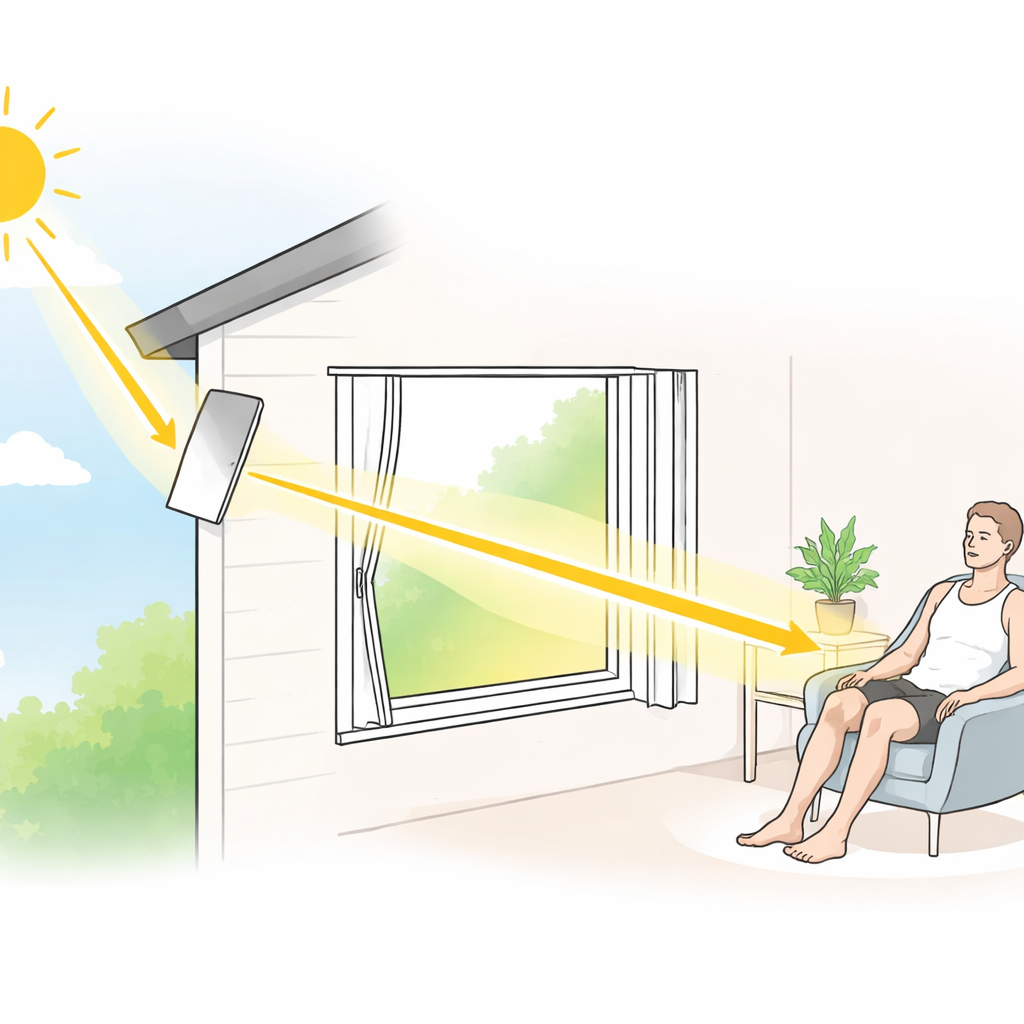
Testing the effect on real people
Sixteen healthy adults in the UAE, aged 22 to 45, took part in a pilot trial. After a month of observation, they used the system four times a week for eight weeks, with each session lasting about 10 to 20 minutes depending on skin tone and measured light intensity. About one‑third of the body surface was uncovered during each session, and participants otherwise kept their normal diet and routines. Blood samples were collected before, halfway through, and after the intervention. Instead of relying on standard lab kits, the team used a highly precise mass spectrometry method to measure eight different vitamin D forms and related compounds, allowing them to see not just total vitamin D but also its active version and subtle byproducts.
What changed in the blood
The key finding was a strong, time‑dependent rise in the main vitamin D form produced by the skin, known as 25‑hydroxyvitamin D3, which more than doubled over the study period. Overall vitamin D levels, combining forms from food and sunlight, rose by about half, and the hormonally active form produced in the kidney also roughly doubled. In contrast, the form usually supplied by diet, vitamin D2, stayed about the same, showing that the gains came mainly from new vitamin D3 made in the skin. A marker of liver cholesterol breakdown did not change, suggesting that the therapy did not disturb broader fat metabolism. Importantly, participants reported no skin or eye problems, and no safety issues were detected during the many brief indoor exposures. 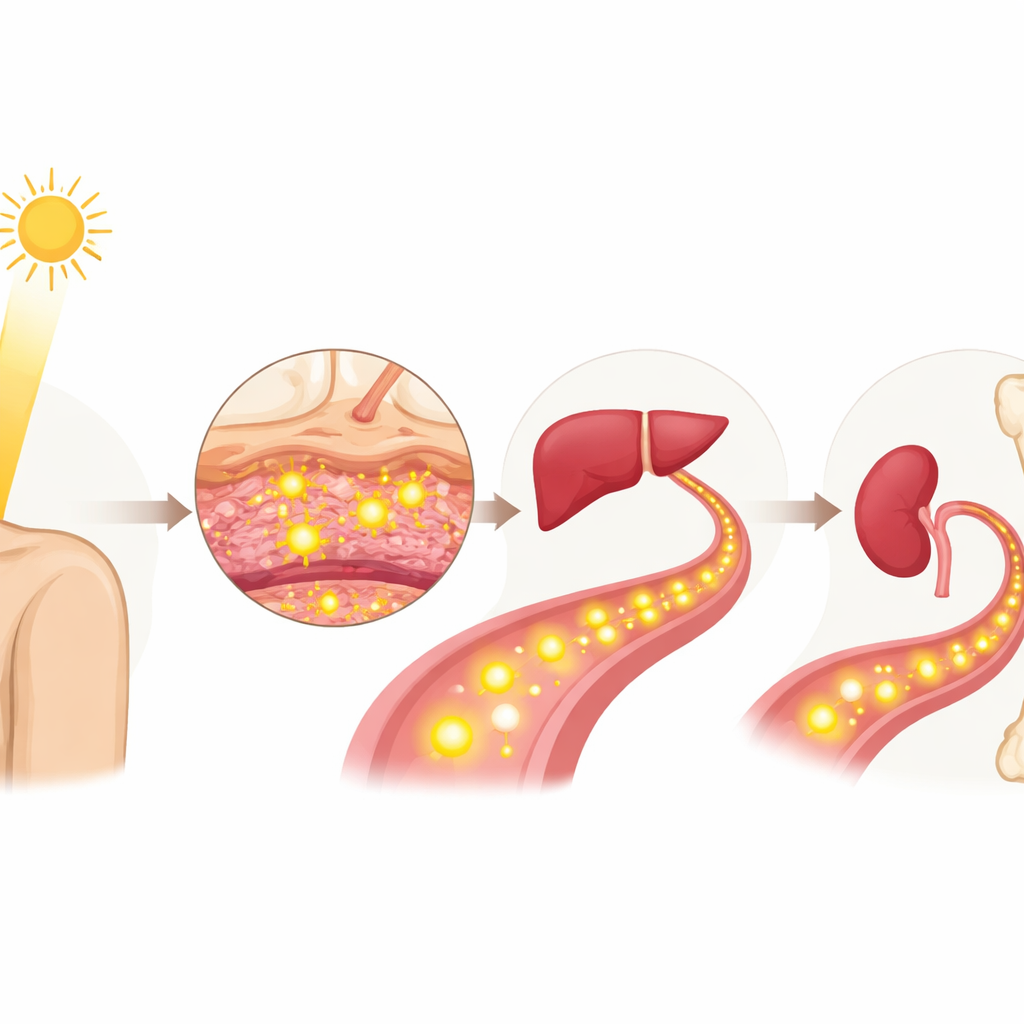
What this means for everyday life
The mirror system did not push vitamin D levels all the way up to widely accepted “sufficient” ranges in just two months, but it did move them clearly upward in a hard‑to‑reach, indoor‑living population. That suggests this approach could serve as a practical helper alongside supplements and fortified foods, especially in hot climates where going outside is uncomfortable or impractical. By blending simple optical hardware with real‑time safety controls, the study shows that natural sunlight can be harnessed indoors to support vitamin D in a gentle, repeatable way. For people who rarely see direct sun, such technology may one day become a routine part of staying healthy while living and working inside.
Citation: Hakeem, M.K., Hassan, A., Rajendran, T. et al. Harnessing natural sunlight indoors: sensor-regulated therapeutic approach to enhance vitamin D status in humans. Sci Rep 16, 10723 (2026). https://doi.org/10.1038/s41598-026-46541-7
Keywords: vitamin D, indoor sunlight, mirror therapy, UVB exposure, public health