Clear Sky Science · en
CXCL12 and eotaxin are independent prognostic serum biomarkers in gastric cancer
Why blood clues for stomach cancer matter
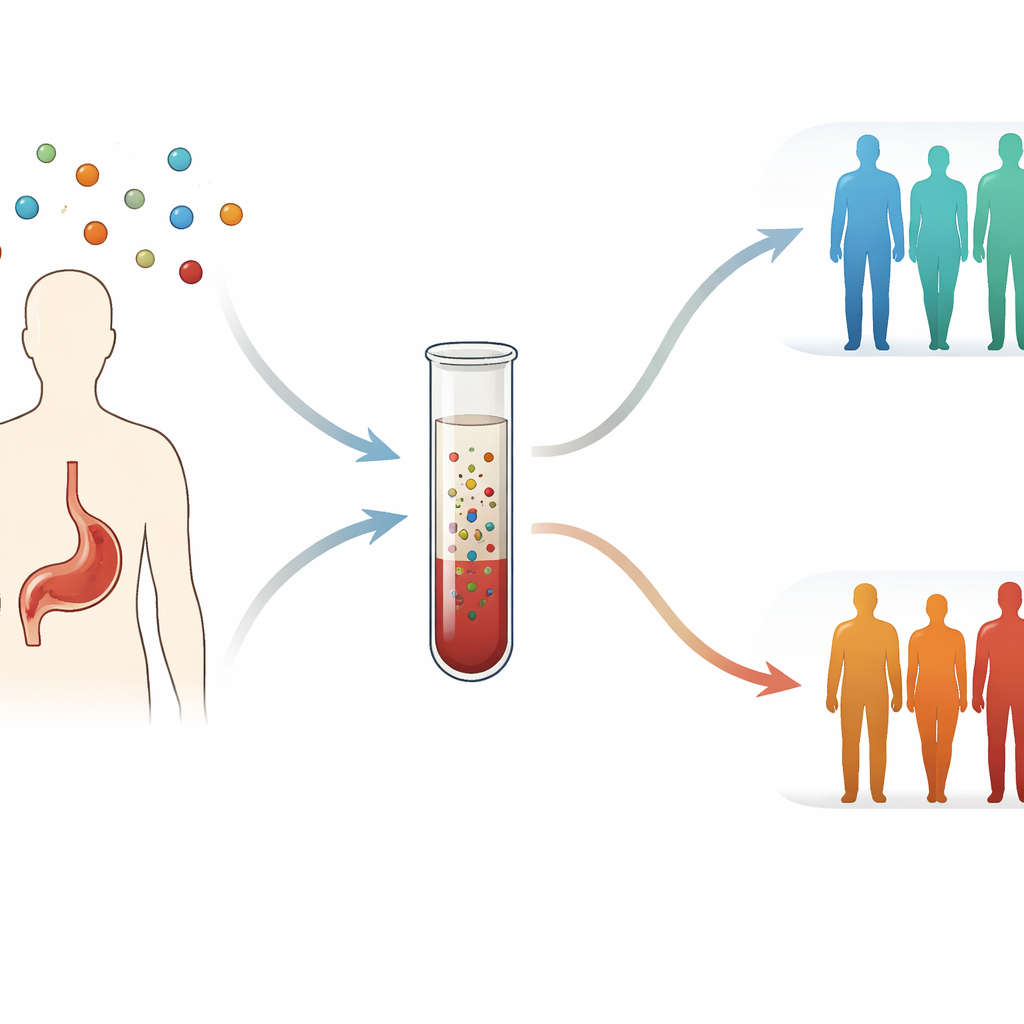
Stomach cancer remains one of the deadliest cancers worldwide, largely because it is often found late and can be difficult to treat once it has spread. Doctors urgently need simple tests that can help them judge how a patient is likely to fare and tailor treatment accordingly. This study asked whether everyday blood samples might hold such clues, focusing on small signaling proteins involved in inflammation and immunity.
Looking for warning signs in the blood
The researchers followed 240 people who had surgery for stomach (gastric) adenocarcinoma at a single Finnish hospital between 2000 and 2009. Before surgery, each patient gave a blood sample that was frozen for later analysis. Years afterward, the team measured 48 different cytokines and growth factors—molecules that help immune cells talk to each other—using a multiplex assay that can test many markers at once. They then tracked how long patients lived without dying specifically from stomach cancer and compared survival with the levels of each protein.
Narrowing down the strongest signals
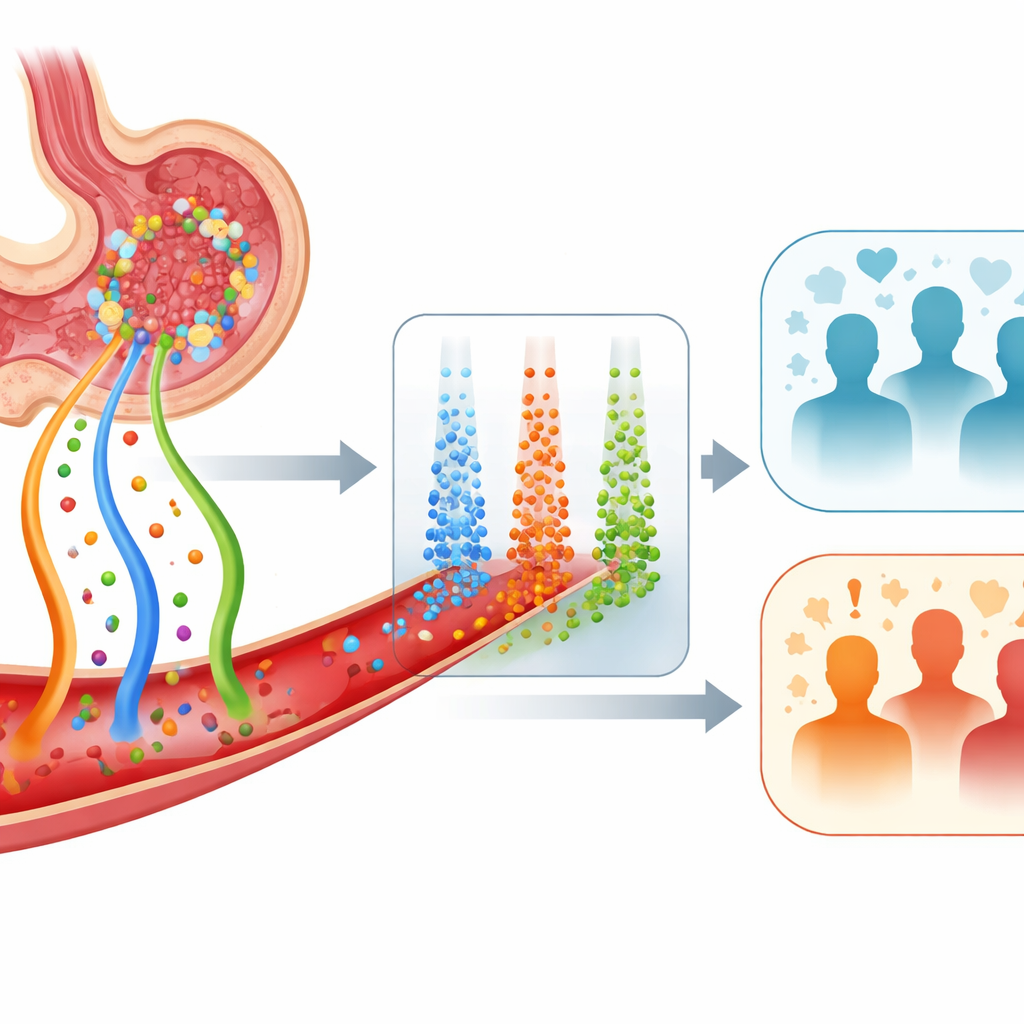
Of the 48 molecules tested, reliable measurements were obtained for 29; many of the rest were simply too low in the blood to analyze. Statistical models showed that three markers stood out as being linked to cancer-specific survival: CXCL12, stem cell factor (SCF), and eotaxin. In general, patients with higher levels of these proteins in their serum tended to live longer after surgery than those with lower levels. After adjusting for age, cancer stage, tumor type, extent of surgery, and treatments like chemo and radiation, two of them—CXCL12 and eotaxin—remained independent predictors of outcome.
How the markers relate to tumor type and spread
The team took a closer look at different subgroups of patients. When they divided patients by traditional tissue-based classifications and more modern molecular subtypes, high CXCL12 and eotaxin levels still marked better survival in several groups, including patients with diffuse-type tumors and those whose cancer had already reached the lymph nodes. High SCF was also linked to better outcomes in some subtypes, although its effect was weaker in the full statistical model. Interestingly, while eotaxin was higher in patients whose tumors carried Epstein–Barr virus, this virus-positive group was small, so larger studies are needed to confirm the link.
What these immune messengers might be doing
CXCL12, SCF, and eotaxin are best known for guiding immune cells, supporting blood formation, and shaping inflammatory reactions. In many cancers, CXCL12 has been tied to more aggressive disease, but most earlier work looked at its presence in tumor tissue rather than in blood. Here, higher serum CXCL12 seemed to signal a stronger, more favorable body-wide immune response. SCF may reflect a healthier support system in the gut wall and blood-forming tissues, while eotaxin, usually associated with allergies, may influence blood vessel growth and cancer cell death. The study did not dissect mechanisms, but the results highlight how the immune environment around stomach tumors can influence patient outcomes.
What this could mean for future care
The findings suggest that simple blood tests for CXCL12, SCF, and especially eotaxin and CXCL12 could help doctors estimate which stomach cancer patients have a better or worse prognosis after surgery. Such markers, used alongside existing tests like CEA and CA19-9 and standard staging, might eventually guide decisions about how aggressive follow-up treatment should be. Because this was an exploratory study from a single center, the results need to be repeated and refined in other patient groups. If confirmed, these immune-related markers could open new avenues for understanding, monitoring, and perhaps one day treating stomach cancer by targeting its inflammatory surroundings.
Citation: Brodkin, J., Kaprio, T., Mustonen, H. et al. CXCL12 and eotaxin are independent prognostic serum biomarkers in gastric cancer. Sci Rep 16, 10683 (2026). https://doi.org/10.1038/s41598-026-46511-z
Keywords: gastric cancer, serum biomarkers, CXCL12, eotaxin, immune microenvironment