Clear Sky Science · en
Identification of small molecule inhibitors for the Brachyspira pilosicoli glutamate racemase (Bp-MurI) enzyme using a computational and experimental approach
Why this gut germ matters for farms and people
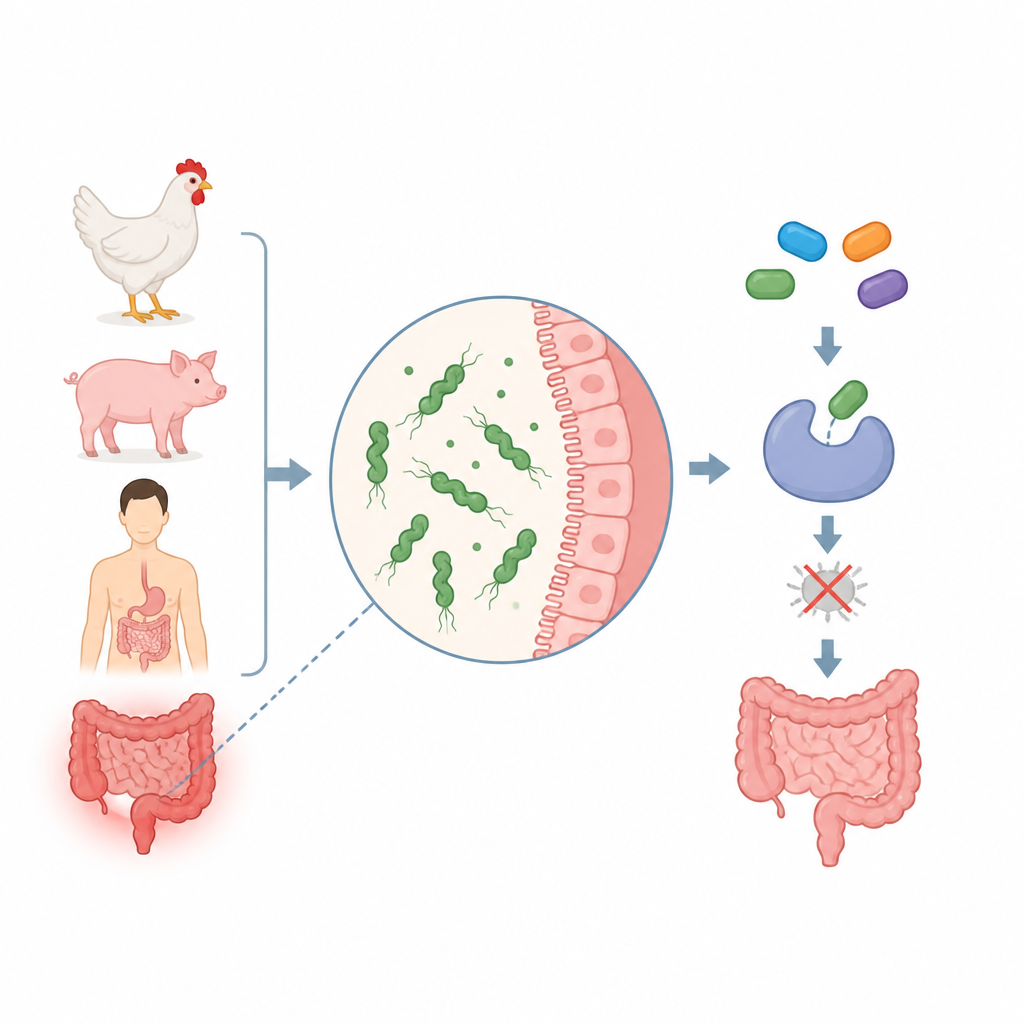
Brachyspira pilosicoli is a corkscrew-shaped bacterium that settles in the intestines of chickens, pigs and sometimes humans. It can cause long-lasting diarrhoea, poor growth in animals and big losses for farmers, yet there are no vaccines and some antibiotics are starting to fail. This study explores a smart way to search computers first and test later in the lab to spot new drug candidates that might one day help control this hard-to-handle germ.
A hidden threat in the barn and beyond
The bacterium thrives in crowded, low-hygiene conditions and can spread through faecally contaminated water or close contact with infected animals. In poultry, it leads to dirty, wet litter, slower growth, fewer eggs and more deaths in severe outbreaks. Pigs with the infection grow poorly and have chronic diarrhoea, while some infected people report abdominal pain, bowel changes and rectal bleeding. Current treatments rely on a small set of antibiotics, and resistance to these medicines has already been detected. That mix of economic cost, animal welfare concerns and the risk of human infection makes the search for new treatments especially urgent.
Picking a weak spot in the bacterial armour
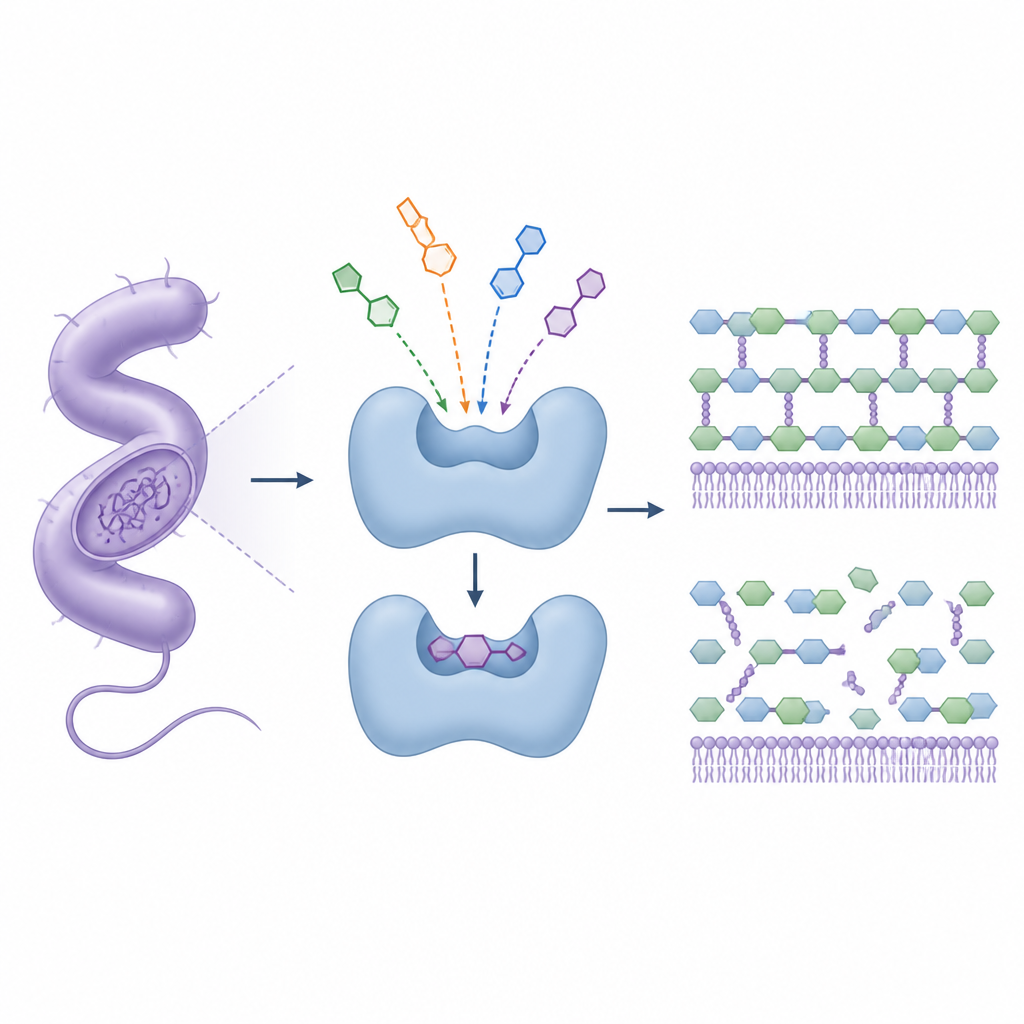
Instead of randomly testing chemicals, the researchers focused on one weak point in the bacterium’s defences: an enzyme called glutamate racemase, or Bp-MurI. This enzyme helps build the cell wall that acts like a protective shell around the bacterial cell. Without it, the bacterium cannot maintain a strong wall and struggles to survive. Because similar enzymes are found in many bacteria but not in humans, they are attractive targets for new antibiotics. The team used advanced structure prediction tools to create a detailed three-dimensional model of the Bp-MurI enzyme and carefully checked that this model matched known structures from related microbes.
Using computers to sift thousands of chemicals
With the model in hand, the scientists mapped the pocket on the enzyme where its natural building block would normally sit. They then created a kind of three-dimensional “template” describing the essential features a useful drug molecule should have to fit this pocket. Using this template, they screened more than 51,000 small molecules from a commercial library, first in silico and then with more refined docking and simulation methods. Step by step, they filtered candidates for good fit, likely behaviour in the body and absence of obvious toxicity, eventually narrowing the list to three promising “hit” compounds that seemed to bind well to the enzyme in the computer models.
From screen to test tube
The story did not end with computer predictions. The three hit compounds were then tested in a broth assay against real B. pilosicoli bacteria grown under anaerobic conditions. One compound showed no detectable killing, one had only weak activity, and the third compound, labelled Hit 3, reduced bacterial growth at moderate concentrations, although it was still far less potent than the existing antibiotic tiamulin. None of the hits were strongly toxic to cultured human epithelial cells, and further computer analysis suggested that their chemical and drug-like properties were broadly acceptable, though not perfect. The researchers also checked enzyme sequences from many different B. pilosicoli strains and found that the key region where Hit 3 is predicted to bind is largely conserved, hinting that a future improved version could work broadly across strains.
What this work means for future medicines
This pilot project shows how modelling, virtual screening and simulations can quickly sift huge chemical collections to find a few realistic candidates before expensive lab work begins. Even though only one of the three best-looking molecules showed clear bacterial killing, and it was weaker than the current drug, the study delivers proof of concept that the chosen enzyme is a valid target and that the pipeline itself is workable. The hit structures can now serve as starting points for chemical tweaking and for direct tests of how they affect the enzyme and the bacterial cell wall. In the long run, refining this approach could lead to new treatments that help protect farm animals and reduce the chance that this gut bacterium spreads to people.
Citation: Kant, R., Ragione, R.L. & Christodoulides, M. Identification of small molecule inhibitors for the Brachyspira pilosicoli glutamate racemase (Bp-MurI) enzyme using a computational and experimental approach. Sci Rep 16, 15632 (2026). https://doi.org/10.1038/s41598-026-46506-w
Keywords: Brachyspira pilosicoli, glutamate racemase, virtual screening, antimicrobial discovery, swine and poultry gut disease