Clear Sky Science · en
Population genetic diversity in the annual breeding area of the Spodoptera frugiperda in China
Why a crop pest’s family tree matters
The fall armyworm is a moth whose caterpillars can strip fields of corn and other crops, threatening food supplies and farmers’ livelihoods. Since this pest arrived in China in 2018, it has spread quickly across the south of the country. This study looks at the genetic “fingerprints” of these insects to understand where they came from, how they move, and what their hidden diversity means for controlling them before they cause even greater damage.
Tracing an unwanted traveler
Researchers collected 123 fall armyworm larvae from 21 sites across four southern Chinese provinces that now serve as yearly breeding grounds: Yunnan, Guangxi, Guangdong, and Hainan. They compared bits of the insects’ DNA with data from India and South Korea. By studying one gene found in tiny cell structures called mitochondria and another gene in the cell nucleus, they could tell which strain of the insect was present and how closely populations from different places were related. This genetic map helps reveal both the history of the invasion and the routes the insects still use.
One dominant strain and a narrow family line
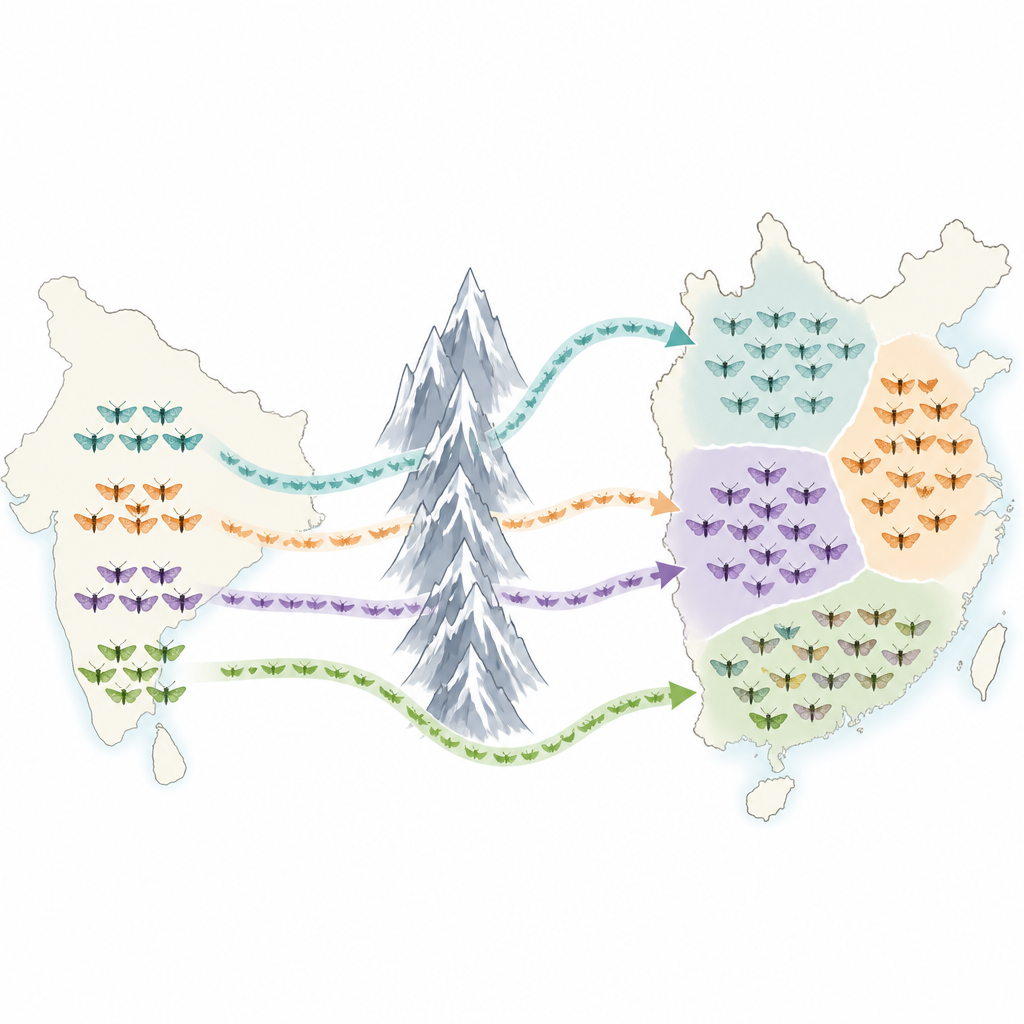
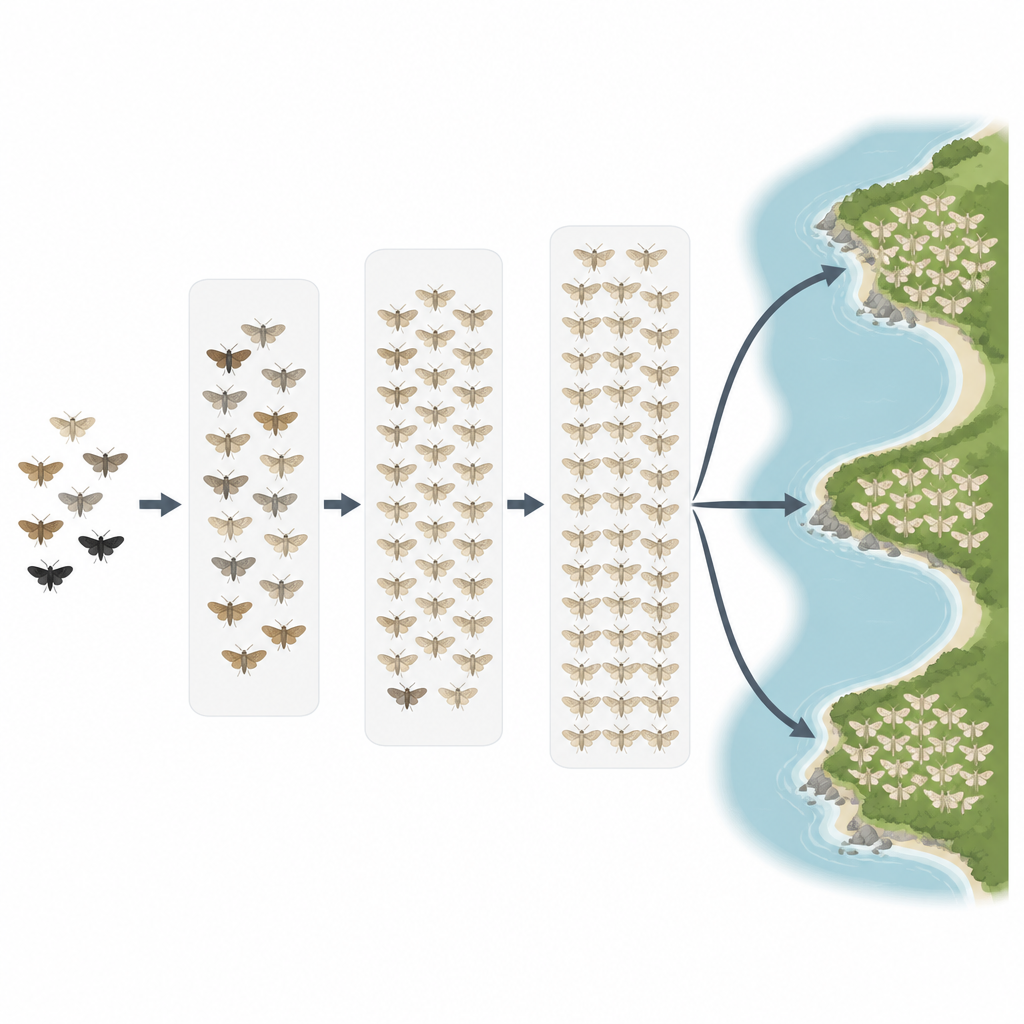
The team found that every sampled insect in China belonged to the “corn strain,” a form of fall armyworm that strongly favors corn and similar crops. More than one fifth of the insects carried a mixed version of one key gene site, but they still matched the corn strain overall. When the researchers looked at the variety of DNA types, or haplotypes, they discovered that Chinese and Korean populations shared only a few common versions and had much less variety than insects from India. This pattern is what scientists expect when a new population is founded by a small number of pioneers: most genetic options present in the original home are left behind, and a few lineages dominate as the invaders multiply.
Mountains, monsoon winds, and hidden highways
By comparing genetic differences between regions, the study shows how geography and weather shape the spread of this pest. Insects from India and the Chinese province of Yunnan were clearly distinct, suggesting that the Himalayas form a strong barrier that blocks direct movement. In contrast, fall armyworms in Guangdong, Guangxi, and Hainan looked very similar to one another, pointing to frequent mixing across the South China Sea and nearby land. Seasonal monsoon winds and storms likely carry moths over long distances, helping blend populations across parts of southern China even when water or other obstacles lie in the way.
A genetic crossroads in southern China
Among the Chinese regions, Guangxi stood out as a hotspot of genetic variety. While most areas were dominated by one or two DNA types, Guangxi hosted all three common ones, marking it as a hub where different lineages meet. The study suggests that constant inflow of insects from the nearby China–Vietnam border may refresh the local gene pool. At the same time, signals in the DNA from some Chinese areas point to past population crashes followed by rapid growth. Strong use of insecticides in major farming zones like Guangdong may also be shaping which genetic variants survive, potentially encouraging the spread of resistance traits.
What this means for protecting crops
Overall, the results point to a fall armyworm invasion of China that began with a limited group of corn-strain insects from South Asia, followed by fast population growth that reduced genetic diversity. Since then, mountain ranges, wind patterns, and local farming practices have guided where the insects can move and which genetic variants thrive. For farmers and regulators, this genetic picture highlights the need for regional cooperation, close monitoring of cross-border movement, and pest control strategies that reduce the risk of insecticide resistance spreading along these invisible genetic highways.
Citation: Lin, J.R., Zhang, J., Zou, Y. et al. Population genetic diversity in the annual breeding area of the Spodoptera frugiperda in China. Sci Rep 16, 15826 (2026). https://doi.org/10.1038/s41598-026-46482-1
Keywords: fall armyworm, invasive pest, genetic diversity, China agriculture, migration routes