Clear Sky Science · en
Multiplex high resolution melting using MADC2 and SCAR markers for sex identification of Cannabis sativa L. cultivation
Why Plant Sex Matters to Growers
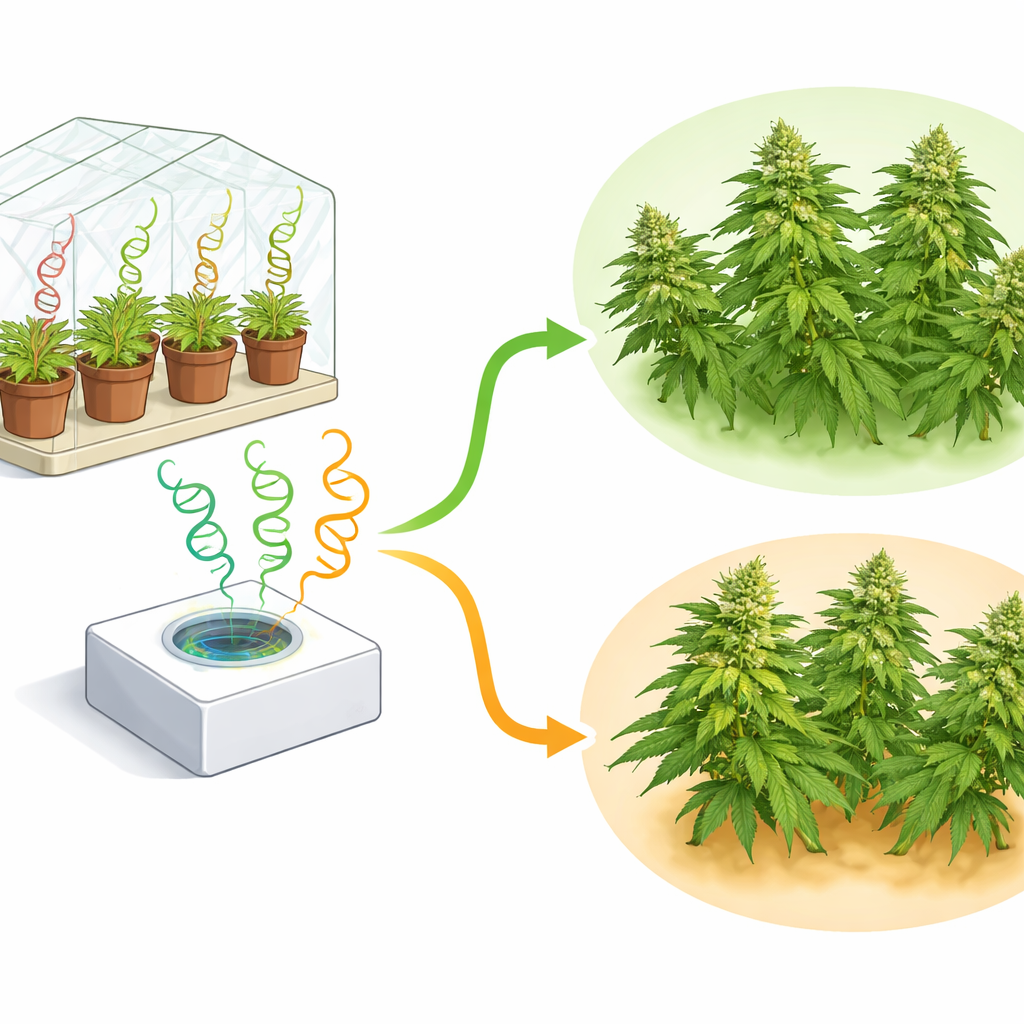
Cannabis may be famous for its medicinal and recreational uses, but behind every harvest lies a basic biological question: which plants are male and which are female? Female plants produce the resin-rich flowers valued for medicines, oils, and many commercial products, while males mainly provide pollen and fiber. Telling them apart early, when they look almost identical, could save growers weeks of guesswork, reduce waste, and boost profits. This study presents a fast, DNA-based method to identify the sex of cannabis plants when they are still seedlings, and even to detect a few unwanted males hidden in large batches of supposedly female plants.
From Look-Alike Seedlings to DNA Clues
In the field, male and female cannabis plants can look nearly the same until they begin to flower, which may take months. During this time, farmers invest water, nutrients, space, and labor without knowing which plants will ultimately produce the flowers or fibers they want. Traditional sexing methods rely on subtle visible traits and experience, and are prone to errors. To get around this, the researchers turned to small differences in the plants’ DNA. Using a technique called DNA fingerprinting, they searched across the cannabis genome for fragments that appear mainly in males, or that behave slightly differently in males and females.
Finding Reliable DNA Signposts
The team first used a method known as SRAP to scan many regions of the genome and pick out DNA fragments that differed between male and female plants. From these fragments they designed a set of simpler DNA markers, called SCAR markers, that are easier to test in the lab. They combined these with previously known male-linked DNA markers known as MADC. Altogether, they examined twelve candidate markers in dozens of plants from several popular cannabis varieties, comparing DNA-based results with the plants’ actual sex as revealed later by their flowers. Several markers proved unreliable, but a handful stood out, especially a male-specific marker called MADC2 and a more general marker called Cs_197 that appears in both sexes but behaves slightly differently in each.
A One-Tube Test with Melting DNA
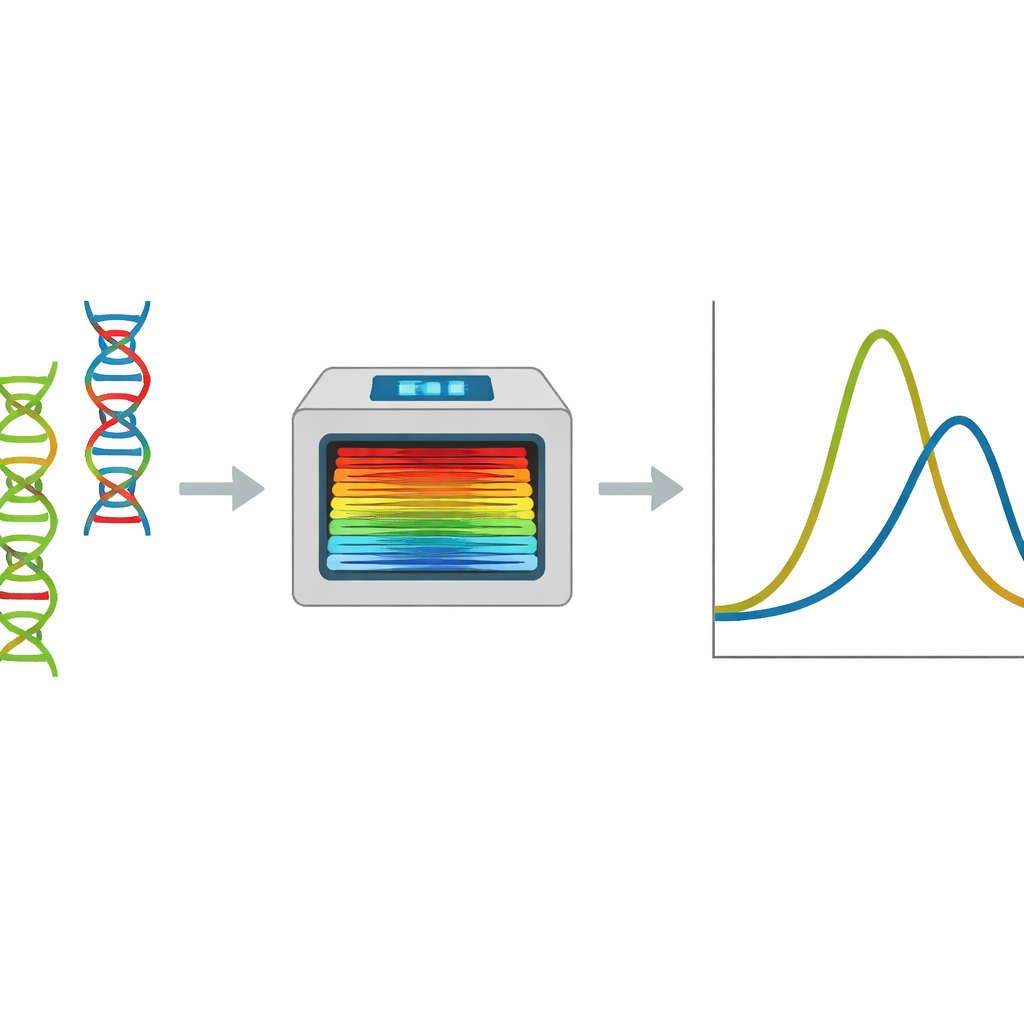
To turn these markers into a practical tool, the researchers used high resolution melting, a technique that gently heats double-stranded DNA and monitors how it separates. Each DNA fragment has its own “melting” behavior, and even small sequence differences change the shape of its melting curve. By combining MADC2 and Cs_197 in a single reaction—a setup they call multiplex high resolution melting, or mHRM—they created a test where male samples produce two distinct melting signals, while females show only one. This pattern was highly consistent across 53 plants of known sex and across multiple cannabis strains, matching traditional anatomical sexing with roughly 98% accuracy. When applied to 92 very young seedlings of unknown sex, the mHRM results later matched the plants’ flowering traits perfectly.
Spotting Hidden Males in Big Batches
Large cannabis farms often buy seeds sold as “female” based on their appearance, but a few stray males can still slip through. To keep screening costs low, growers may wish to test pooled samples rather than every plant one by one. The researchers explored how well their mHRM method could detect a tiny amount of male DNA mixed with DNA from many females. By creating mixtures in different ratios, they showed that the combined test could still reveal male contamination when there was roughly one male among nine females. This means that farms can test groups of seedlings together, flag batches that contain males, and then narrow down which individuals to remove, saving both time and money.
What This Means for Growers and Researchers
In simple terms, this study delivers a quick, accurate, and relatively low-cost DNA test that tells cannabis growers whether a plant is male or female long before it flowers. Using a single tube and a standard laboratory machine, the method reads the “melting behavior” of two key DNA regions to classify each plant, and can even detect a small number of males inside a large group of females. For industry, this can translate into more efficient use of space, better control over flower quality, and reduced risk of accidental pollination. For researchers and breeders, the same approach offers a powerful tool to study plant sex, improve new varieties, and better match cannabis cultivation to medical, fiber, or seed production needs.
Citation: Siengthong, M., Kamol, P., Yodkham, A. et al. Multiplex high resolution melting using MADC2 and SCAR markers for sex identification of Cannabis sativa L. cultivation. Sci Rep 16, 13753 (2026). https://doi.org/10.1038/s41598-026-46461-6
Keywords: cannabis sex identification, DNA melting analysis, plant breeding tools, molecular farming, hemp cultivation