Clear Sky Science · en
Iron-modified biochar enhanced the activation of peracetic acid for removal of imidacloprid: efficiency, active species and catalytic mechanism
Why cleaning farm pesticides from water matters
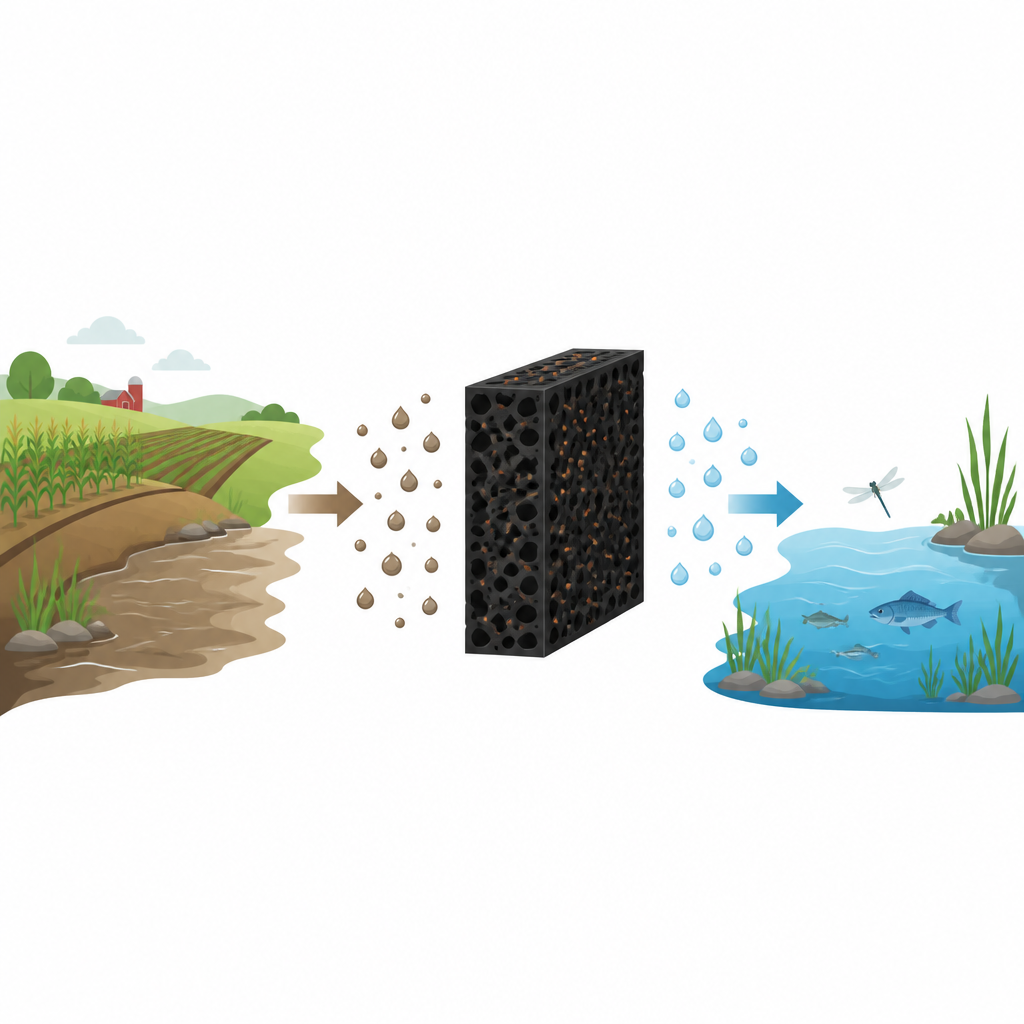
Modern farming relies on powerful insect killers to protect crops, but traces of these chemicals can wash into rivers and lakes, where they may harm insects, fish and even mammals. This study looks at a smarter way to strip one such pesticide, imidacloprid, from water using a low-cost material made from crop waste and a common disinfectant, aiming to make water safer without adding new pollution problems.
Turning crop leftovers into a helpful filter
The researchers started with rape straw, an agricultural leftover that is often burned or discarded. By heating this straw in the absence of oxygen, they produced a charcoal-like material called biochar, which naturally has many tiny pores. They then added iron to the straw before heating, creating an iron-rich version of the biochar with a more developed pore structure and shiny iron-containing particles on its surface. These changes increased the surface area and created many active spots where chemical reactions can occur, turning the plant waste into a useful tool for cleaning water.
Using a gentle oxidant to attack a stubborn pesticide
Imidacloprid is designed to be stable in water so it can protect crops for long periods, but that same stability makes it hard to remove once it reaches streams and groundwater. The team combined their iron-modified biochar with peracetic acid, a disinfectant already used in food and medical settings. In water containing imidacloprid, the iron-biochar worked with peracetic acid to generate highly reactive short-lived particles that can rip apart complex molecules. Under the best tested conditions, this pair removed more than four-fifths of the pesticide within an hour, far outperforming either the biochar or the oxidant used alone.
How the hidden chemistry does the cleanup
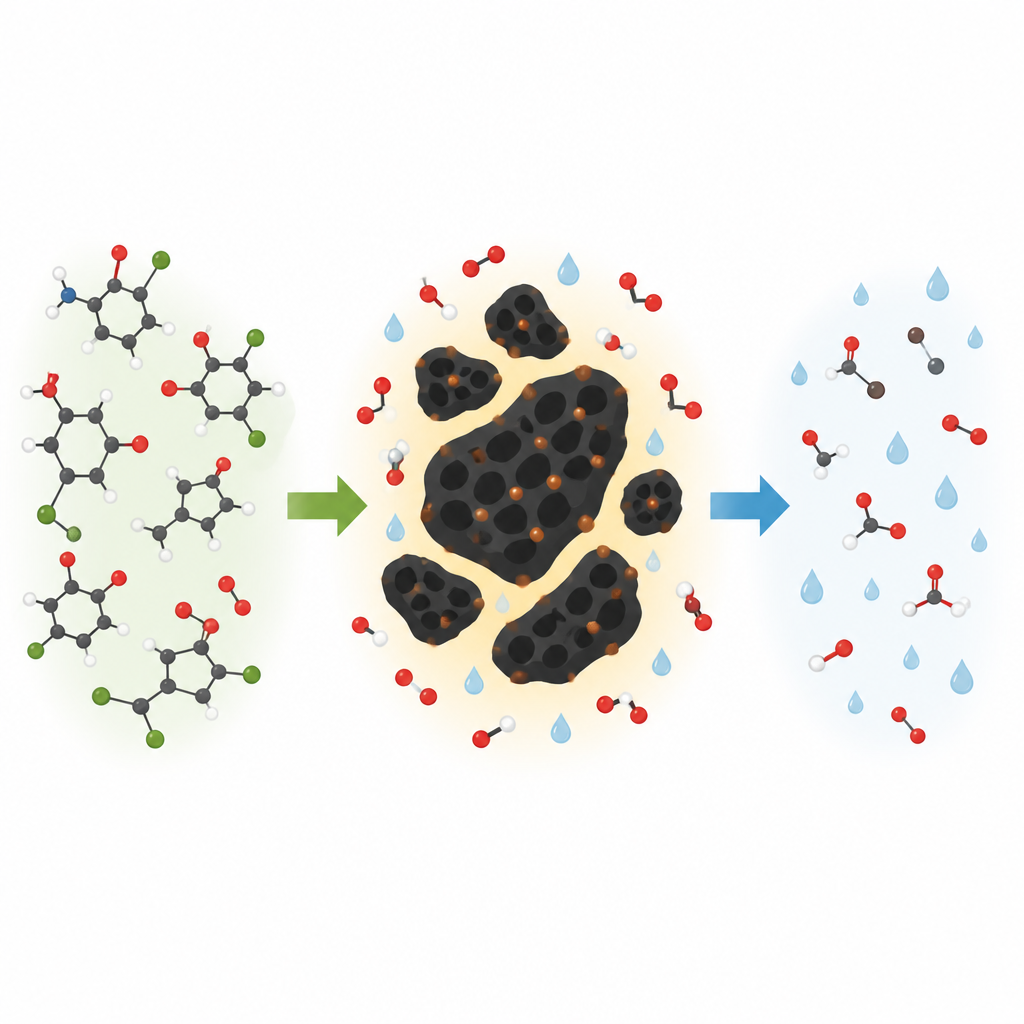
To understand what was happening at the microscopic level, the scientists used several advanced tools. They showed that iron on the biochar surface constantly shifted between two charge states while in contact with peracetic acid, a back-and-forth change that helped produce reactive fragments such as hydroxyl and oxygen-based radicals. These energetic fragments attacked the pesticide at several weak points, breaking apart its rings and side groups and gradually cutting it down into smaller pieces. The process worked well across a wide range of water acidity, which means it could handle many real-world wastewaters without fine-tuned control.
Checking the safety of what remains
Destroying a pollutant is only useful if the pieces left behind are themselves less dangerous. Using computer models that estimate how chemicals affect fish, tiny crustaceans and algae, the team evaluated the toxicity of the main breakdown products formed during treatment. Most of these daughter compounds were predicted to be less harmful than the original pesticide, though a few still showed notable effects on certain organisms. Natural water ingredients like chloride, bicarbonate and humic substances were also tested; some slowed the cleanup by tying up the reactive fragments, but the iron-biochar system still performed well overall and could be reused several times with only moderate loss of power.
What this means for safer water
In simple terms, the study shows that a material made from farm waste and iron, paired with an existing disinfectant, can quickly chip away at a persistent farm chemical in water and mostly turn it into less risky pieces. The approach avoids complex equipment, works under mild conditions and reuses a plentiful agricultural residue. While more work is needed to fully confirm the safety of every by-product and to test the method in real wastewater, the findings point toward a practical and relatively gentle way to help keep pesticide residues out of rivers and drinking water supplies.
Citation: He, J., Wang, B., Sun, H. et al. Iron-modified biochar enhanced the activation of peracetic acid for removal of imidacloprid: efficiency, active species and catalytic mechanism. Sci Rep 16, 15947 (2026). https://doi.org/10.1038/s41598-026-46438-5
Keywords: imidacloprid, biochar, peracetic acid, pesticide removal, wastewater treatment