Clear Sky Science · en
Postharvest preservation of Kinnow mandarin (Citrus reticulata L.) using oregano essential oil nanoemulsions with enhanced biochemical stability and antifungal efficacy against Penicillium digitatum
Why keeping fruit fresh matters
Anyone who has opened a box of citrus only to find soft, moldy fruit knows how quickly fresh produce can spoil. For growers and shoppers alike, this waste means lost money, lost nutrition, and fewer good-tasting fruits on the table. This study looks at a gentle, edible coating made from oregano oil that can help Kinnow mandarins stay firm, tasty, and mold free in cold storage for a full month.
A common fruit with a short window
Kinnow mandarin is a popular citrus hybrid rich in vitamin C, beta carotene, and many plant compounds linked to health benefits. It is harvested only a few months each year and, like other juicy fruits, spoils quickly if not handled carefully. Cold rooms can slow aging, but they also bring problems such as peel damage from chilling and invasion by green mold caused by the fungus Penicillium digitatum. In extreme cases, this mold can ruin most of a stored crop. Producers need ways to protect fruit during storage without relying only on synthetic fungicides.
A thin edible shield from oregano oil
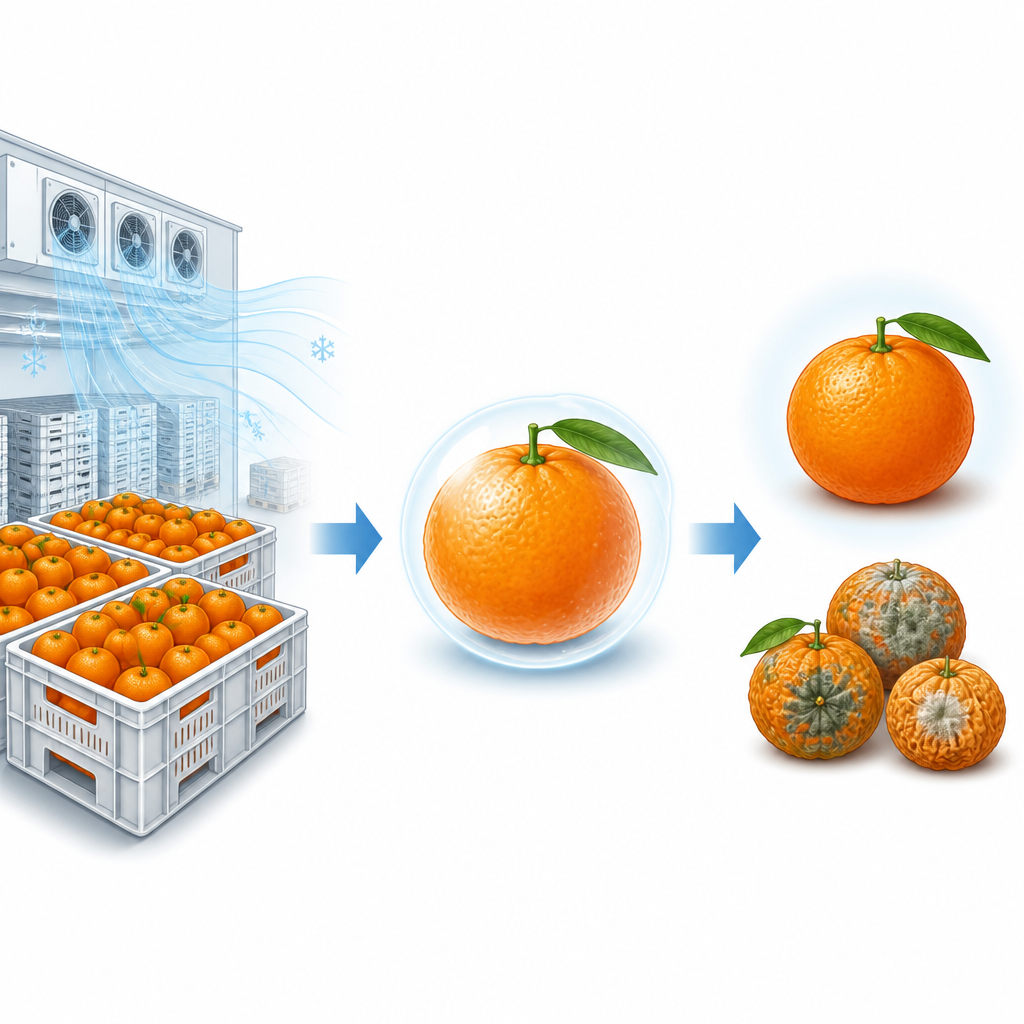
The researchers focused on an approach already attracting attention in the food industry: edible coatings. These are thin, safe films that cover the fruit surface, slowing water loss and breathing while carrying natural protective ingredients. In this work, the team turned oregano essential oil into a nanoemulsion, meaning the oil was broken into very tiny droplets and mixed with water using food-grade emulsifiers and ultrasound. This form improves stability, spreads evenly on the fruit, and slowly releases active molecules. They used this oregano nanoemulsion alone and in combination with two common plant-based coating materials, chitosan and carboxymethylcellulose, then dipped freshly harvested Kinnow mandarins and stored them for 30 days at 5 °C and high humidity.
Fighting mold and slowing aging
Laboratory tests showed that the oregano nanoemulsion stopped the green mold fungus at lower doses than plain oregano oil, meaning the tiny droplets made the natural antifungal compounds more effective. On real fruits, mandarins coated only with the nanoemulsion lost far less weight, stayed firmer, and had fewer signs of chilling injury than uncoated fruit. Measures linked to taste and ripening also changed more slowly: sugar levels rose less, acidity was better preserved, and the fruits kept more vitamin C, phenols, flavonoids, and overall antioxidant power. The coating also dampened the activity of key enzymes that normally break down cell walls and lipids as fruit ages, helping the peel and flesh retain structure and juiciness.
How the coating beats fungus and preserves quality
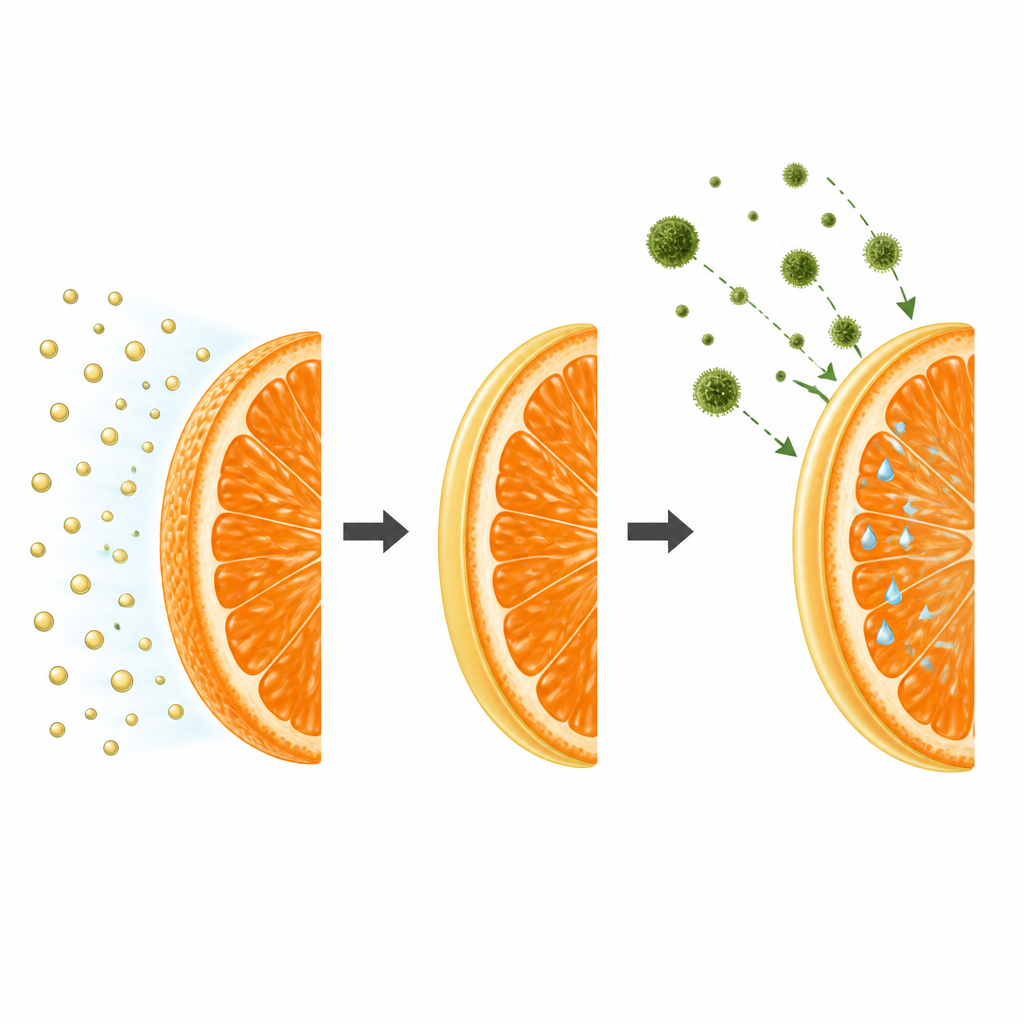
The thin nanoemulsion layer acted in several ways at once. First, oregano oil contains compounds that damage fungal cells, and the nano-sized droplets spread those compounds evenly over the fruit surface and release them over time, making it harder for green mold spores to grow. Second, the coating behaved like a semi-permeable skin, gently restricting gas and water movement. This lowered respiration and slowed the use of organic acids and antioxidants inside the fruit, which helped keep pH, acidity, and color closer to their fresh values. By reducing enzyme activities tied to softening and membrane damage, the coating limited shriveling and off-flavors that panelists readily noticed in uncoated mandarins.
A practical path to longer lasting mandarins
By the end of a month in cold storage, mandarins treated with oregano oil nanoemulsions were clearly superior in firmness, taste, and appearance, and they showed much less fungal decay than any other group. Blends with chitosan or carboxymethylcellulose also helped, but the nanoemulsion alone performed best overall. For growers, packers, and retailers, this points to a low-waste, consumer-friendly way to keep Kinnow mandarins marketable for longer without harsh chemicals. For shoppers, it suggests that an invisible, edible film based on a familiar kitchen herb could quietly help keep their citrus brighter, safer, and more nutritious from orchard to fruit bowl.
Citation: Shaukat, M., Farhan, M., Ahmad, I. et al. Postharvest preservation of Kinnow mandarin (Citrus reticulata L.) using oregano essential oil nanoemulsions with enhanced biochemical stability and antifungal efficacy against Penicillium digitatum. Sci Rep 16, 14753 (2026). https://doi.org/10.1038/s41598-026-46421-0
Keywords: citrus storage, edible coating, oregano oil, nanoemulsion, postharvest preservation