Clear Sky Science · en
Protective effects of Astragalus membranaceus polysaccharide against aluminum oxide nanoparticle-induced growth retardation and oxidative-immunological disruption in Oreochromis niloticus
Why this matters for fish and for us
Aquaculture now supplies a large share of the fish on our plates, but farmed fish live in waters increasingly laced with modern pollutants, including tiny metal nanoparticles used in industry and water treatment. This study asks a simple, practical question: can a natural ingredient from a traditional medicinal plant help protect farmed Nile tilapia from the hidden damage caused by aluminum oxide nanoparticles in the water? The answer has implications for food safety, animal welfare, and how we keep fish farms productive without adding new chemicals to the environment.
Tiny particles, big problems for farmed fish
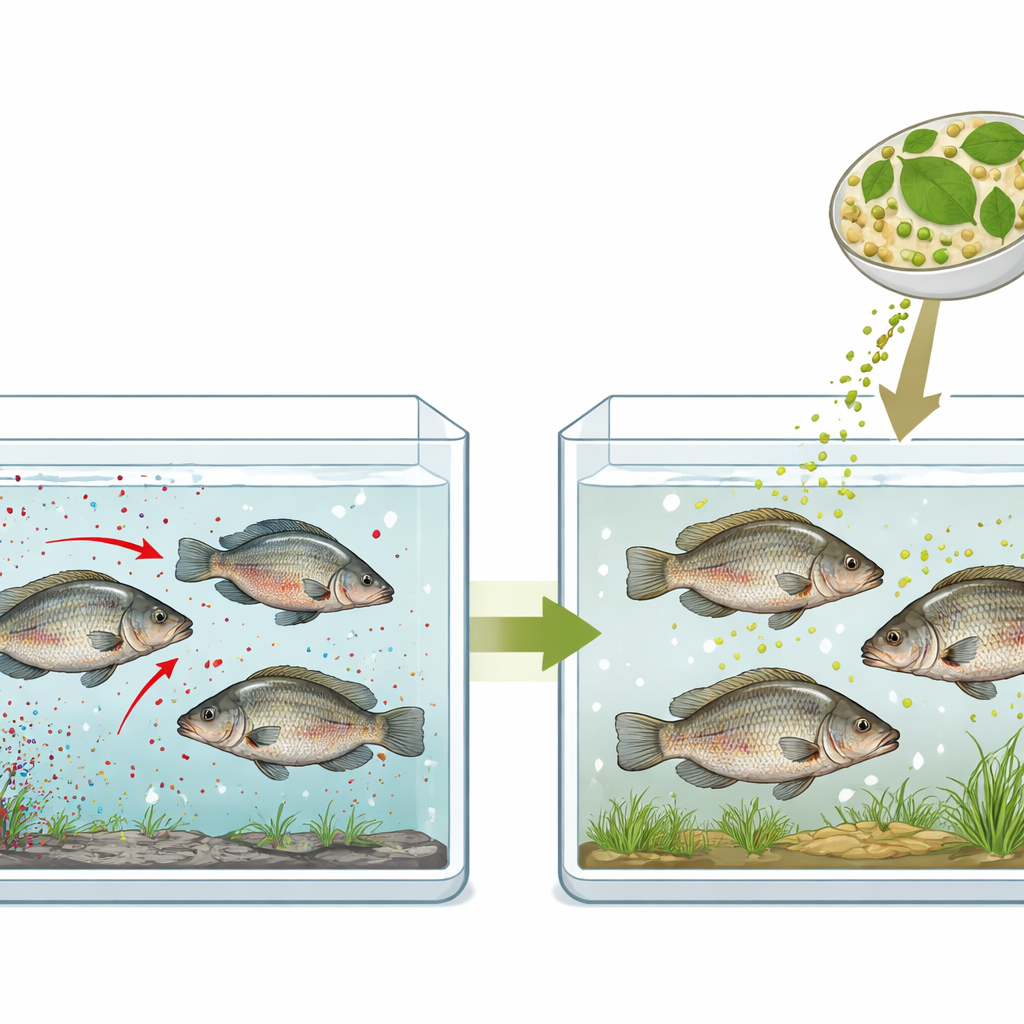
Aluminum oxide nanoparticles are microscopic particles that slip easily through water and into living tissues. In fish ponds, they can enter through the gills and spread to key organs like the liver, kidney, spleen, and muscles. Earlier work showed that these particles can stunt growth, disrupt behavior, and damage organs in many species, including Nile tilapia, one of the world’s most widely farmed fish. Because these organs handle breathing, detoxification, waste removal, and immune defense, long-term exposure raises serious concerns for both fish health and the economics of aquaculture.
A herbal helper from traditional medicine
The researchers focused on polysaccharides—complex natural sugars—extracted from the roots of Astragalus membranaceus, a herb long used in Chinese medicine. Chemical tests confirmed that the extract was rich in flavonoids and phenolic compounds, both known for strong antioxidant and anti-inflammatory activity. These Astragalus polysaccharides (APS) were mixed into fish feed at two doses. The team then exposed Nile tilapia to a sub-lethal level of aluminum oxide nanoparticles in the water for four weeks, with some groups receiving APS in their diet and others not, allowing a direct comparison between unprotected and supplemented fish.
From stressed, sick fish to healthier, faster growers
Fish exposed only to aluminum nanoparticles fared poorly. They gained less weight, converted feed into growth less efficiently, and had slightly lower survival than the control group. Outwardly, many showed skin darkening, loss of scales, red patches, tail rot, and swollen, congested internal organs. Blood tests revealed signs of liver strain: higher levels of a liver enzyme linked with cell damage and lower levels of total protein and a key immune molecule, IgM. Under the microscope, tissues from the gills, liver, kidney, muscle, and spleen showed widespread degeneration, bleeding, and cell death, reflected in high damage scores for each organ.
Adding APS to the diet, especially at the higher dose, transformed this picture. Growth and feed efficiency not only rebounded compared with the nanoparticle-only group, they approached or even exceeded those of unsupplemented controls. Survival improved, and visible lesions largely disappeared. Liver enzyme levels dropped back toward normal, while blood proteins and IgM rose, indicating better nutritional status and immune readiness. Histological sections showed that gills, liver, kidney, muscle, and spleen architecture were mostly restored, with only mild remaining changes in the high APS group.
How the plant extract calms oxidative and immune turmoil
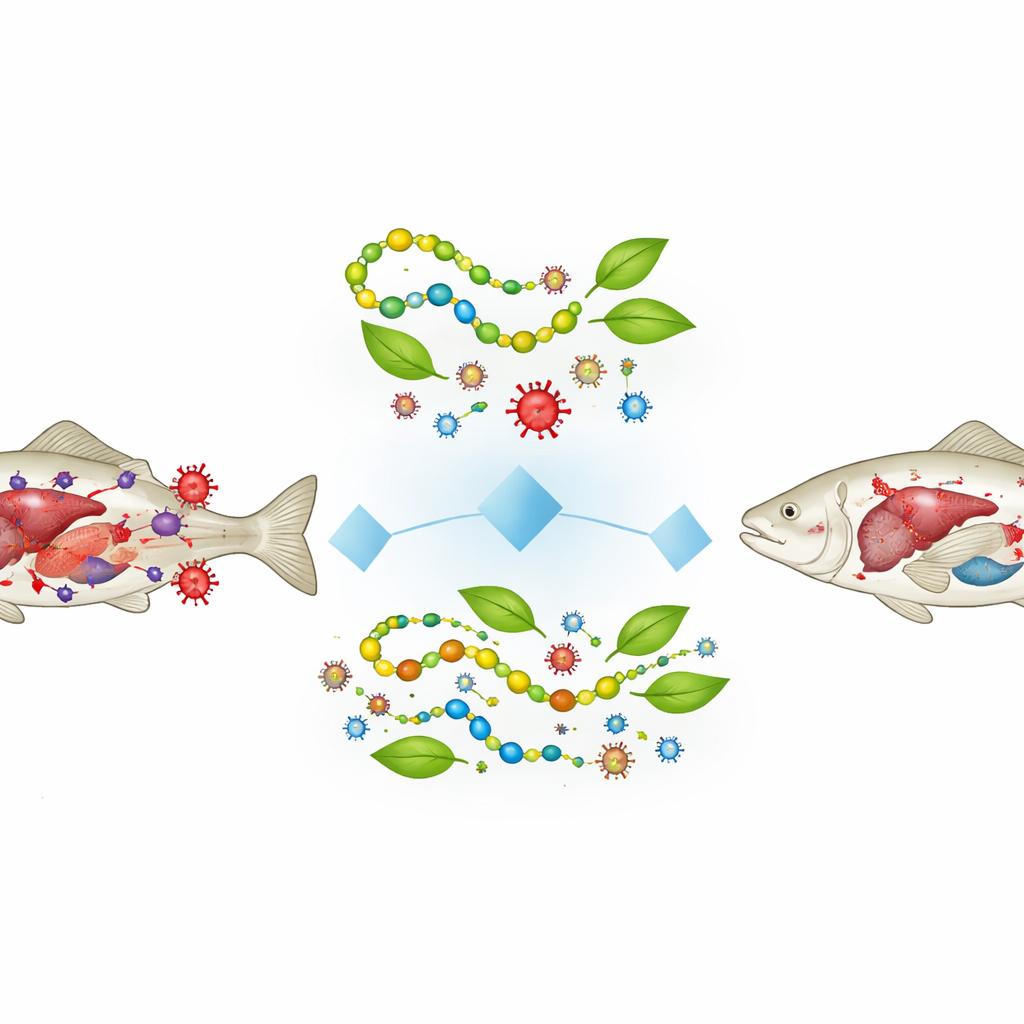
To understand what was happening inside the fish, the scientists measured activity of genes involved in antioxidant defense, inflammation, and metal stress. Nanoparticle exposure sharply reduced the expression of key antioxidant enzymes that normally neutralize harmful oxygen by-products, while cranking up genes that drive inflammatory signals and a metal-binding stress protein called metallothionein. In APS-fed fish, these patterns shifted back toward balance: antioxidant genes were turned back up, inflammatory genes were dialed down, and the stress protein signal eased. In parallel, quantitative scoring showed fewer vacuoles in liver cells and fewer activated pigment-laden immune centers in the spleen, consistent with less ongoing damage and cleaner tissue.
What this means for cleaner, safer aquaculture
Put simply, the study shows that a natural polysaccharide extract from Astragalus can shield Nile tilapia from the growth loss, organ damage, and immune disruption caused by aluminum oxide nanoparticles in their water. By strengthening the fish’s own antioxidant and immune systems, APS reduces inflammation and structural injury across multiple organs, leading to healthier animals that grow better and survive at higher rates. While long-term and real-world farm trials are still needed, these results suggest that carefully chosen plant-based feed additives could become an eco-friendly tool to help aquaculture cope with rising nanoparticle pollution—supporting both fish welfare and sustainable food production.
Citation: Megeed, O.H.A.E., Rashad, M.M., Ali, G.E. et al. Protective effects of Astragalus membranaceus polysaccharide against aluminum oxide nanoparticle-induced growth retardation and oxidative-immunological disruption in Oreochromis niloticus. Sci Rep 16, 12205 (2026). https://doi.org/10.1038/s41598-026-46411-2
Keywords: aquaculture, nanoparticle toxicity, Nile tilapia, Astragalus polysaccharides, fish immunology