Clear Sky Science · en
Ecological network collapse and functional potential shifts in the canine oral microbiota associated with periodontal disease: a pilot study
Why your dog’s mouth matters
For many families, dogs are more like children than pets, and their health is closely watched. Yet one of the most common problems dogs face, gum disease, often hides in plain sight. This study looks inside the dog’s mouth at the tiny community of microbes that live on the teeth and gums, asking how that community changes when periodontal disease takes hold. Understanding these hidden shifts may help explain bad breath, tooth loss, and even links to disease in other organs, while pointing toward smarter future care.
Two different microbial worlds
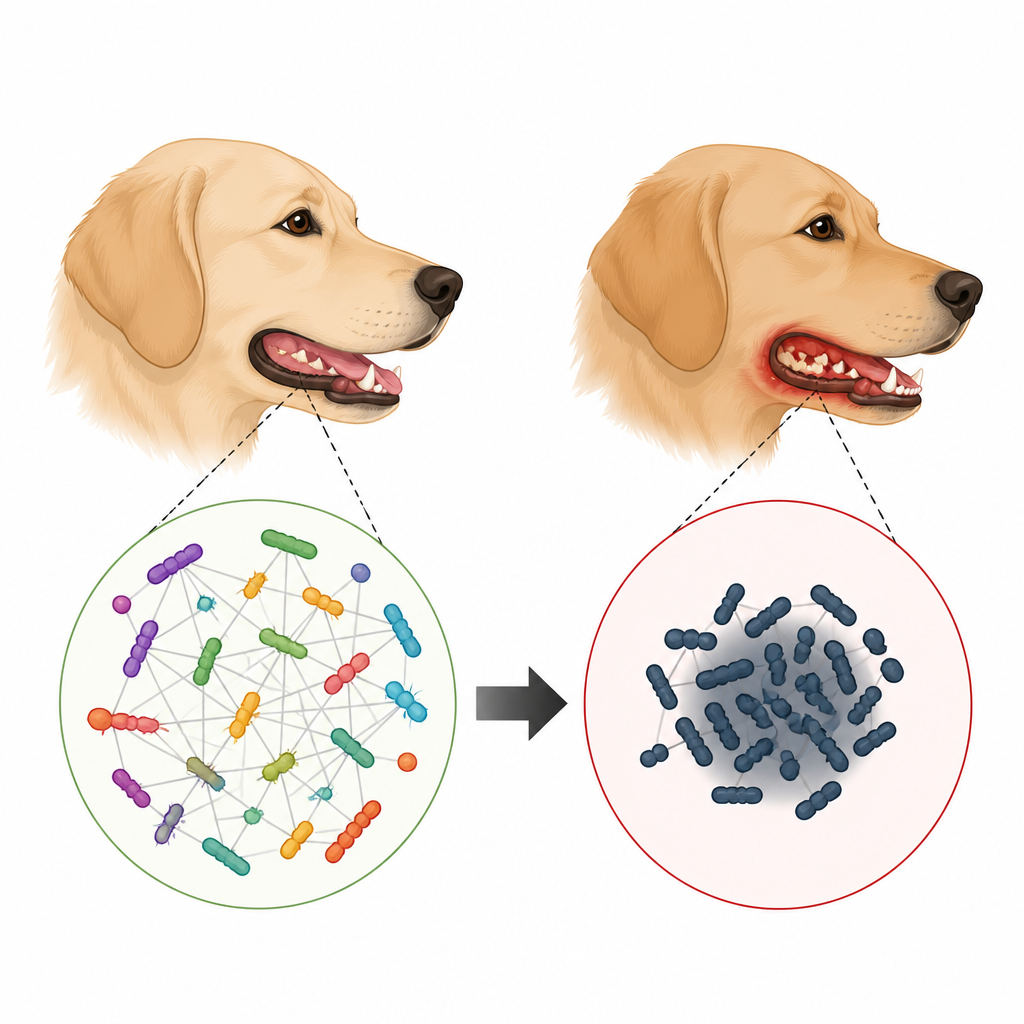
The researchers compared plaque from ten pet dogs: five with healthy mouths and five with moderate to severe periodontal disease. Using DNA sequencing, they created a detailed census of the bacteria present in each dog. When they mapped how similar the samples were to each other, the two groups formed clearly separate clusters. Dogs with gum disease shared a very similar microbial pattern, while healthy dogs differed widely from one another. This suggests that there may be many ways for a dog’s mouth to be healthy, but gum disease pushes the community toward one common, disturbed state.
More species, but a poorer balance
Contrary to what many people expect, the diseased mouths did not show a simple loss of microbes. Instead, they actually held more kinds of bacteria and greater evolutionary variety than healthy mouths. The key change was not fewer species overall, but a shift in which families were in charge. Healthy dogs tended to have many members of a group called Pasteurellaceae, which may help maintain a mildly oxygenated, protective environment near the gums. In dogs with periodontal disease, these helpers were greatly reduced, and a different family, Porphyromonadaceae, became dominant along with other known troublemakers. The authors suggest that chronic inflammation and bleeding in sore gums create new food sources that invite extra opportunistic bacteria to join, adding to rather than replacing the existing community.
From quiet helpers to harmful byproducts
To explore what these shifts might mean for the dog’s body, the team used computational tools to predict the kinds of biochemical pathways the microbes could carry out. In healthy mouths, pathways linked to building essential amino acids and maintaining the community were more common. In diseased mouths, pathways tied to anaerobic energy production and to the handling of sulfur-containing amino acids were enriched. Such pathways are associated with the creation of irritating molecules like lipopolysaccharide and volatile sulfur compounds. These substances can fuel inflammation, damage tissue, and contribute to the strong bad breath frequently noted in the diseased dogs, hinting at a feedback loop between the microbes and the dog’s immune system.
When the microbial web falls apart
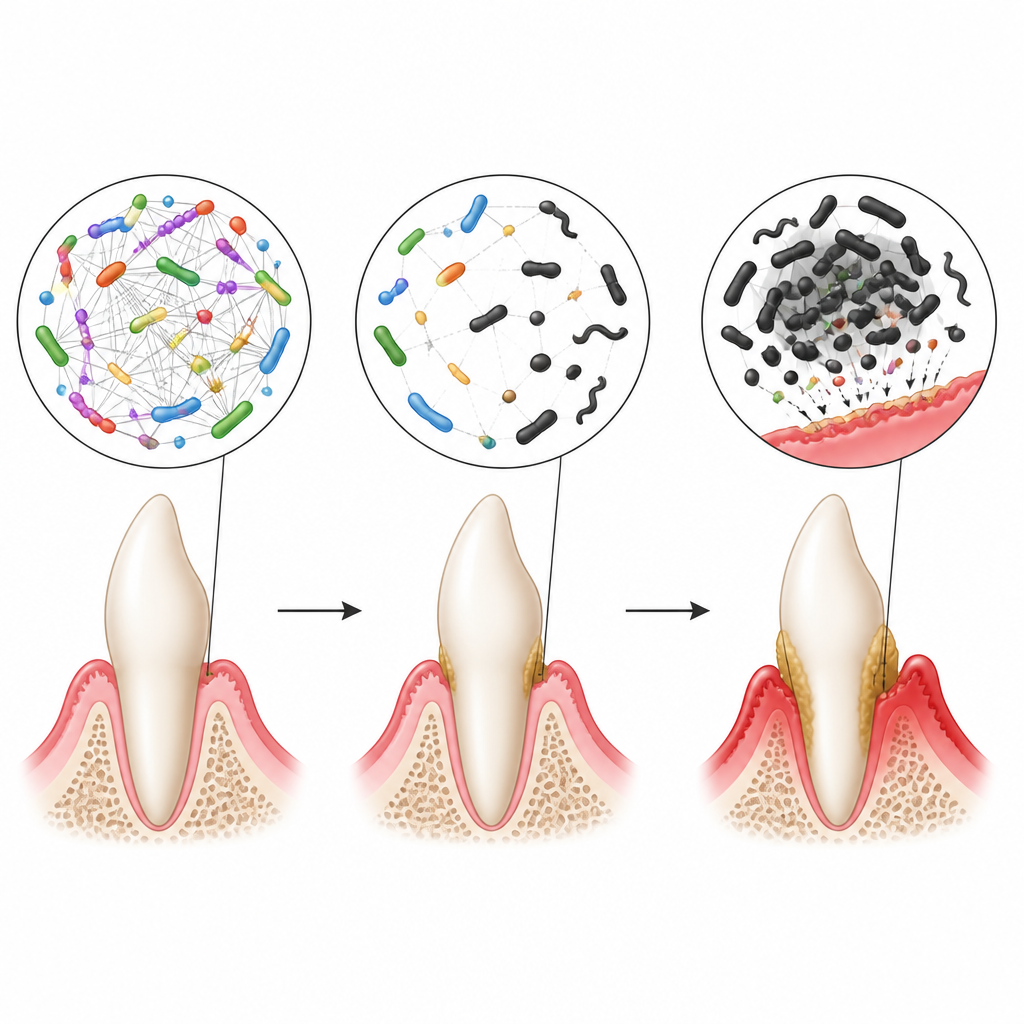
The study also asked how strongly different bacterial groups tended to appear together. In healthy dogs, the microbial community formed a dense, tightly knit network, with many families linked in a web of cooperative and competitive relationships. In dogs with periodontal disease, that web looked frayed. There were fewer connections, fewer tightly clustered groups, and new central players that were themselves known or suspected pathogens. This “network collapse” suggests that gum disease is not just about the arrival of bad actors, but about the breakdown of a stable, self-regulating ecosystem that normally keeps potential troublemakers in check.
What this means for dogs and their care
Overall, this pilot study suggests that canine periodontal disease is marked by an “additive” form of imbalance, where extra harmful microbes join the community, diversity rises, helpful bacteria vanish, and the whole network of interactions weakens. At the same time, healthy dogs seem able to host quite different mixes of microbes while still maintaining balance. Although the study is small and exploratory, it offers a new ecological way of thinking about gum disease in dogs. Rather than targeting one culprit species, future treatments may focus on protecting or restoring a stable, flexible microbial community that supports oral health and reduces inflammation.
Citation: Park, J., Choi, SA., Kim, D. et al. Ecological network collapse and functional potential shifts in the canine oral microbiota associated with periodontal disease: a pilot study. Sci Rep 16, 15625 (2026). https://doi.org/10.1038/s41598-026-46400-5
Keywords: canine periodontal disease, oral microbiome, dog dental health, gum inflammation, microbial dysbiosis