Clear Sky Science · en
The association of TyG-BMI with MAFLD and liver fibrosis: a cross-sectional study
Why your liver cares about everyday numbers
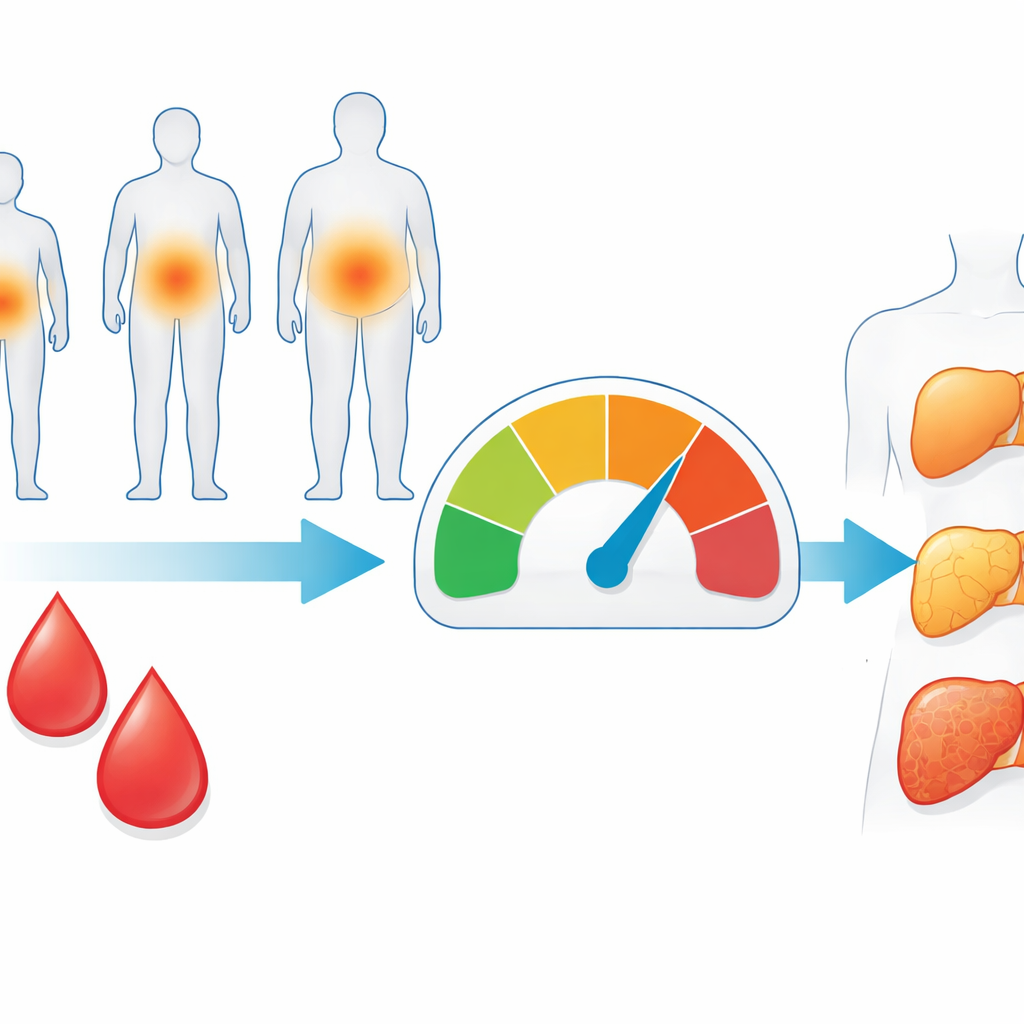
Many people know their weight, blood sugar, or cholesterol, but few realize that a simple combination of these routine measures can quietly signal the health of their liver. This study explores whether an index called TyG-BMI—built from blood fats, blood sugar, and body mass index—can flag a common yet often silent condition: metabolic-associated fatty liver disease (MAFLD). Because MAFLD affects more than a third of adults worldwide and can lead to liver scarring and cancer, a low-cost, non-invasive warning tool could matter to anyone who gets regular checkups.
A silent liver problem on the rise
MAFLD develops when excess fat accumulates in the liver in the setting of broader metabolic problems such as weight gain, high blood sugar, or abnormal blood fats. While many people with MAFLD feel perfectly well, the condition can slowly progress from simple fat build-up to liver inflammation, scarring (fibrosis), cirrhosis, and liver cancer. The current gold-standard test, a liver biopsy, is invasive and impractical for large numbers of patients. Even newer imaging tools, though safer, are not always available in routine clinics. This reality has driven a search for simple markers—derived from standard blood tests and body measurements—that can help doctors decide who is at higher risk and needs closer follow-up.
Turning routine checks into a liver risk signal
The TyG-BMI index combines fasting triglycerides (a type of blood fat), fasting blood glucose, and body mass index into a single number that reflects both metabolic strain and overall body fat. In this cross-sectional study from a health examination center in Qingdao, China, researchers analyzed 1,457 adults who had detailed blood tests and a specialized ultrasound-based liver scan. This scan provided two key readouts: a measure of liver fat (controlled attenuation parameter, CAP) and a measure of liver stiffness (liver stiffness measurement, LSM), which relates to scarring. Participants were classified as having MAFLD or not, and the scientists then examined how strongly TyG-BMI tracked with the presence of disease, the amount of liver fat, and signs of fibrosis.
How well the index spotted fatty liver
People with MAFLD had clearly higher TyG-BMI values than those without the disease. After accounting for age and sex, each small step up in TyG-BMI was linked to a measurable rise in the odds of having MAFLD. When the researchers sorted participants into four groups from lowest to highest TyG-BMI, the risk of MAFLD climbed steeply across the groups, with those in the highest range having much greater odds of disease than those in the lowest. A statistical test of diagnostic performance showed that TyG-BMI could distinguish MAFLD from non-MAFLD reasonably well, with accuracy similar to an established score called the fatty liver index, even though TyG-BMI relies on fewer ingredients. The index worked about equally well in men and women but performed better in adults under 60 than in older individuals, suggesting age-specific nuances in how MAFLD develops.
Linking the index to liver fat and scarring
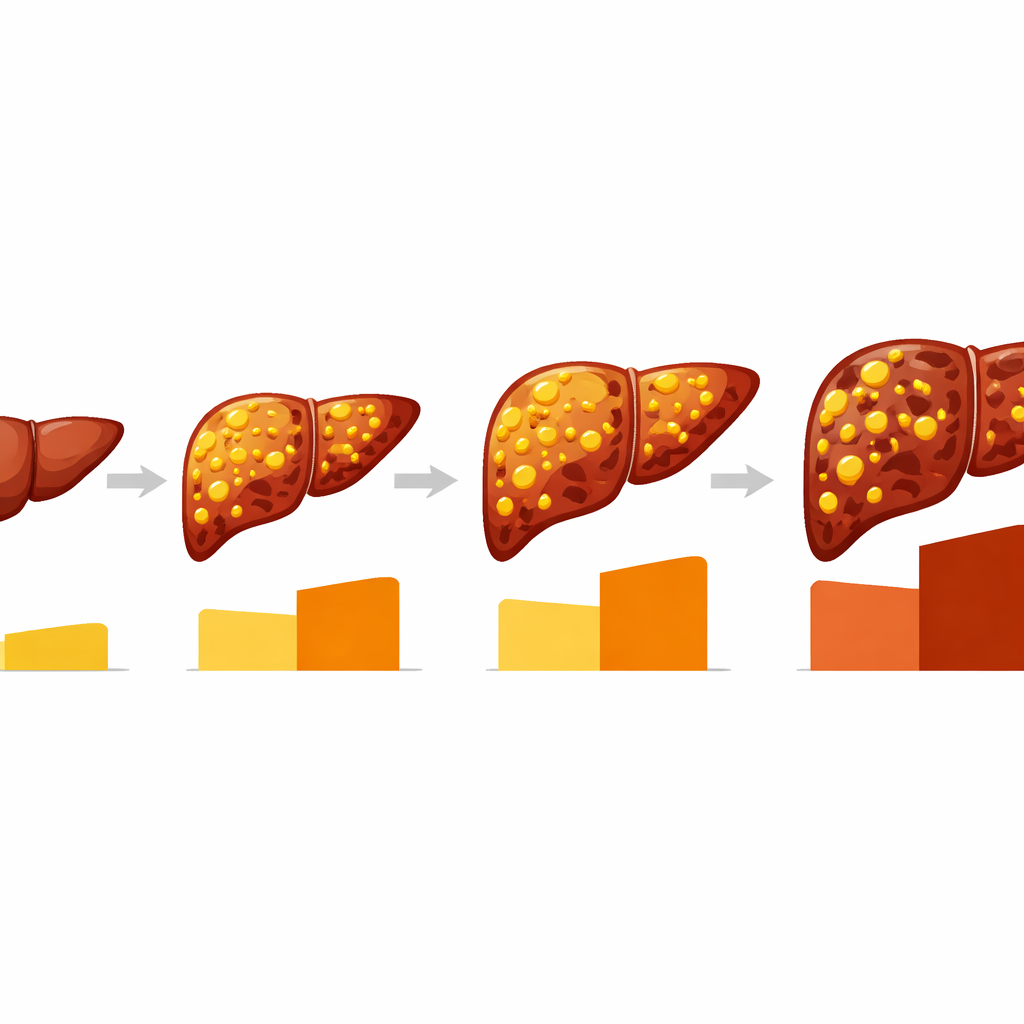
Beyond simply saying “MAFLD: yes or no,” TyG-BMI also rose steadily with liver fat severity. Participants were grouped into four steatosis grades based on their CAP readings; average TyG-BMI values increased from the no-fat group through mild, moderate, and severe fat build-up. Each incremental rise in TyG-BMI was tied to a higher chance of moving into a more severe fat category. The index was also modestly but significantly correlated with liver stiffness, a sign that higher TyG-BMI may go hand in hand with more advanced scarring. When the researchers adjusted for age and sex, TyG-BMI remained an independent contributor to liver stiffness, hinting that this simple number may offer clues about long-term liver damage risk, not just fat content.
What this means for everyday health
Taken together, the findings suggest that TyG-BMI—a calculation built from tests and measurements many people already have—captures multiple aspects of MAFLD: the chance of having it, how severe the fat build-up is, and the likelihood of more serious liver scarring. While the study cannot prove cause and effect and was conducted at a single center, it supports using TyG-BMI as a first-line screening tool and as a way to prioritize who might benefit most from imaging or specialist care. For patients, it reinforces a straightforward message: keeping blood sugar, blood fats, and body weight in check may not just protect the heart, but also quietly safeguard the liver.
Citation: Wang, X., Han, X., Liu, J. et al. The association of TyG-BMI with MAFLD and liver fibrosis: a cross-sectional study. Sci Rep 16, 10590 (2026). https://doi.org/10.1038/s41598-026-46378-0
Keywords: fatty liver, insulin resistance, metabolic health, liver fibrosis, noninvasive biomarker