Clear Sky Science · en
A deep reinforcement learning approach for dynamic transaction fee adjustment in Ethereum
Why this matters for everyday crypto users
Anyone who has tried to send a payment or mint a non-fungible token on Ethereum has likely faced puzzling fees that jump around and long waits when the network is busy. This paper explores a new way to set those fees using an artificial intelligence technique so that the network stays smooth and predictable even when demand suddenly surges.
How Ethereum fees work today
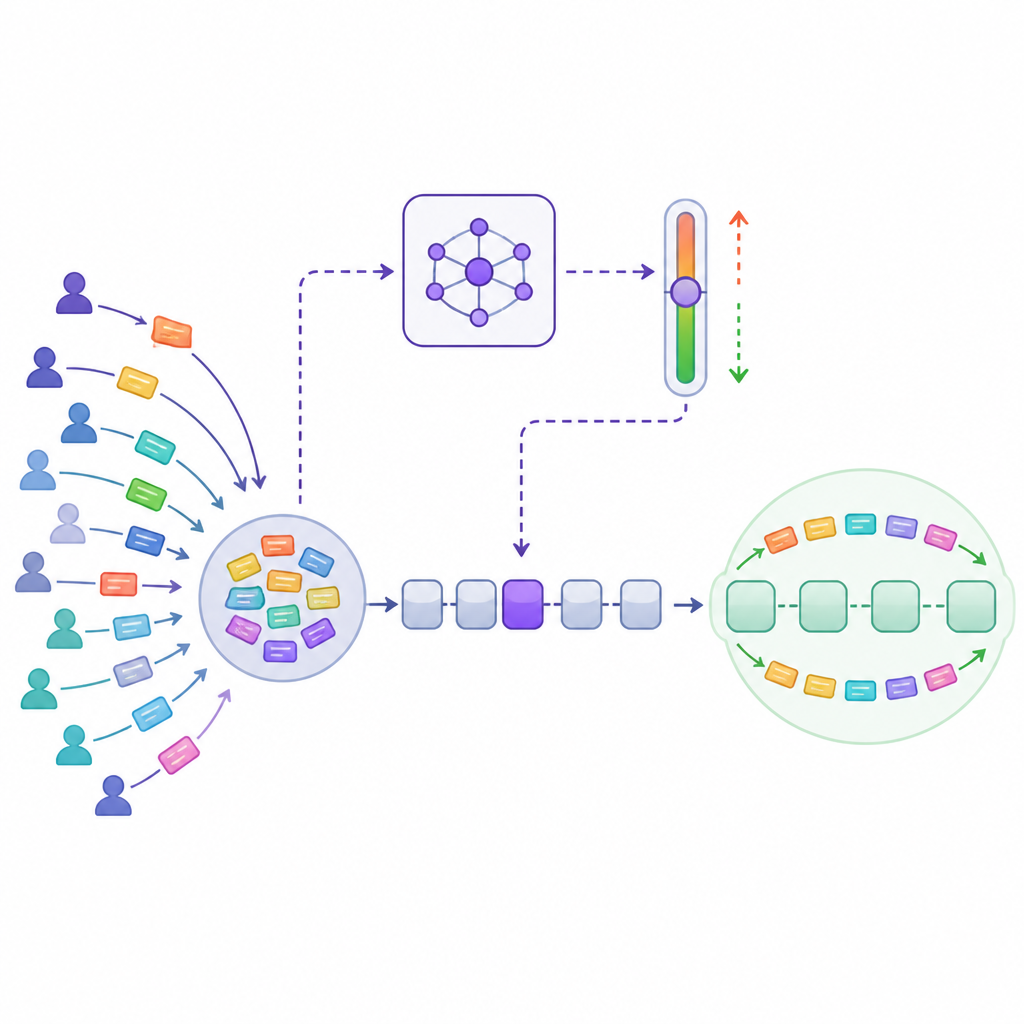
Ethereum charges for every operation using a unit called gas, and users pay a gas price to have their transactions included in a block. Since 2021, a built-in rule called EIP-1559 has tried to make this process fairer and more predictable by adjusting a base fee that everyone must pay, while allowing an extra tip for faster service. When blocks are mostly full, the base fee goes up, and when there is spare room, it goes down. This rule-based approach helped compared with earlier fee auctions, but it still struggles during sharp demand spikes, such as popular NFT drops, and when many users value their transactions at similar levels.
Where the current rules fall short
The authors show that EIP-1559 can behave poorly in real and simulated high-demand periods. During a famous NFT mint in 2022, for example, gas usage hovered near the block limit while the base fee swung wildly, leading to unstable costs and congestion. Prior research also found that when users place very similar values on their transactions, small changes in the base fee can push blocks from nearly empty to completely full and back again. That kind of boom and bust pattern wastes block space and makes it hard for users to guess what they should pay.
Letting an AI agent learn the right fee
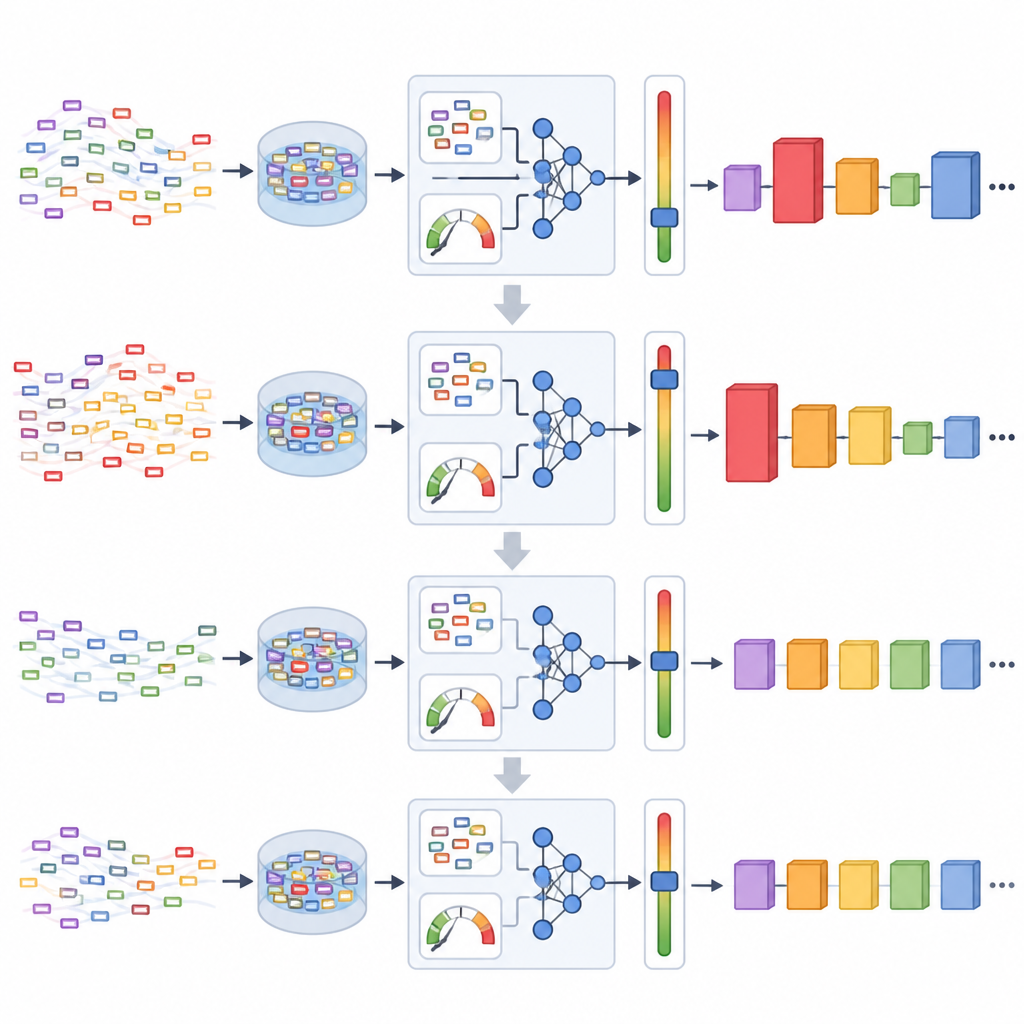
Instead of hard-coding how the base fee reacts to demand, the authors treat fee setting as a learning problem. They build a simulated Ethereum-like environment where an agent observes the current base fee, how much gas was used in the last block, and several details about the shared transaction pool, such as how many new and pending transactions exist and what fees users are offering. Based on this state, the agent chooses a small adjustment to the base fee. After each block, it receives a reward that is higher when gas usage is close to a target level and lower when blocks are too empty or too full. Using deep reinforcement learning, the agent gradually discovers a pattern of adjustments that keeps usage near the target while avoiding extreme swings.
Testing the new fee mechanism under many conditions
The researchers run extensive simulations that mimic different market moods. In some scenarios, transaction demand gently rises or falls; in others, it peaks sharply or drops suddenly. They also vary how users behave, distinguishing between those who simply pay a fixed tip and those who raise their tip when blocks are crowded. Across these setups, the learned policy is compared with the standard EIP-1559 rule. The key measures are how close average gas usage stays to the target, how much gas usage fluctuates from block to block, and how volatile the base fee is over time.
What the results show about stability and flexibility
The deep learning based mechanism consistently keeps gas usage close to the desired level while reducing its variability compared with EIP-1559. The improvement is especially striking when user valuations fall in a narrow range, exactly the setting where the current rule can fall into chaotic patterns. In those cases, the new method cuts fluctuations in gas usage by about a factor of ten and makes the base fee far steadier. The agent also reacts more gracefully to sudden spikes: it raises the base fee quickly enough to pull usage back toward the target without overshooting as much as the old rule. By adjusting how fast the fee is allowed to move and by adding or removing transaction pool information, the authors show that network operators could tune the tradeoff between responsiveness and smoothness.
What this means for future blockchain fees
From a layperson’s perspective, the study suggests that smart algorithms could make Ethereum’s fees feel less like a guessing game. A fee system that learns from real-time activity, rather than following a fixed formula, can keep blocks well used, limit wild fee swings, and handle busy periods with less disruption. While the work is based on simulations and would need careful testing before deployment, it points toward fee mechanisms that adapt to changing conditions and could improve both user experience and network efficiency.
Citation: Jang, H., Shim, J. A deep reinforcement learning approach for dynamic transaction fee adjustment in Ethereum. Sci Rep 16, 15600 (2026). https://doi.org/10.1038/s41598-026-46368-2
Keywords: Ethereum fees, reinforcement learning, blockchain economics, gas price, transaction congestion