Clear Sky Science · en
Finishing protocols of orthodontic attachments determine surface roughness and susceptibility to microbial colonization in vitro
Why the Tiny Bumps on Braces Matter
Clear aligners often rely on small tooth-colored bumps, called attachments, to help move teeth. They may look smooth and harmless, but how these bumps are finished after bonding can change how much dental plaque sticks to them. This study explores whether different ways of trimming the extra material around these attachments can make them more or less friendly to the germs that cause cavities and gum problems.
Small Bumps, Big Role in Clear Aligners
With the rise of clear aligner treatments, composite attachments have become routine in modern orthodontics. These resin bumps are bonded to teeth so the plastic trays can grip and guide them. When dentists place attachments, extra resin often squeezes out around the edges. If that excess is not carefully removed, it can leave tiny ridges and pits on the surface. Earlier research has shown that rougher dental surfaces trap more bacteria, but little was known about the specific finishing steps used for aligner attachments. The authors set out to test how common trimming methods affect surface smoothness, plaque buildup, and the acidity of the resulting microbial film.
How the Lab Tooth Models Were Prepared
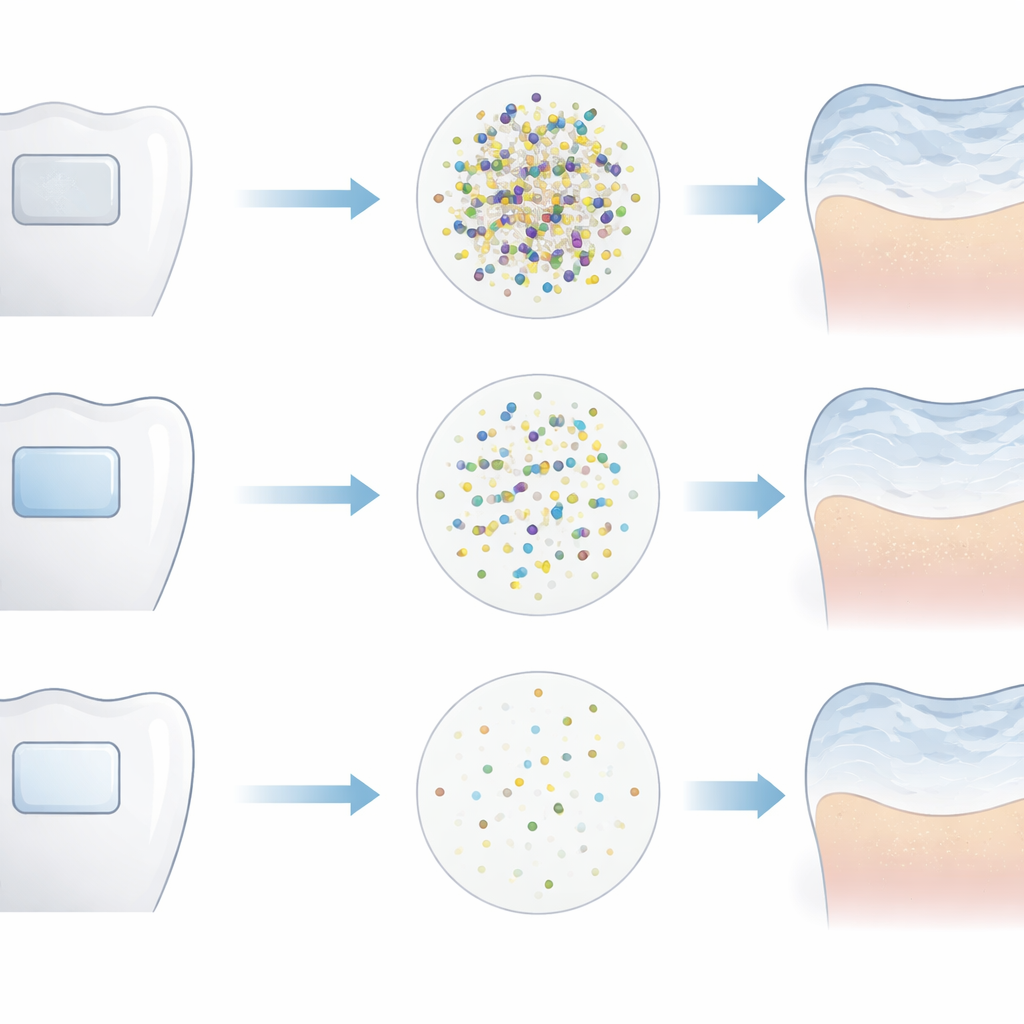
In this in vitro study, researchers made thirty identical composite attachments using a single type of dental resin. The samples were split into three groups. In one group, the extra resin was left untouched, mimicking a rushed or poorly finished attachment. In the second group, excess material was trimmed away with a scalpel blade, as many clinicians do at the chairside. In the third group, the edges were finished with a fine, low-speed rotary bur designed to create a smoother surface. The team then measured the three-dimensional roughness of each attachment and exposed them for 24 hours to a controlled mix of bacteria and yeast commonly involved in tooth decay and oral infections.
What Happened When Germs Were Added
After a day in warm, saliva-like conditions with a sugar-rich broth, the scientists checked how many microorganisms had attached to each sample and how acidic the surrounding liquid had become. All three attachment groups developed similarly acidic environments, with pH values dropping into a range that can weaken tooth enamel. However, the amount of microbial growth differed sharply. Attachments with leftover excess resin harbored the heaviest microbial load. Those trimmed with a scalpel showed about half as many colony-forming units, while attachments finished with the 24-blade bur had by far the fewest organisms. These findings highlight that even when acidity ends up similar, the overall number of attached microbes is strongly influenced by how smooth or rough the attachment surface is.
Tiny Surface Shapes That Shelter Plaque
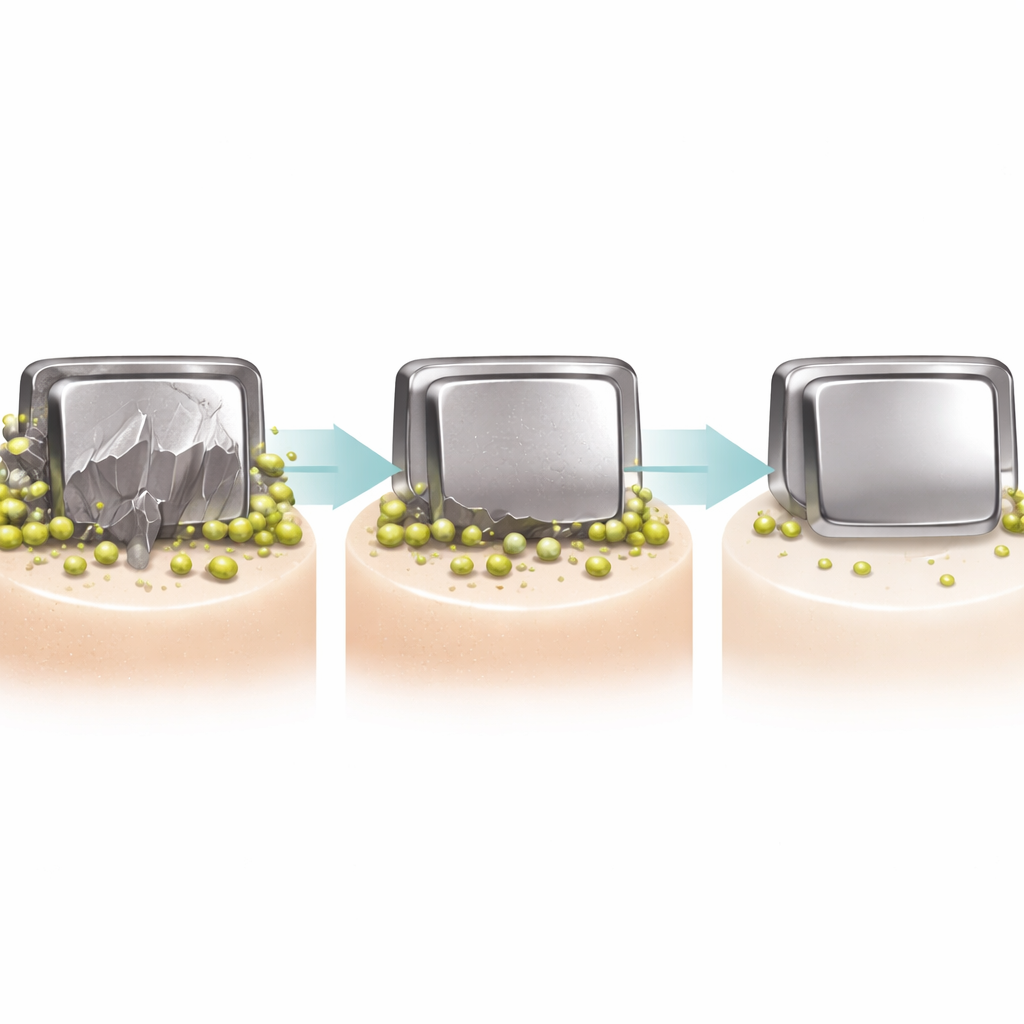
Surface measurements and electron microscope images helped explain these differences. Attachments with unremoved excess showed rugged, valley-like margins where the resin met the base, creating sheltered corners that protect bacteria from being washed away. Scalpel trimming produced more sloping, ramp-like edges with moderate roughness, while rotary-bur finishing yielded the smoothest and most sharply defined contours. In line with long-standing knowledge from dental fillings, rough surfaces and overhanging edges acted as plaque traps. The smoother, perpendicular margins created by the fine bur offered fewer hiding spots, so fewer microbes could cling and organize into biofilm.
What This Means for Everyday Orthodontic Care
Beyond laboratory measurements, the results point to practical implications for patients wearing clear aligners. Rough, poorly finished attachments are more likely to capture plaque and support acid-producing biofilms, which in turn can increase the risk of white spot lesions, enamel demineralization, and gum irritation around treated teeth. In contrast, carefully finished attachments, especially those refined with a fine multi-blade bur, stay smoother and less hospitable to microbial buildup, without needing any extra effort from the patient. In simple terms, the study shows that the way orthodontists shape and polish these small bumps can quietly tilt the balance between a cleaner smile and unwanted tooth damage during treatment.
Citation: Mota, J.B., Justino, I.B., Câmara, J.V.F. et al. Finishing protocols of orthodontic attachments determine surface roughness and susceptibility to microbial colonization in vitro. Sci Rep 16, 11378 (2026). https://doi.org/10.1038/s41598-026-46360-w
Keywords: clear aligners, orthodontic attachments, dental plaque, surface roughness, enamel demineralization