Clear Sky Science · en
Alleviatory effect of foliar application of silicon nanoparticles on germination, growth, and photosynthetic pigments of Butterfly pea (Clitoria ternatea) under salt stress
Why salty soils matter for our food
Across the globe, more and more farmland soils are turning salty, which quietly cuts harvests by stunting crops from the very first stages of life. This study explores whether a tiny helper from the world of nanotechnology, silicon nanoparticles sprayed onto leaves, can help Butterfly pea plants stay healthy and productive in salty conditions that would normally slow their growth and dull their green color.
A tough test for a hardy plant
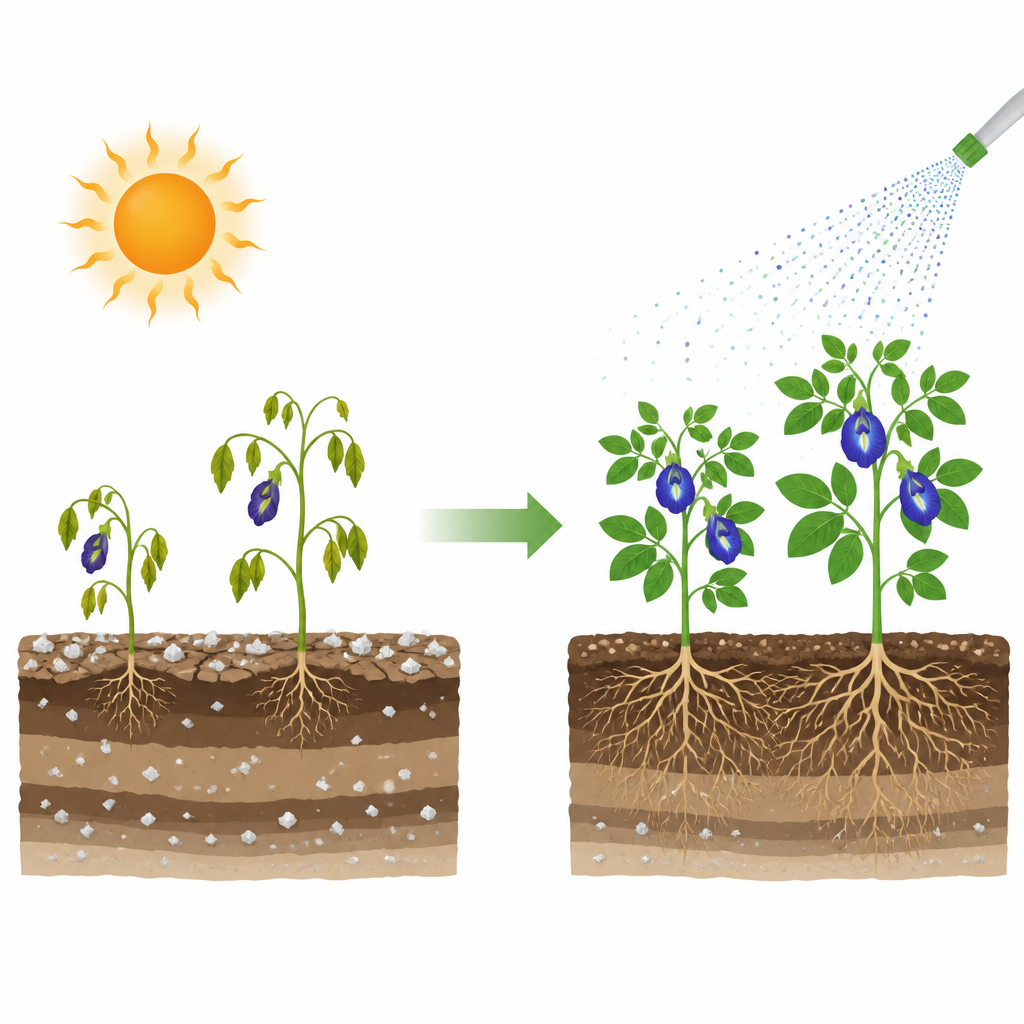
Butterfly pea is a climbing legume valued as animal feed, a natural dye source, and a provider of soil-enriching root nodules. Despite its resilience, it still struggles when salt levels in soil climb. The researchers exposed Butterfly pea seeds and young plants to four levels of salt in water, from no added salt up to a concentration that strongly slows growth. At the same time, some plants received gentle leaf sprays of silicon nanoparticles at two strengths, while others received only plain solution, allowing a clear comparison of how the tiny particles influenced plant performance under stress.
Watching seeds and shoots under stress
Salt made it harder for seeds to sprout and for young seedlings to stretch their first roots and shoots. As the salt level rose, fewer seeds germinated, and those that did produced shorter radicles and plumules, with lower fresh and dry weight. The harshest salt treatment cut plant height by about half and leaf area by more than half compared with unsalted plants. When the scientists added silicon nanoparticles to the leaves, however, seeds and seedlings fared noticeably better. Sprayed plants showed higher germination percentages, longer young roots and shoots, and more biomass, especially at the higher nanoparticle dose.
Greener leaves and better water balance
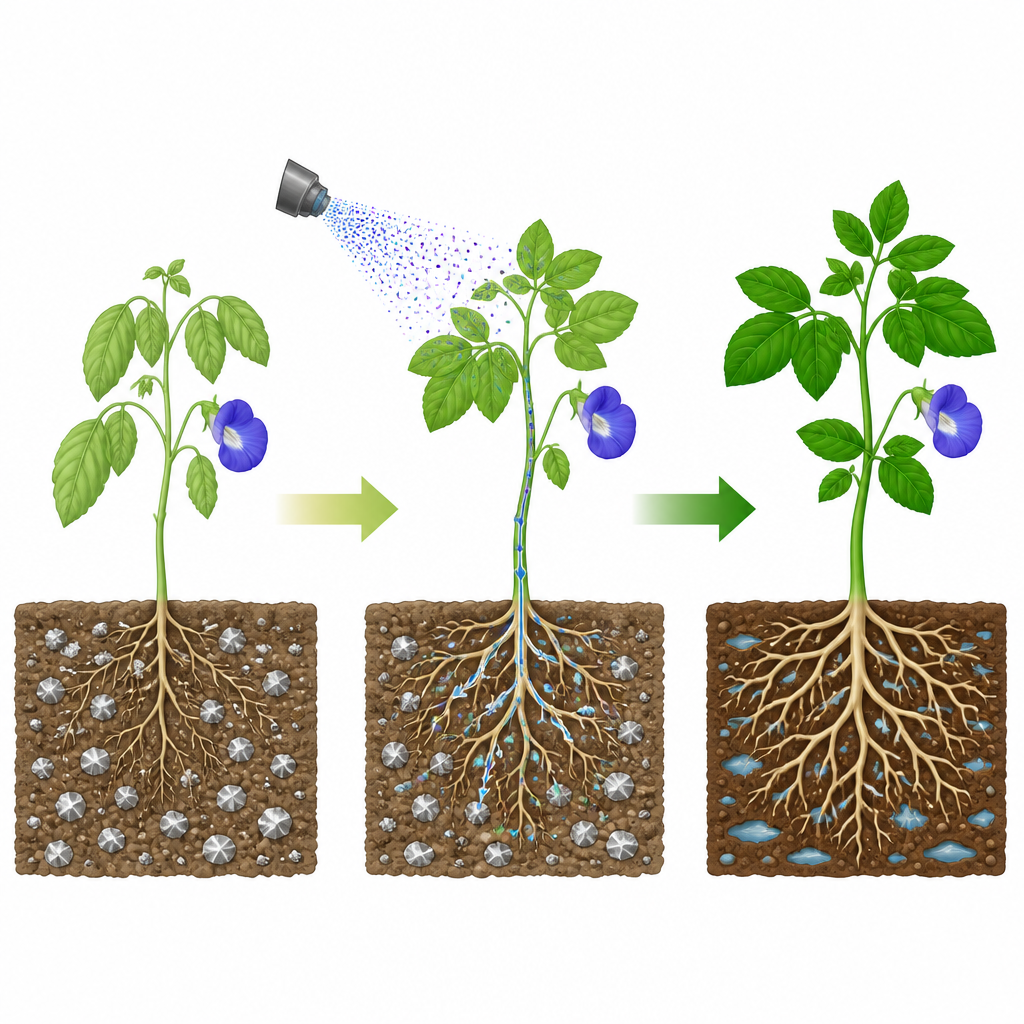
Salt did not only shrink plants; it also dulled their color and drained their water content. Levels of chlorophyll a, chlorophyll b, total chlorophyll, and carotenoids all dropped as salt increased, signaling damage to the light-harvesting system that powers growth. Relative water content in the leaves also fell under strong salt stress, showing that plants were struggling to stay hydrated. Foliar sprays of silicon nanoparticles partly reversed these trends. Under the highest salt level, treated plants regained much of their lost height and leaf area, and their dry biomass rose by roughly one sixth compared to unsprayed, salt-stressed plants. Their leaves held more water and contained more green and yellow pigments, suggesting that the nanoparticles helped stabilize cell structures and protect the photosynthetic machinery.
Inner chemistry shifts that support survival
Inside the leaves, salt stress triggered classic emergency responses: increased amounts of proline and soluble sugars, which help cells hold onto water and buffer against damage, alongside shifts in proteins and protective compounds such as phenolics and flavonoids. With salt alone, some of these defenses rose but overall protein and certain antioxidants fell, hinting at strain on the plant’s metabolism. Silicon nanoparticle sprays boosted the build up of proline and sugars even further and helped restore protein, phenolic, and flavonoid levels. Statistical analyses that looked at many traits together showed that treated plants clustered with higher growth, better pigment status, and stronger metabolic balance, while unsprayed, salt-stressed plants grouped with poor performance.
What this means for salty fields
The work shows that fine sprays of silicon nanoparticles can cushion Butterfly pea plants against the harmful effects of salty soils, from germination through early growth. By helping plants keep their leaves green, their cells hydrated, and their internal chemistry tuned for defense, these tiny particles allowed substantial recovery of height, leaf size, and biomass even at severe salt levels. For farmers facing creeping soil salinity, especially in dry regions, foliar silicon nanoparticles may offer an environmentally friendly tool to maintain the productivity of forage and multipurpose crops like Butterfly pea without changing the soil itself.
Citation: Khalofah, A. Alleviatory effect of foliar application of silicon nanoparticles on germination, growth, and photosynthetic pigments of Butterfly pea (Clitoria ternatea) under salt stress. Sci Rep 16, 15212 (2026). https://doi.org/10.1038/s41598-026-46349-5
Keywords: salt stress, Butterfly pea, silicon nanoparticles, foliar spray, plant salinity tolerance