Clear Sky Science · en
Valorization of waste concrete powder as a sustainable substitute for limestone fines in conventional concrete: a case study from Portugal
Turning Concrete Waste into a Helpful Resource
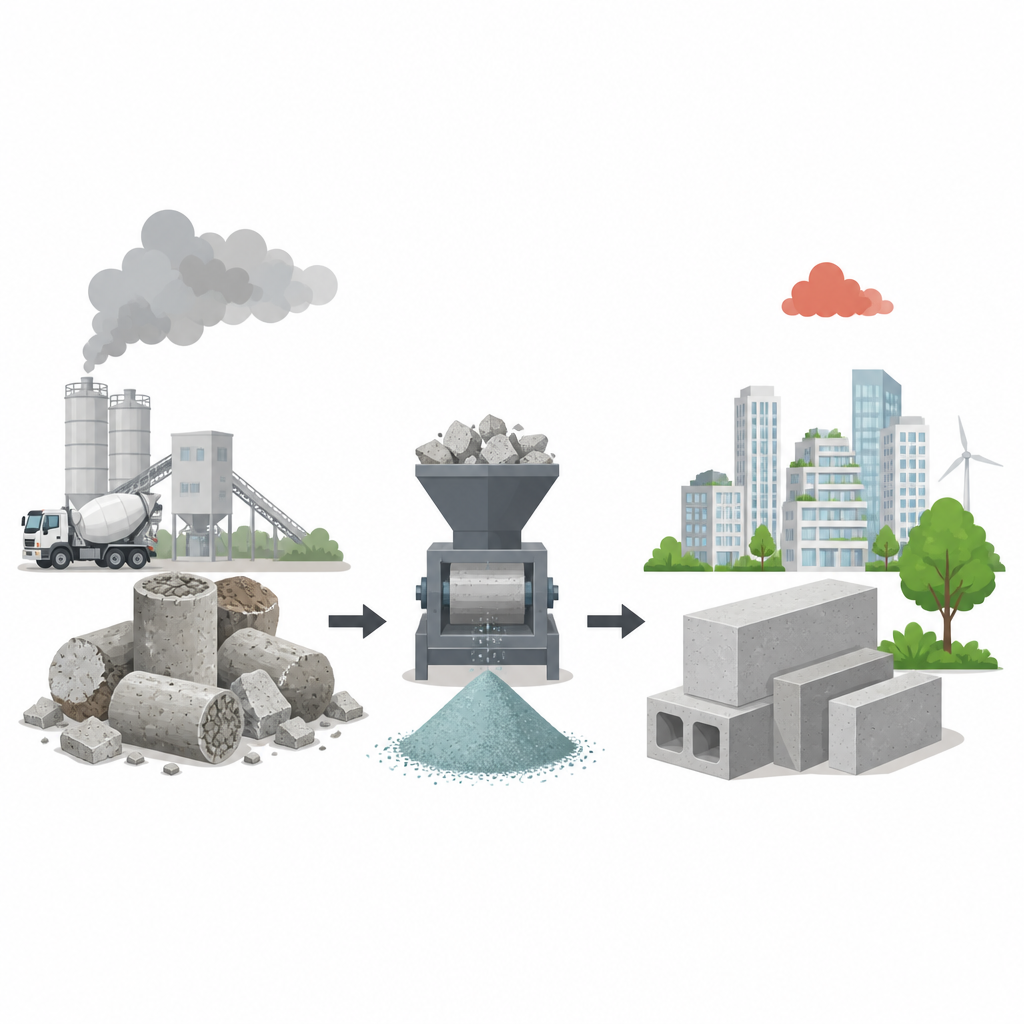
Concrete is the backbone of modern cities, but it comes with a heavy environmental cost. Making cement, the key ingredient in concrete, releases large amounts of carbon dioxide, while huge volumes of used and tested concrete end up as waste. This study explores whether fine powder made from crushed concrete test samples, usually thrown away after quality checks, can safely replace part of the cement now filled by finely ground limestone. If it works, the same concrete plants that make this waste could turn it into a useful ingredient, cutting both emissions and landfill use.
From Broken Test Blocks to Fine Powder
In a ready-mix concrete plant in Portugal, thousands of cube specimens are cast and crushed each year to verify strength, generating about 200 tons of waste concrete per plant. Instead of treating this as rubbish, the study crushed the broken pieces further in a grinding drum and sieved them into a fine powder. This concrete test sample powder was then used to replace part of the cement in small mortar prisms and full concrete mixes, at levels ranging from 10 to 30 percent in mortar and 10 to 20 percent in concrete. For comparison, the same replacement levels were also tested using the more familiar limestone fines currently used by many producers.
How the New Mixes Performed in the Lab
Engineers first checked how strong these mixes became over time. When up to 10 percent of the cement was replaced by waste concrete powder, the resulting mortars and concretes reached compressive strengths close to those of the standard mix and to limestone-based mixes. Beyond that level, however, strength dropped noticeably, especially at 20 and 30 percent replacement, because there was simply less active cement available to bind the material. Limestone mixes stayed slightly stronger than those with concrete powder, largely because the limestone particles were finer and packed more tightly, but at 10 percent replacement the gap was small.
Water, Salts, and the Inside Story
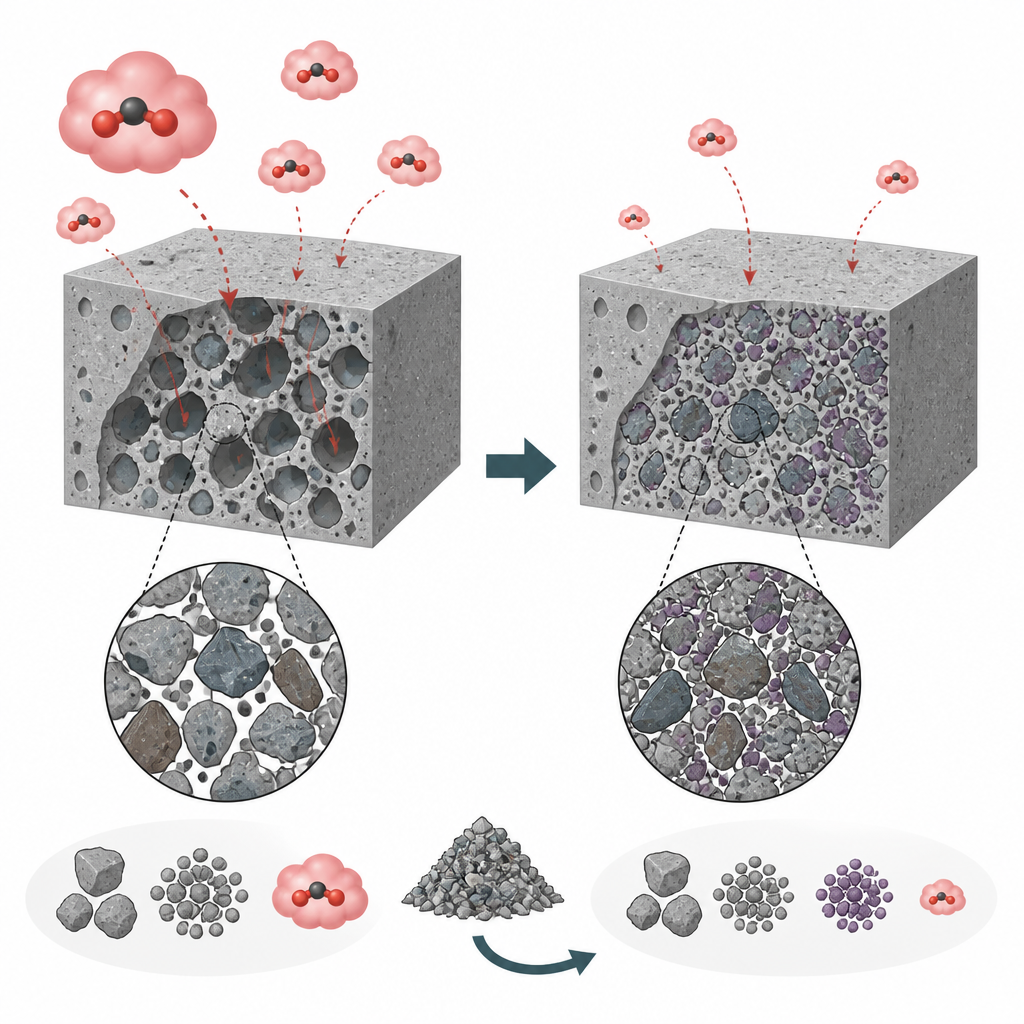
The study also probed how easy it was for water and salt to move through the concrete, since these processes strongly affect durability. At a modest 10 percent replacement level, both limestone fines and concrete powder actually lowered the rate at which water was sucked into the surface, suggesting that the fine particles helped fill and refine the tiny near-surface pores. At higher replacement levels, this benefit was lost and overall porosity increased, which made it easier for water and especially chloride ions, such as those from de-icing salts or sea spray, to penetrate. Microscopic and mineral tests backed up these results: they showed that both limestone and waste concrete powder behaved mostly as inert fillers, helping early crystal growth but not adding much chemical reaction of their own. The concrete powder particles were coarser and more irregular, leading to a slightly looser internal structure than in limestone mixes.
Climate Impact and Circular Use of Materials
Because cement is the biggest source of emissions in concrete, any reduction in cement content can lower the carbon footprint of a mix. Using a life cycle assessment tool, the researchers calculated the carbon dioxide released per cubic meter of concrete. Replacing 20 percent of the cement with either limestone fines or concrete test sample powder cut embodied emissions by roughly 17 percent compared with the reference mix. When these emissions were judged alongside the achieved strength, all mixes fell within a narrow performance band, showing that notable CO2 savings are possible without sacrificing too much strength, as long as replacement levels stay moderate.
What This Means for Future Concrete
For a non-specialist, the main message is that waste from routine concrete testing can be turned into a useful ingredient that partly replaces cement. At around 10 percent replacement, this recycled powder keeps strength and basic durability similar to current practice while helping to reduce emissions and avoid landfill disposal. Push the replacement too high, and the concrete becomes weaker and more permeable. The work suggests a practical, near-term step toward more circular and climate-conscious concrete: grind up a waste that plants already produce every day and feed it back into new mixes, carefully limited to levels where performance remains reliable.
Citation: Özkan, H. Valorization of waste concrete powder as a sustainable substitute for limestone fines in conventional concrete: a case study from Portugal. Sci Rep 16, 15701 (2026). https://doi.org/10.1038/s41598-026-46343-x
Keywords: concrete waste, cement replacement, limestone fines, circular economy, carbon footprint