Clear Sky Science · en
Prompt engineering competence, knowledge management, and technology fit as drivers of educational sustainability through generative AI
Why smarter questions to AI matter for students
As generative AI tools like chatbots enter classrooms, a key puzzle emerges: what makes some students turn these tools into lasting learning partners while others use them only briefly or poorly? This study explores how students’ skill in asking AI good questions, how they handle the knowledge they gain, and how well AI tools fit their study needs all work together to support long term, sustainable learning in higher education.
How the study looked at students using AI
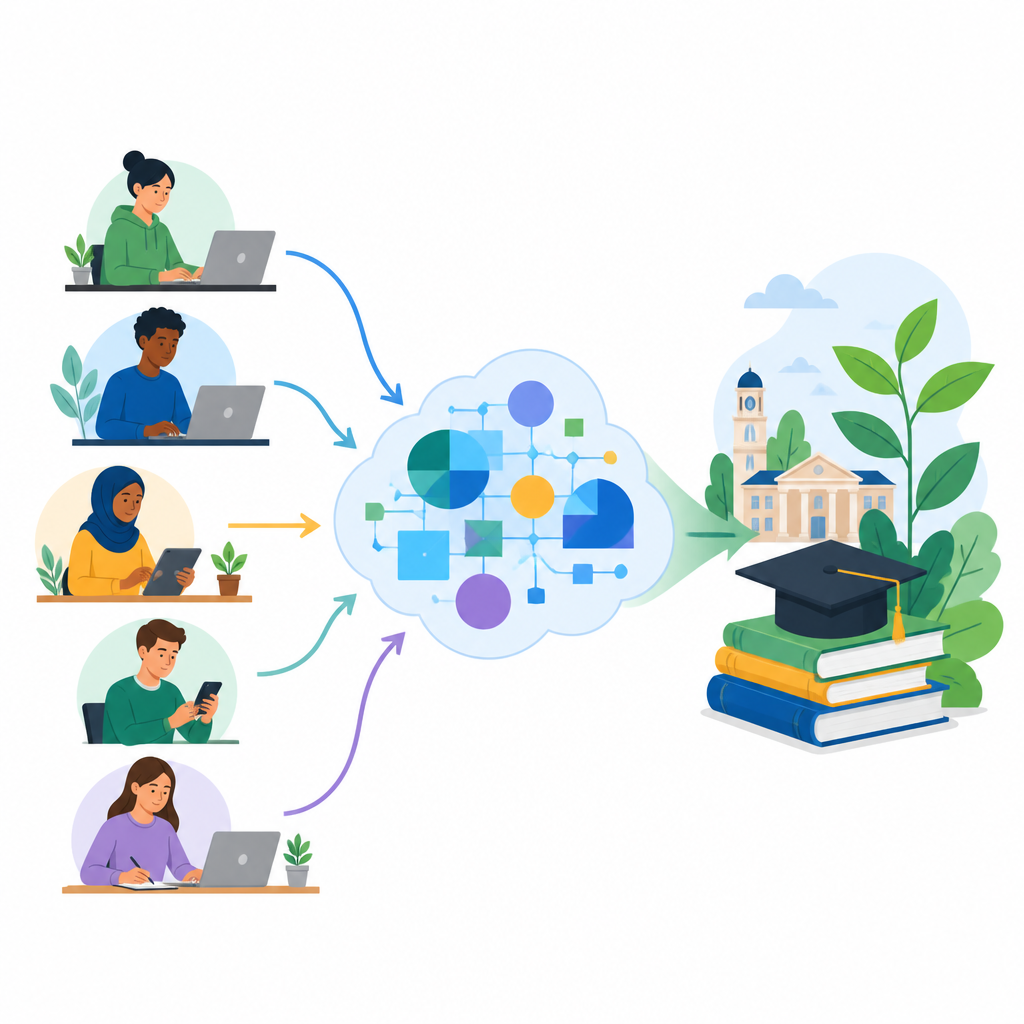
The researchers surveyed 437 university students who already use generative AI tools such as ChatGPT for academic work. Using statistical modeling, they built and tested a chain of influences that begins with a student’s “prompt engineering” competence, passes through how much useful knowledge the student gains and actually uses, then shapes how well the AI seems to fit both the tasks at hand and the individual student, and finally leads to the student’s intention to keep using AI. The end point of this chain is educational sustainability, understood here as the lasting, effective use of AI in learning rather than a short lived tech fad.
From better prompts to better learning fit
The core idea is that in generative AI systems, the quality of what students get out depends heavily on what they put in. Students who can pose clear, detailed, and purposeful prompts tend to extract more accurate and relevant information and are better able to apply it to assignments, projects, and problem solving. The study finds that this knowledge acquisition and application strongly shape how well students feel AI fits their coursework tasks and their own preferences, skills, and comfort level. In other words, smart prompting does not just yield better answers; it makes the technology feel more suited to both the work and the person using it.
Why “fit” drives continued use

The research highlights two kinds of fit. Task–technology fit captures how well AI tools help with specific learning tasks, such as understanding a concept or solving a problem. Individual–technology fit captures how well the tools match students’ learning styles, confidence, and needs. Both types of fit are linked to students’ plans to continue using AI, but task–technology fit is the stronger driver. When students feel that AI genuinely helps them complete academic tasks more effectively, they are far more likely to keep using it voluntarily and regularly. This continued use, in turn, is closely tied to the idea of educational sustainability, since tools only reshape learning when they remain part of everyday study routines.
Prompt skills as a new literacy
The study also positions prompt engineering as a new kind of academic literacy. Students who are skilled at breaking complex tasks into smaller questions, adjusting prompts to different AI tools, refining their requests based on earlier replies, and checking AI outputs for bias and accuracy show much higher levels of both knowledge gain and knowledge use. Prompt engineering emerged as the strongest predictor in the entire model, suggesting that how students talk to AI can matter more than the specific platform they choose. Interestingly, the overall pattern held for both male and female students, although applying knowledge to real tasks seemed to strengthen the sense of task fit a bit more for women.
What this means for the future of learning
To a lay reader, the study’s message is straightforward: generative AI boosts education most when students learn how to ask better questions and actively work with the answers. When strong prompt skills feed into steady knowledge gain and real world use, students see AI as a natural part of their study toolkit, not a passing novelty. This sustained, meaningful use is what the authors call educational sustainability. Rather than replacing human learning, AI becomes a partner that supports deeper understanding and long lasting skills, provided that schools help students develop the competencies needed to guide and question these powerful tools.
Citation: Gibreel, O., Karataş, K. & Arpaci, I. Prompt engineering competence, knowledge management, and technology fit as drivers of educational sustainability through generative AI. Sci Rep 16, 15596 (2026). https://doi.org/10.1038/s41598-026-46335-x
Keywords: generative AI in education, prompt engineering, educational sustainability, task technology fit, knowledge management