Clear Sky Science · en
Diagnostic value of bone marrow smear for amyloid detection and its correlation with clinical features in systemic light-chain amyloidosis
Why this matters for patients and doctors
Systemic light chain amyloidosis is a rare blood-related disease that can quietly damage the heart, kidneys, liver, and other organs before it is recognized. Diagnosis usually relies on tissue samples that take time and resources to process. This study asks a simple but important question: can a routine bone marrow smear, which is quick and widely available, reliably help spot the telltale protein deposits of amyloidosis and guide care sooner?

A closer look at a rare but serious disease
In light chain amyloidosis, fragments of immune proteins misfold and build up as stiff, abnormal material between cells. Over time, these deposits interfere with how organs work, leading to fatigue, kidney problems, shortness of breath, and heart failure. Confirming the diagnosis requires seeing these deposits in a biopsy under the microscope. Sampling organs such as the heart can be risky, so doctors often turn to easier sites like abdominal fat or bone marrow. Bone marrow biopsy is standard, but its processing is slow and may miss some cases. Bone marrow smears, prepared from the same sample, are faster to read, yet their true value for detecting amyloid had not been well tested in a large group of patients.
How the study was carried out
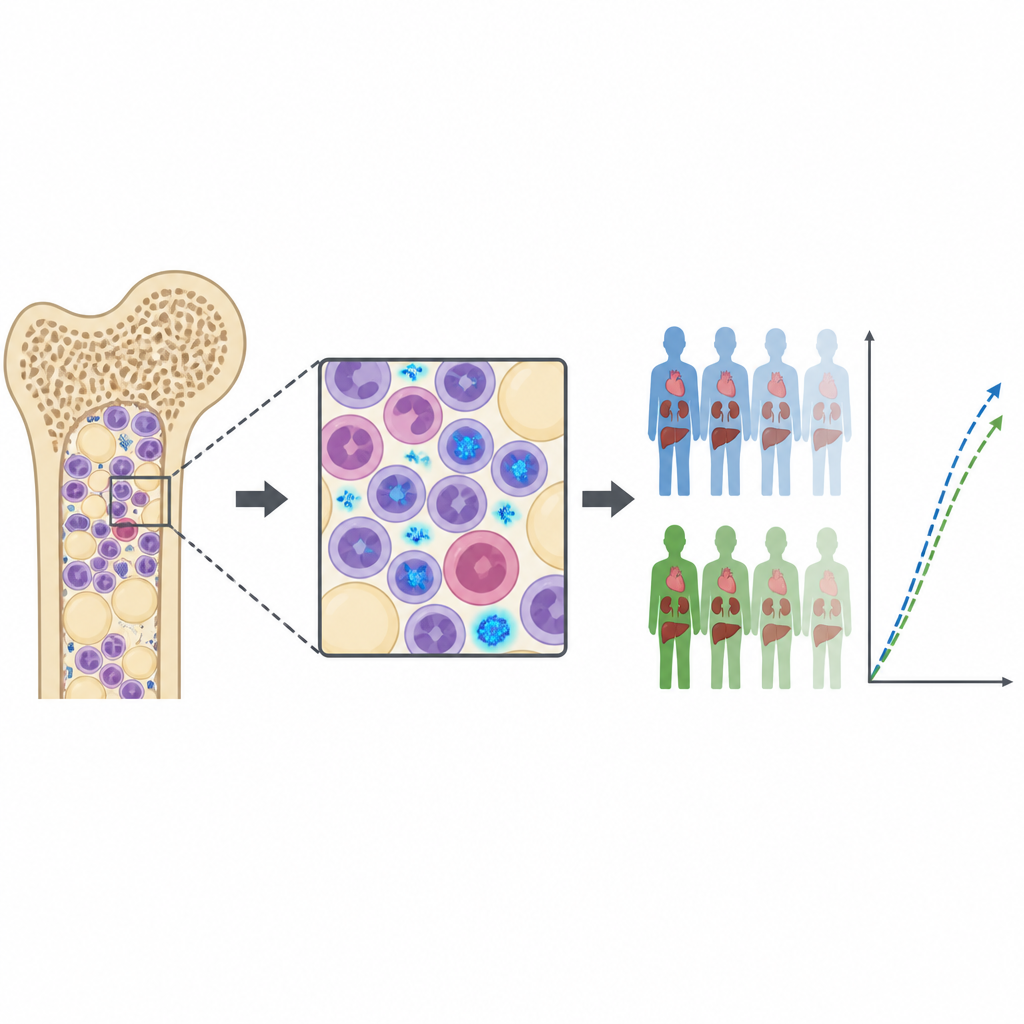
Researchers in China reviewed bone marrow smears from 252 people with confirmed systemic light chain amyloidosis. For each person, they compared the smear with a matching bone marrow biopsy taken from the same spot. The team used two common stains on the smears: Wright–Giemsa, which gives a purplish-blue color to cells and material, and Congo red, which highlights amyloid deposits that glow apple-green under polarized light. Three experienced hematologists examined all slides independently and only called a result positive if they fully agreed. The study also collected detailed blood, urine, and heart and liver test results, and tracked survival over several years.
How well smears matched biopsies
Among all 252 patients, amyloid showed up on bone marrow smears in nearly half of them. When researchers focused on the 126 patients whose biopsies clearly contained amyloid, 96 percent also had positive smears. In the 126 patients whose biopsies did not reveal amyloid, all smears were negative as well. Overall, smear and biopsy results agreed in 98 percent of cases. This means that when a smear showed amyloid, it almost always matched what the more involved biopsy found. At the same time, the smear did not pick up more cases than biopsy, so it should not replace the tissue sample, but it can act as a rapid companion test from the same procedure.
Links to organ strain and blood changes
The team also asked whether having amyloid deposits in the bone marrow itself was tied to how sick patients were. Among patients who did not have other plasma cell or B-cell cancers, those with amyloid in their bone marrow were more likely to have a particular light chain type and had lower hemoglobin levels, suggesting more anemia. They also showed higher levels of enzymes and markers related to liver stress, kidney filtering, and heart strain. This pattern hints that bone marrow deposits may track with more widespread organ involvement, even when the number of malignant plasma cells in the marrow is modest.
What it means for outcomes and care
Despite these links to organ strain, patients with and without bone marrow amyloid deposits had similar survival over roughly three to four years of follow-up, whether or not they had an accompanying blood cancer such as multiple myeloma. The presence of marrow deposits also did not line up with specific chromosome changes in the abnormal cells. Taken together, the results suggest that bone marrow smears can offer a fast and reliable way to screen for amyloid during routine marrow exams, especially when suspicious material is seen and quickly checked with Congo red staining. However, full bone marrow biopsy remains essential to confirm the diagnosis and to pinpoint the exact type of amyloid, which guides treatment choices. Using both smear and biopsy together may help doctors detect this rare disease earlier and plan care more efficiently.
Citation: Li, J., Chang, Z., Tang, Q. et al. Diagnostic value of bone marrow smear for amyloid detection and its correlation with clinical features in systemic light-chain amyloidosis. Sci Rep 16, 15367 (2026). https://doi.org/10.1038/s41598-026-46329-9
Keywords: light chain amyloidosis, bone marrow smear, congo red staining, organ involvement, hematology diagnosis