Clear Sky Science · en
Low Fischer’s ratio is associated with increased mortality in patients with kidney failure
Why the Balance of Small Molecules Matters
People with severe kidney disease face a much higher risk of dying, often from heart problems, even when they receive modern dialysis care. Doctors know some of the culprits—such as inflammation, poor nutrition, and diabetes—but these do not fully explain why outcomes remain so poor. This study looks at a simple blood measurement called Fischer’s ratio, which reflects the balance between two groups of building blocks of protein, to see whether it can help identify which kidney patients are at greatest risk.
A Simple Ratio with a Big Story
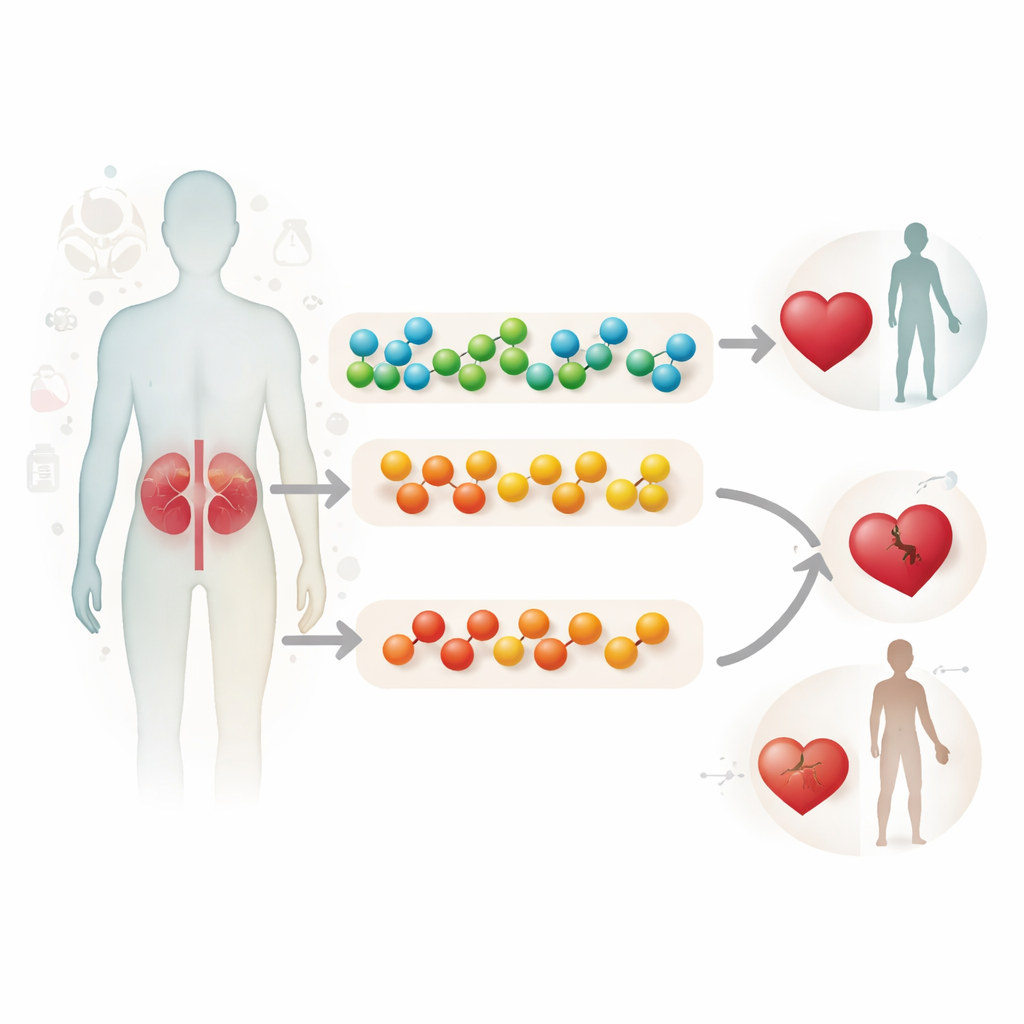
Proteins in our bodies are made from amino acids. Two important families of these are branched-chain amino acids and aromatic amino acids. The Fischer’s ratio compares the amount of the branched group to the aromatic group in the blood. Earlier work in liver and heart disease suggested that when this balance is off, patients tend to do worse. Because the kidneys play a central role in handling amino acids, the authors asked whether this ratio might also be a warning sign in people whose kidneys have failed and who are starting long-term dialysis.
How the Study Was Carried Out
The researchers followed 328 adults with the most advanced stage of chronic kidney disease just as they began dialysis treatment. They measured levels of the two amino acid groups in fasting blood samples and calculated each person’s Fischer’s ratio. Patients were then grouped into high, middle, and low ranges of this ratio and tracked for up to five years. During this period, one quarter of the patients died and about half received a kidney transplant. Using statistical methods that took transplant into account and adjusted for age, heart disease, diabetes, blood pressure, inflammation, body weight, and nutritional status, the team examined how strongly the ratio was linked to survival.
What the Researchers Found
Compared with healthy volunteers of similar age and sex, patients with kidney failure had lower levels of both amino acid groups and a lower Fischer’s ratio overall. Among the patients themselves, those who died had a lower ratio than those who survived. When the researchers compared groups, people in the low and middle ranges of the ratio had a roughly 70 percent higher risk of death than those in the highest range, even after accounting for many other risk factors. Interestingly, looking at each amino acid group alone did not predict death as clearly as the ratio did, suggesting that the balance between the two matters more than the absolute amount of either one.
Clues to Heart and Nutrition Problems
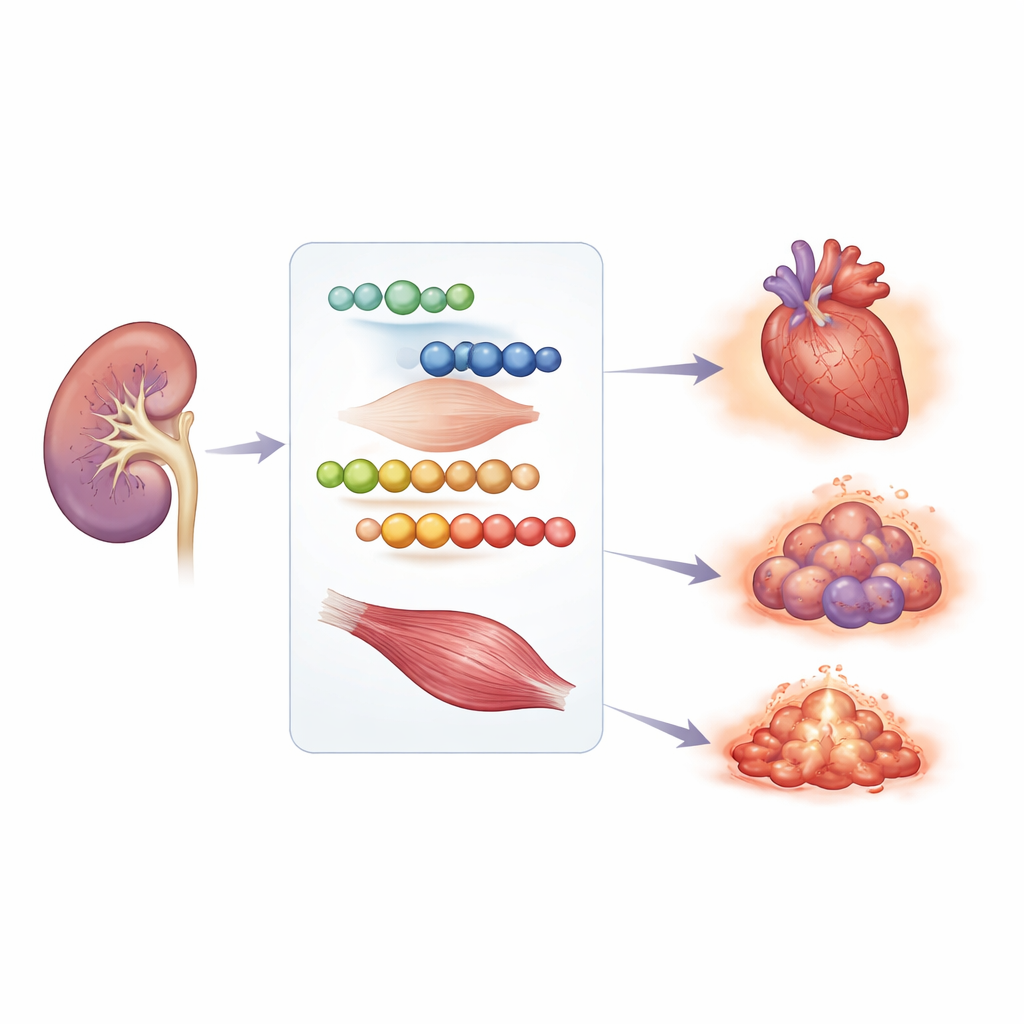
The Fischer’s ratio was linked to signs of poor nutrition and inflammation: patients with lower ratios were more likely to be malnourished and to have higher levels of inflammatory markers. Yet these links were modest, implying that the ratio is capturing additional, more complex changes in metabolism. When the researchers looked at subgroups, they found that the ratio was especially powerful in patients who already had heart disease, and to a lesser degree in those with diabetes. In these groups, a low ratio marked out patients with several-fold higher odds of dying, pointing to a tight connection between disturbed amino acid balance, failing kidneys, and vulnerable hearts and blood vessels.
What This Could Mean for Patients
The study suggests that a low Fischer’s ratio is a warning sign for people starting dialysis: it signals a higher chance of death, particularly in those who also have heart disease. Because this ratio can be measured from a routine blood test, it might one day help doctors pick out high-risk patients who need closer monitoring or more intensive nutritional and metabolic support. The research does not yet prove that fixing the amino acid imbalance will improve survival, but it highlights a new piece of the puzzle in kidney failure and points toward future trials that could test whether targeted dietary or medical treatments can tilt this tiny molecular balance in favor of longer, healthier lives.
Citation: Zhang, Q., Suliman, M.E., Qureshi, A.R. et al. Low Fischer’s ratio is associated with increased mortality in patients with kidney failure. Sci Rep 16, 11603 (2026). https://doi.org/10.1038/s41598-026-46326-y
Keywords: chronic kidney disease, Fischer ratio, amino acids, dialysis outcomes, cardiovascular risk