Clear Sky Science · en
Goal setting as a facilitator of motor learning in postural control task
Why balance training and goals matter
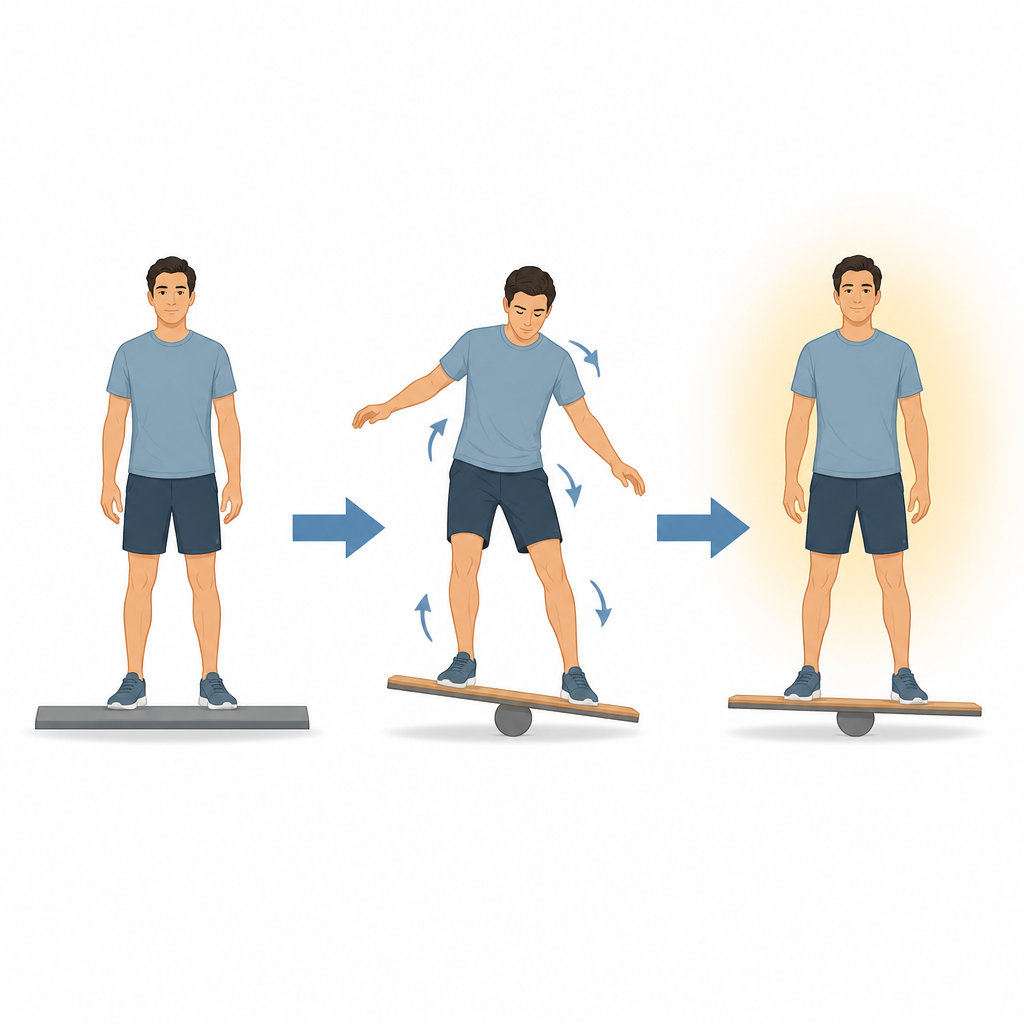
Standing steady on an unstable board might sound like a simple gym trick, but it taps into skills that keep us upright in daily life and sports. This study asked a practical question: when people practice a challenging balance task, does giving them clear performance goals in addition to feedback help them learn faster and feel more motivated than feedback alone?
What the researchers wanted to find out
The team focused on two big ideas: motor learning and motivation. Motor learning is how our bodies and brains get better at movements with practice, such as standing on a moving bus or landing from a jump. Motivation matters because people practice more, and more effectively, when they care about a task and feel capable. The researchers drew on goal setting theory, which suggests that specific, challenging but realistic goals can sharpen focus, boost effort, and encourage people to discover better strategies. They also used concepts from motivation research, which links a person’s sense of competence and enjoyment to how well they learn new skills.
How the balance experiment worked
Thirty four healthy young adults with no balance disorders were recruited. Each person stood on a narrow board mounted on a rounded base that could tilt in all directions. Small motion sensors under the board recorded how much it rocked, summarized in a stability score: the more the board moved, the higher the score and the worse the balance. Everyone first completed a pretest of three trials without goals or feedback, then answered a short survey about how interested they felt, how competent they felt, and how much effort and importance they attached to the task.
Practice with and without clear goals
Participants were divided into two groups. The control group practiced with feedback only: after each short trial on the board, they were told how well they had done. The goal setting group got more guidance. Before each trial they were shown a target value based on how the control group had performed on the same trial, giving them a clear performance goal to aim for. After the trial, they received the same feedback on their own stability score. Both groups completed twelve practice trials, broken into four blocks with rest periods, and then filled out the motivation survey again. A day later, everyone returned for a retention test, repeating the original three trials without goals or extra feedback to see what learning remained.
What changed in balance and motivation
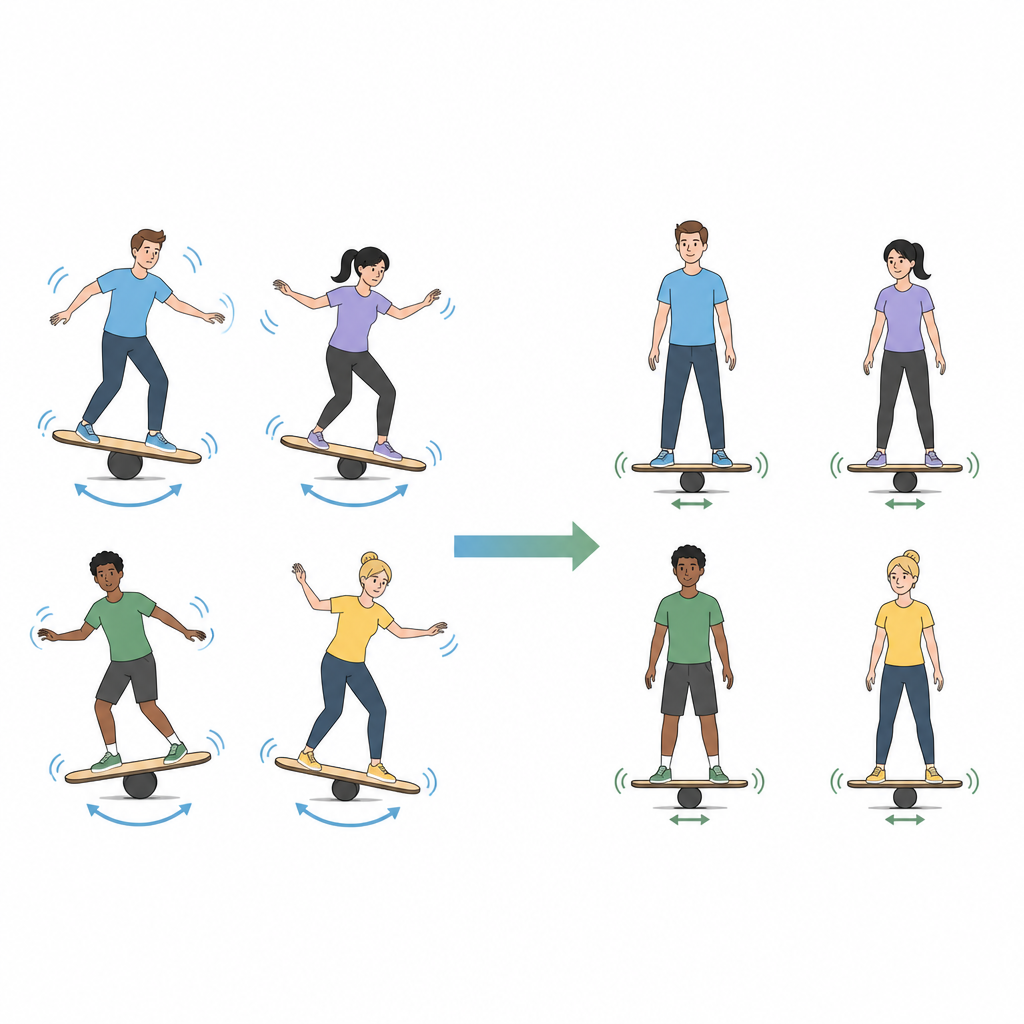
During practice, the goal setting group steadily outperformed the control group: on average their stability scores were lower, meaning they kept the board closer to level. By the final practice block, overall performance in both groups had improved, but the goal setting group held a clear advantage. The key test came a day later. At the retention session, the goal setting group again showed better balance than the control group, and only the goal setting group showed a clear improvement from pretest to retention. This pattern suggests that the benefits were not just short lived; having specific goals alongside feedback helped participants truly learn the balance skill.
How people felt about the task
The motivation results told a similar story. Across the study, participants who practiced with goals reported higher overall intrinsic motivation than those who received feedback alone. In particular, their interest and enjoyment in the task increased, and their sense of competence rose more than in the control group. In contrast, ratings of effort and importance started high and did not change much in either group, possibly because the unusual board task felt challenging and engaging to everyone from the start. The pattern fits with the idea that clear, realistic goals and repeated success experiences can make a difficult task feel more rewarding and build confidence.
What this means for sport and rehabilitation
The authors conclude that combining specific, attainable performance goals with regular feedback can help people learn balance skills more effectively while also feeling more interested and capable. Because balance underpins everyday activities and many athletic movements, this simple strategy could be useful in sports training and rehabilitation programs that aim to prevent falls or rebuild movement skills. Rather than asking people simply to "do their best," giving them clear targets and showing them how they are progressing can make practice more productive and more satisfying.
Citation: Akizuki, K., Takeuchi, K., Yamamoto, R. et al. Goal setting as a facilitator of motor learning in postural control task. Sci Rep 16, 15942 (2026). https://doi.org/10.1038/s41598-026-46305-3
Keywords: goal setting, motor learning, balance training, intrinsic motivation, rehabilitation