Clear Sky Science · en
Identification and verification of biomarkers associated with integrated stress response in heart failure
Why stressed cells matter in a tired heart
Heart failure is often described as a weak pump, but deep inside heart cells a complex stress response is constantly trying to keep those cells alive. When this internal alarm system is pushed too hard or for too long, it can worsen damage instead of limiting it. This study asked a simple but important question: can we find blood signals of that cellular stress that help doctors spot and track heart failure, and perhaps one day guide treatment?
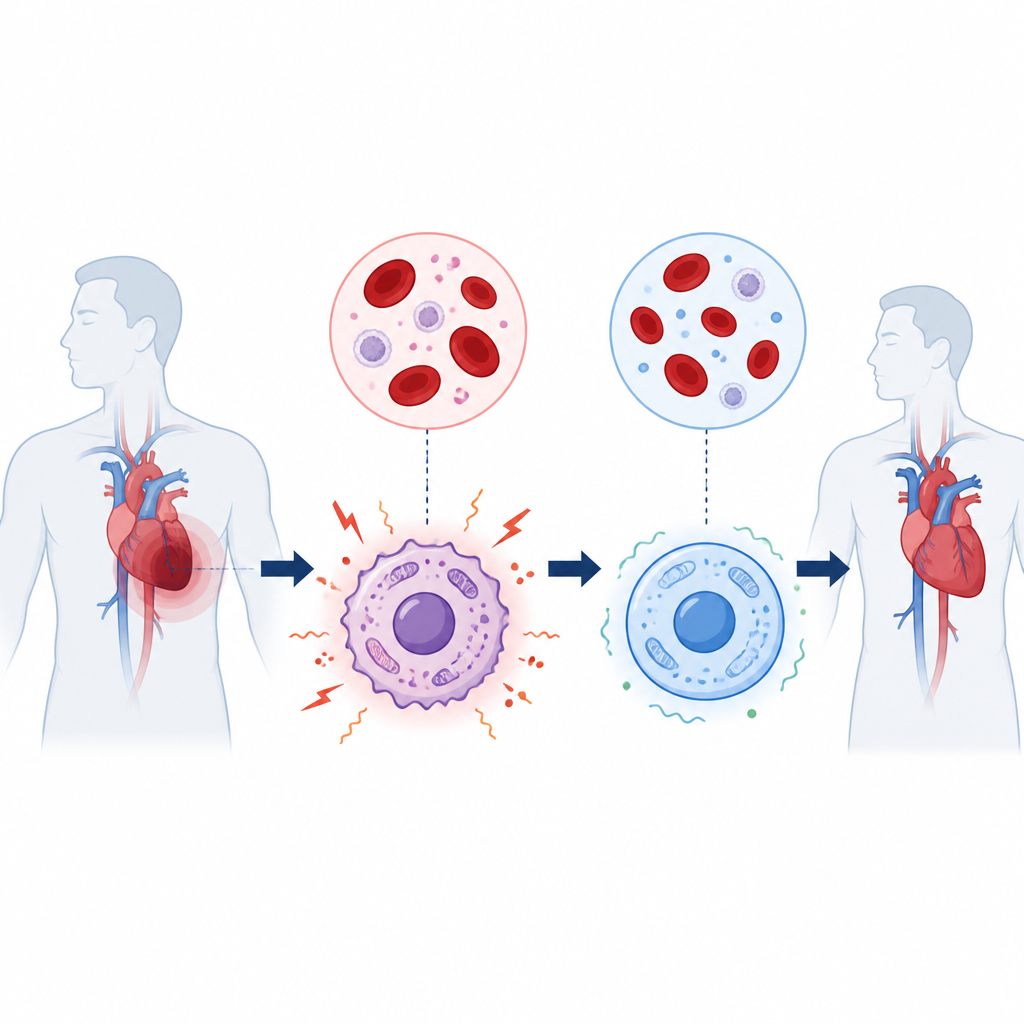
Looking for warning signs in the blood
The researchers focused on the integrated stress response, a built in safety program that cells use when they face threats such as lack of oxygen, toxic molecules, or viral infection. They collected large public datasets of gene activity from people with and without heart failure. Some samples came from blood immune cells, which are easier to obtain in the clinic, and others from heart tissue itself. By combining previous knowledge of stress related genes with these datasets, they searched for genes whose activity changed in a consistent way in people with heart failure.
From thousands of genes to a short list
Modern gene chips measure the activity of thousands of genes at once. The team used network analysis and machine learning to reduce this huge list. First they identified more than two thousand genes that were more or less active in heart failure. Then they kept only those that also belonged to stress related pathways and moved together in heart failure samples. Finally, two independent algorithms were used to pick out the strongest candidates. This process narrowed the field to eleven promising genes, and two of them, called PSME4 and SQSTM1, showed the same pattern in both blood and heart tissue datasets.
Two stress markers that move in opposite directions
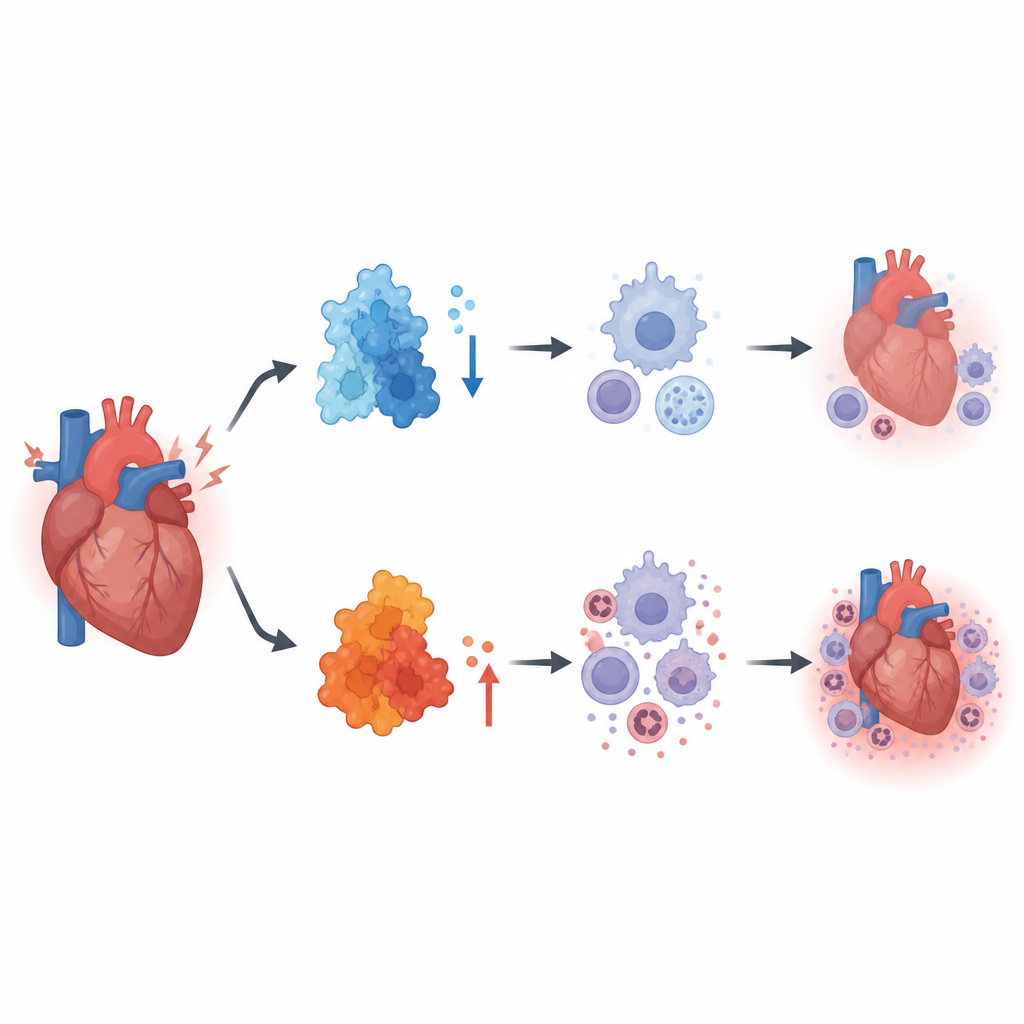
The gene PSME4, which helps cells break down damaged proteins, was found at lower levels in people with heart failure. In contrast, SQSTM1, which is involved in the cell’s recycling system, was higher. The team checked these findings in real blood samples from patients using a laboratory test and confirmed the pattern: PSME4 dropped while SQSTM1 rose. Further computer analysis suggested that both genes sit at the crossroads of key processes including the handling of worn out proteins, responses to viral infection of the heart, and control of harmful oxygen containing molecules.
Links to the immune system and possible treatments
Heart failure is not just a problem of muscle; the immune system also plays a major role. When the researchers looked at immune cell types in their data, they found that eight kinds of immune cells differed between patients and controls. For example, some protective B cells were reduced, while inflammatory cells such as neutrophils and certain suppressor cells were increased. The levels of PSME4 and SQSTM1 were strongly tied to these shifts, hinting that the stress response and the immune system are tightly linked in heart failure. Using drug databases, the team also highlighted several existing compounds that might influence these stress markers, pointing to future avenues for therapy, although these ideas remain to be tested in the lab and clinic.
Turning stress signals into a risk score
To explore how these findings might help patients, the authors built a simple prediction tool called a nomogram that combines PSME4 and SQSTM1 levels into a single risk score. In their datasets, this score did a better job of separating heart failure and non heart failure cases than either gene alone. While this tool still needs larger and more careful testing, it shows how measuring a small number of stress related markers in blood could one day support earlier diagnosis or closer monitoring of people at risk.
What this means for people with heart failure
This study does not offer a new treatment yet, but it uncovers two key pieces of the puzzle that link cellular stress, the immune system, and heart failure. By identifying PSME4 and SQSTM1 as reliable markers of the cell’s internal strain, the work suggests that a simple blood test might eventually help doctors see how stressed the heart really is and tailor care accordingly. It also points scientists toward specific molecules and pathways that could be targeted to restore balance in overworked heart cells, moving beyond treating symptoms to addressing some of the underlying biology.
Citation: Wu, Y., Zhou, Y., Huang, Q. et al. Identification and verification of biomarkers associated with integrated stress response in heart failure. Sci Rep 16, 15935 (2026). https://doi.org/10.1038/s41598-026-46303-5
Keywords: heart failure, cellular stress, biomarkers, immune cells, gene expression