Clear Sky Science · en
Mineral and geochemical variability of the phosphorite deposits in the Duwi Formation, Western Desert, Egypt: Insights into paleoenvironment and physicochemical conditions
Why Rocks in the Desert Matter to Daily Life
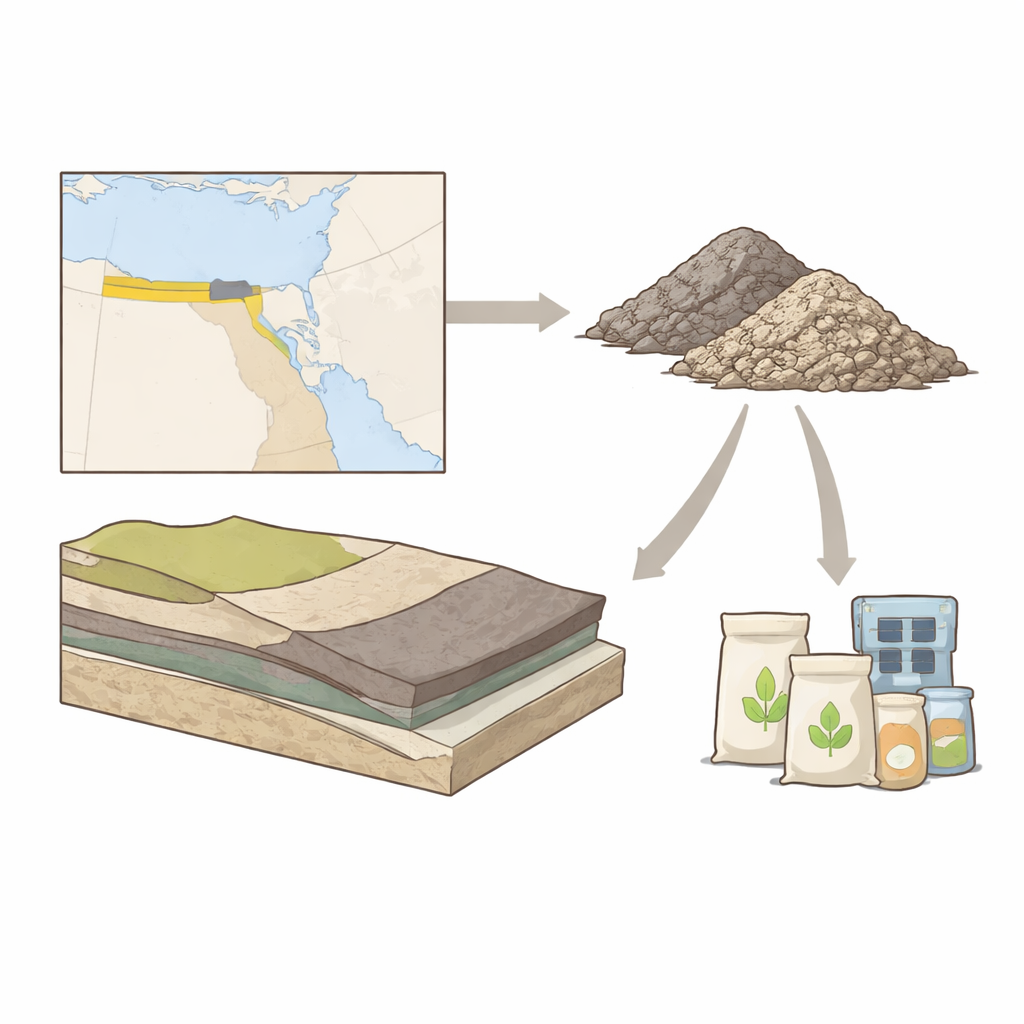
Across a wide belt from Morocco to the Middle East, layers of phosphate-rich rock hidden beneath deserts and coastal plains quietly support modern life. These rocks are the raw material for most of the world’s fertilizers and also carry valuable metals used in electronics and clean-energy technologies. This study focuses on phosphorite layers in Egypt’s Western Desert, at a place called Abu Tartur, to understand how they formed, what they are made of, and how promising they are as a future source of strategic elements.
A Desert Plateau with a Hidden Story
The researchers examined phosphorite beds within the Duwi Formation, a stack of late Cretaceous rocks that record the advance of an ancient sea over what is now Egypt. At Abu Tartur, the Duwi Formation is divided into three members: a lower phosphorite unit, a middle shale unit, and an upper phosphorite unit. The team collected seventeen samples along a three‑kilometer stretch and analyzed eleven of them in detail. Using microscopes, X‑ray techniques, and mass spectrometry, they identified both the minerals present and the tiny amounts of metals locked inside them. This allowed them to link what they saw in hand specimens and thin sections to the broader history of the basin.
What the Grains Reveal about an Ancient Sea
Under the microscope, the phosphorite consists mainly of the mineral apatite, along with fish bones and shark teeth, all pointing to a once‑thriving marine ecosystem. Many grains are angular and only slightly rounded, suggesting they were not carried far before being buried. Between these grains, cement of dolomite, calcite, gypsum, and iron oxides fills the gaps, recording changes in water chemistry and evaporation. Chemical measurements show that these rocks are rich in calcium oxide and phosphorus, with noticeable amounts of sand‑ and clay‑derived material such as silica and aluminum oxides. This mix indicates that the deposits are not pure chemical precipitates from seawater, but rather blends of phosphatic material with detritus washed in from land.
Clues from Invisible Elements
The most revealing evidence comes from trace elements and rare earth elements, a family of metals that are particularly sensitive to environmental conditions. The Abu Tartur phosphorites have remarkably high totals of rare earths plus yttrium—on average around 969 parts per million—much higher than many similar deposits. Their patterns show more of the middle rare earths than the lightest or heaviest ones, and only a slight dip in the element cerium together with a small bump in europium. In open, well‑oxygenated seawater, rare earths usually follow a different pattern with a strong cerium deficit. The unusual pattern here, along with relatively low ratios of yttrium to holmium and moderate uranium to thorium, points to a strong contribution from land‑derived particles and to chemical overprinting after the original sediment settled.
Reworked Layers and Shifting Seas
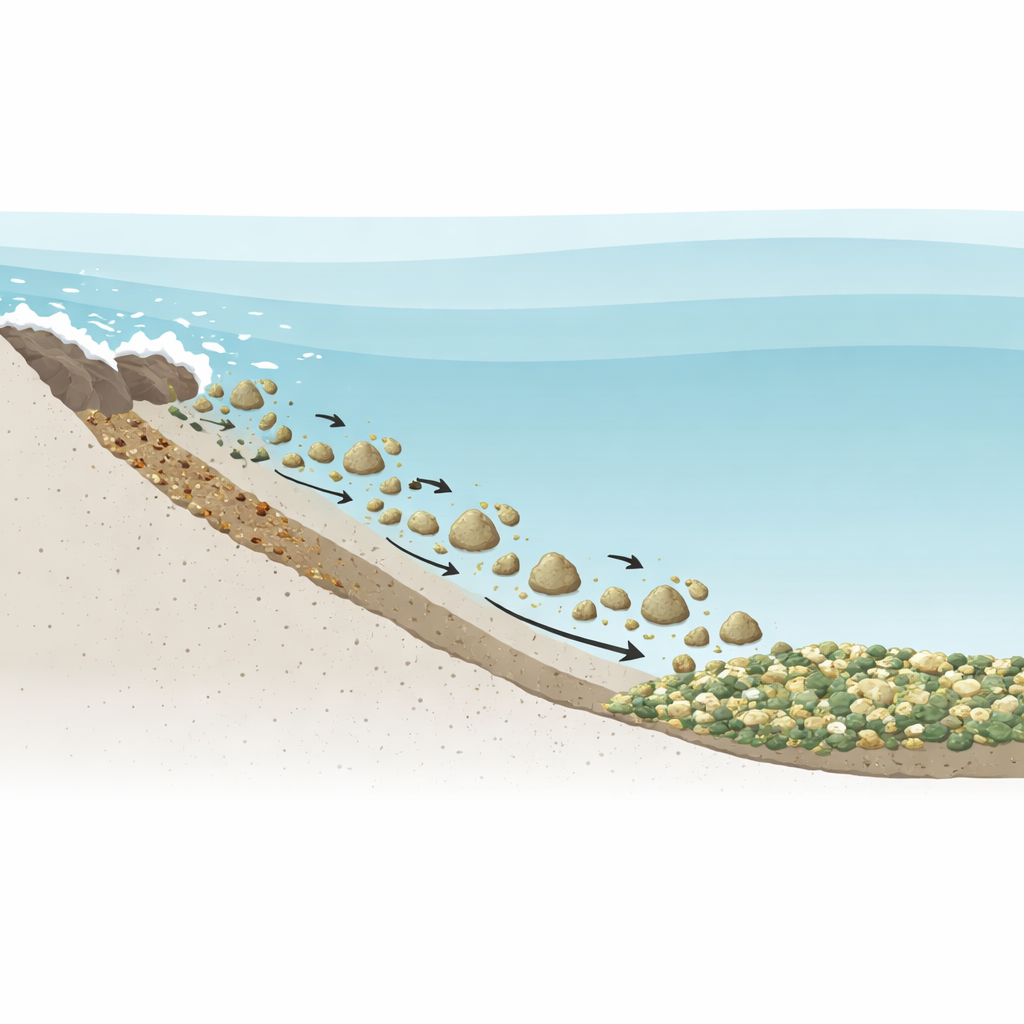
By combining mineral textures, major elements, and rare earth signatures, the authors argue that these phosphorites were not formed in place from seawater alone. Instead, earlier phosphate deposits lying offshore were disturbed and re‑deposited during sea‑level changes in the Campanian–Maastrichtian interval, roughly 80–66 million years ago. As sea level rose and fell, older phosphatic layers were eroded, their grains mixed with clay and sand, and then concentrated again in new beds. The chemistry of redox‑sensitive elements such as vanadium, nickel, and chromium, along with specific rare earth ratios, suggests that the new beds accumulated under a mix of oxygen‑poor and oxygen‑rich bottom waters in a saline marine setting, with relatively slow sedimentation that allowed rare earths to build up in the apatite.
From Ancient Seabed to Modern Resource
Beyond reconstructing an ancient environment, the study highlights the economic promise of Abu Tartur phosphorites. Most samples qualify as high‑grade phosphate ore, suitable for fertilizer production, and they are unusually enriched in rare earths, especially light ones such as lanthanum and neodymium, and in yttrium. These elements can potentially be recovered as by‑products from existing phosphoric acid plants, turning fertilizer rock into a dual source of nutrients and high‑tech metals. In simple terms, the authors conclude that desert rocks laid down in a restless Cretaceous sea now offer Egypt not only a secure fertilizer resource but also a valuable foothold in the global supply of rare earth elements.
Citation: Saleh, G.M., Azer, M.K., Saadawi, D.A. et al. Mineral and geochemical variability of the phosphorite deposits in the Duwi Formation, Western Desert, Egypt: Insights into paleoenvironment and physicochemical conditions. Sci Rep 16, 13910 (2026). https://doi.org/10.1038/s41598-026-46266-7
Keywords: phosphorite, rare earth elements, Abu Tartur, Duwi Formation, paleoenvironment