Clear Sky Science · en
Long-term field evaluation of sewage sludge biochar in green roof substrates reveals hydrological, vegetation, and microbial responses
Turning city roofs into helpers
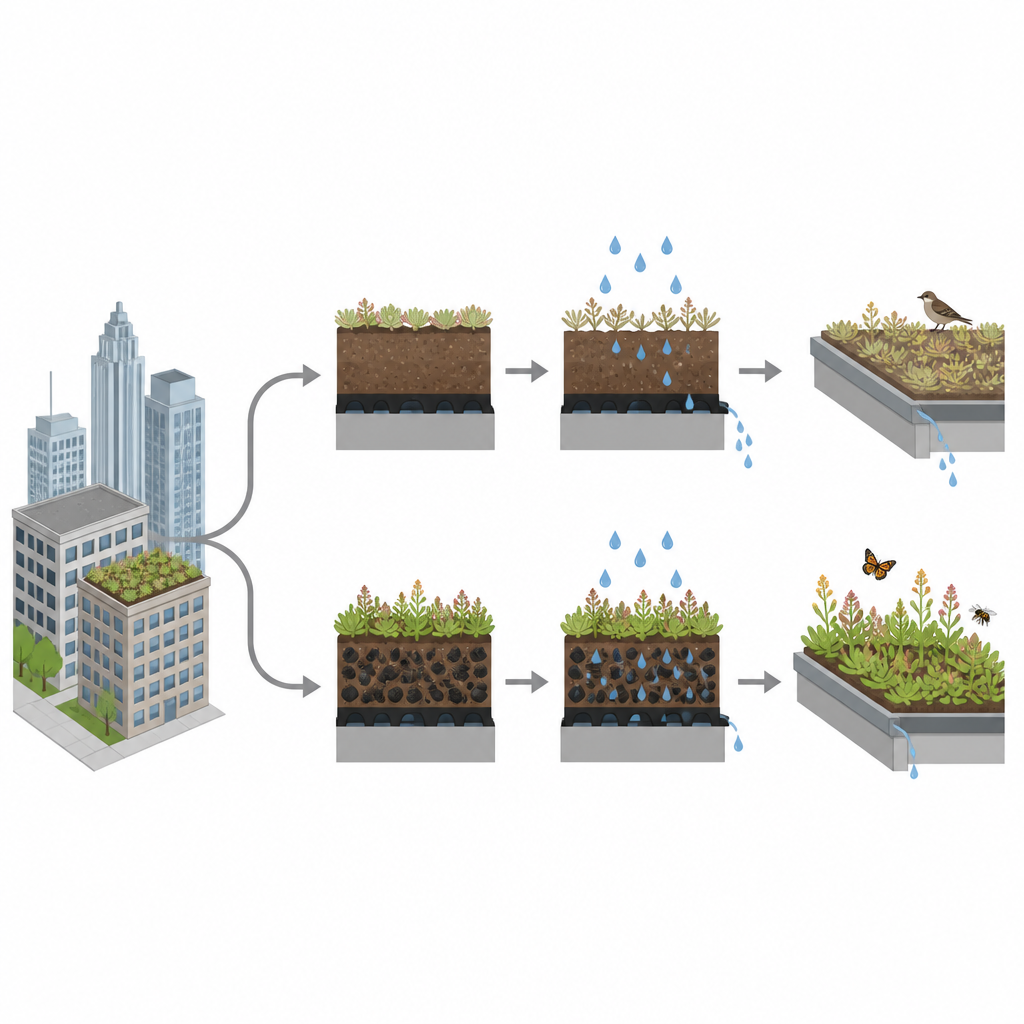
As cities warm and floods grow more frequent, many planners look to green roofs as a simple way to cool buildings, soak up rainwater, and give insects and birds new habitat. This study explores whether an unusual ingredient made from treated sewage sludge, called biochar, can make thin, lightweight green roofs work better while also recycling a waste material that is often difficult to dispose of safely.
A new life for a leftover material
Wastewater treatment plants produce large amounts of nutrient rich sludge that cannot always be used on farm fields because of concerns about metals and other contaminants. When this sludge is heated in the absence of oxygen, it turns into a charcoal like material known as sewage sludge biochar. This process locks many pollutants into a stable form and concentrates useful elements such as phosphorus. The researchers wondered if mixing a modest amount of this biochar into the growing layer of extensive green roofs could improve water performance and plant growth without polluting the runoff that flows from roofs into city drains.
Testing green roofs on a real building
The team installed twelve small test roofs on top of a university building in a dry, temperate part of Slovakia. Each shallow tray held the same commercial green roof mix and hardy Sedum plants, but some trays received no biochar, some had 10 percent by volume, and some had 20 percent. Over more than three years, they monitored rainfall, water flowing off each tray, how wet and warm the growing layer stayed, and how well the plants covered the surface. They also sampled roof runoff for nutrients and other water quality measures and used genetic fingerprinting to track how many kinds of bacteria and fungi lived in the growing layer.
Water, plants, and aging of the roof layer
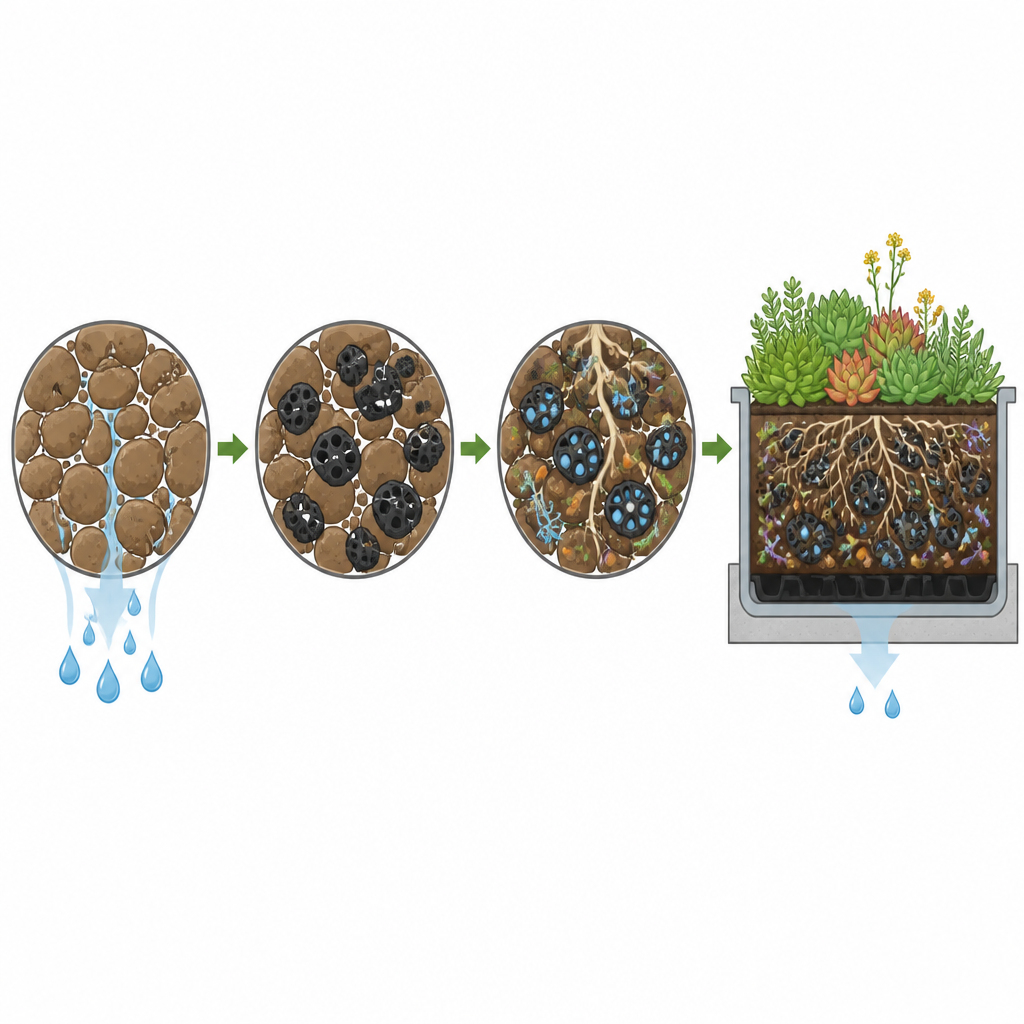
Adding sewage sludge biochar made the growing layer lighter, more porous, and better at holding water. Trays with biochar stayed wetter after rain and sent less water into the drains, especially during drier years, when the 20 percent mix cut runoff the most. Over time, all growing layers settled and changed structure, but those with biochar thinned less and kept a more stable texture. This helped Sedum plants spread more quickly. By the end of the study, plant cover reached about three quarters of the surface in trays without biochar and roughly nine tenths where biochar was present, with little difference between the two biochar doses. In effect, the amendment helped the thin roof layer behave more like a healthy soil despite harsh rooftop conditions.
Runoff quality and tiny life in the roof
Because the biochar started out rich in nutrients, there was a risk it could worsen the quality of water leaving the roof. The researchers did see higher nitrogen and phosphorus levels in runoff from the biochar trays during the first season, as easily washed out nutrients were flushed. However, these levels dropped and then stabilized within the next years, ending up similar to the control trays. Measures such as acidity, dissolved salts, and suspended particles also settled into safe ranges. At the same time, the variety of bacteria and fungi in the growing layer generally increased with the higher biochar rate, suggesting that the more intricate pore spaces and extra food sources in the amended mix created more niches for microbes to thrive.
What this means for future city roofs
For readers interested in how cities can adapt to climate change, this work shows that sewage sludge biochar can turn a disposal problem into a useful ingredient for greener buildings. In this long running rooftop trial, modest amounts of biochar improved water holding capacity, reduced runoff, supported denser plant cover, and fostered richer microbial communities, all without causing lasting harm to runoff quality. While the study took place on one building in one climate, it suggests that carefully prepared biochar from wastewater sludge could help designers build lighter, thinner green roofs that still manage rainwater well and stay healthy over time.
Citation: Vavrincová, L., Pipíška, M., Urbanová, J. et al. Long-term field evaluation of sewage sludge biochar in green roof substrates reveals hydrological, vegetation, and microbial responses. Sci Rep 16, 16123 (2026). https://doi.org/10.1038/s41598-026-46252-z
Keywords: green roofs, biochar, urban water, sewage sludge, microbial diversity