Clear Sky Science · en
Anticancer potential of radioactively activated zinc: mechanisms and therapeutic applications
Why this research matters
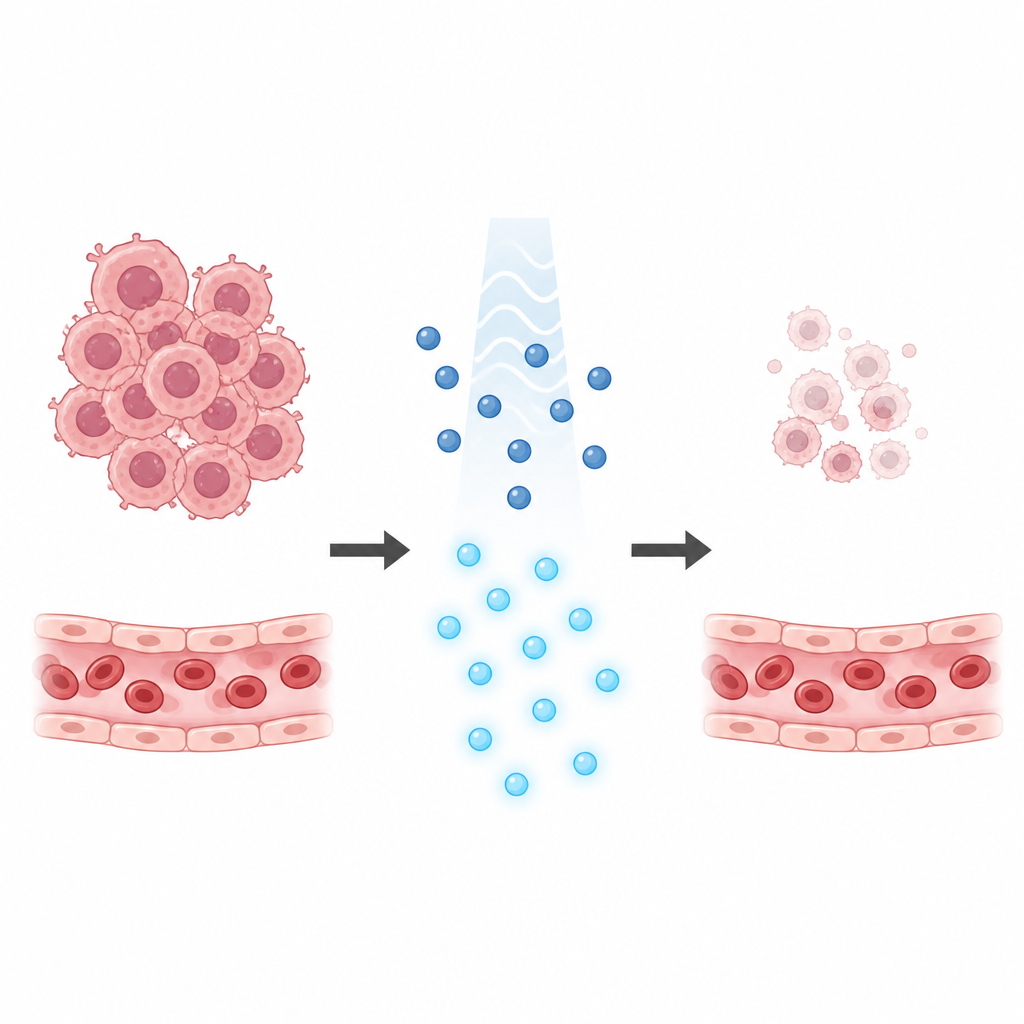
Cancer treatments that can harm tumors while sparing healthy tissue are a long standing goal in oncology. This study explores whether a common nutrient, zinc, behaves differently when it is briefly exposed to medical X rays and begins to emit tiny amounts of gamma radiation. The work does not test a new therapy in patients, but it does ask a provocative question in the lab: can radioactively activated zinc tilt the balance a little more against cancer cells than against normal cells?
A closer look at zinc in the body
Zinc is a trace metal that our bodies need for growth, immunity, metabolism, and protection against oxidative stress. At normal levels it supports health, but in higher doses or in certain chemical forms it can slow cell growth or even trigger cell death. Earlier research has shown that zinc compounds and zinc based nanoparticles can damage DNA, alter the balance of reactive oxygen species, and influence tumor suppressor pathways in cancer cells. These traits have made zinc an interesting candidate to explore as a helper or alternative to traditional metal based drugs such as platinum complexes.
Turning zinc into a gentle radiation source
The authors wondered what would happen if zinc were activated by high energy X rays in a way that produces a small amount of a radioactive isotope called Zn 65. Using a clinical linear accelerator, they irradiated zinc acetate and confirmed, with sensitive detectors, that trace levels of Zn 65 and its weak gamma emissions were present. Although the radioactivity produced was extremely low and far below what is used in medical radiotherapy, it created an opportunity to compare the biological effects of ordinary zinc with this radioactively activated zinc, referred to as IR Zn in the study.
How cancer and normal cells responded
The team exposed human breast cancer cell lines (including estrogen receptor positive MCF 7 cells) and normal human umbilical vein endothelial cells to increasing concentrations of either regular zinc or IR Zn. They measured cell survival, signs of programmed cell death, and how cells progressed through the stages of the cell cycle. Both forms of zinc reduced cancer cell growth, but IR Zn did so at slightly lower concentrations, roughly a 1.2 fold increase in potency for MCF 7 cells. Microscopy showed more rounding and shrinkage of cancer cells with IR Zn, while normal endothelial cells were less affected at the same doses, hinting at a modest degree of selectivity.
What happened inside the cancer cells
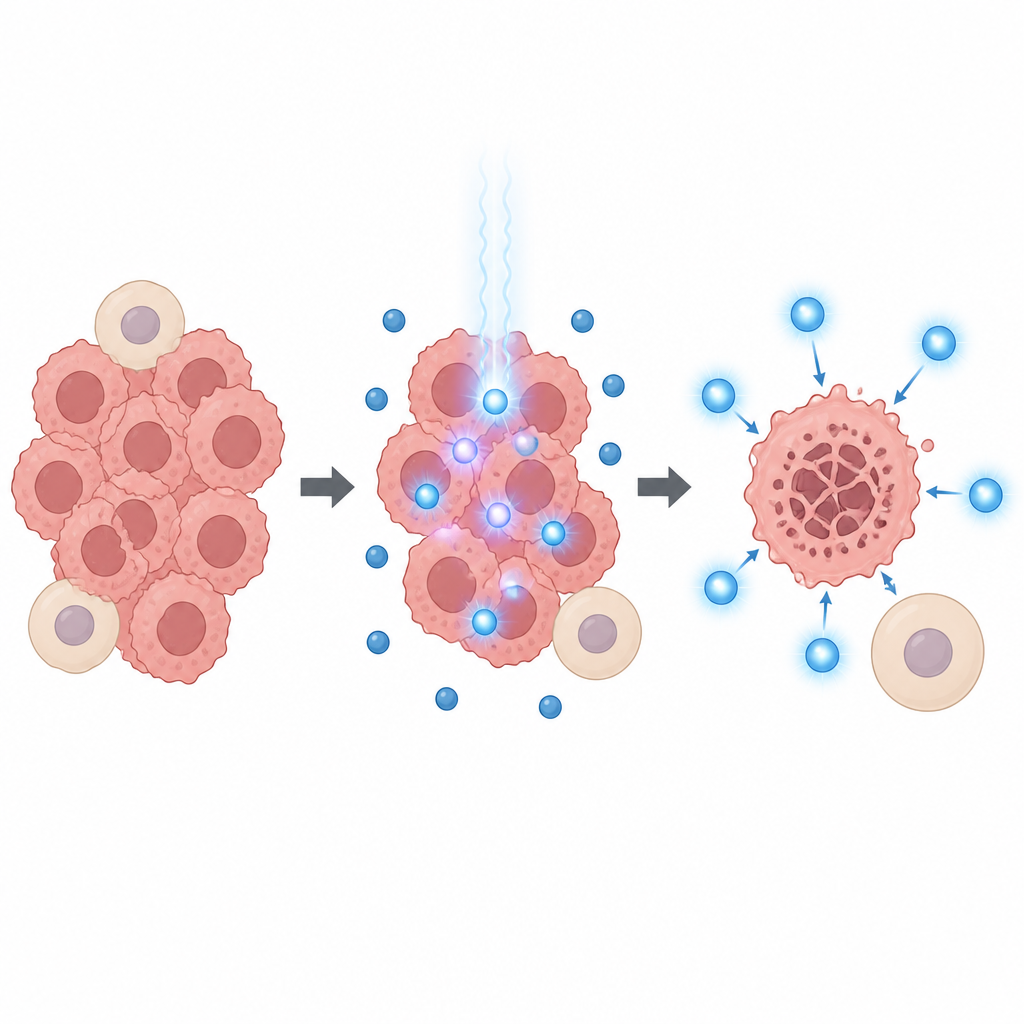
Flow cytometry revealed that both zinc preparations pushed MCF 7 cells into programmed cell death rather than uncontrolled necrosis, with IR Zn causing a higher fraction of late apoptotic cells. Cell cycle measurements showed that treated cancer cells accumulated in the G0 G1 phase and were reduced in the G2 M phase, consistent with a halt before DNA replication. IR Zn accentuated this pattern slightly more than zinc alone. The researchers also examined proteins that pump drugs out of cells. While zinc increased one pump (P gp), IR Zn strongly reduced another, ABCG2, which is tied to multidrug resistance and cell survival. This combination of cell cycle arrest and reduced efflux capacity may make cancer cells more vulnerable to damage.
Caveats and future directions
Importantly, the study emphasizes that the amount of Zn 65 produced was tiny and that the exact contribution of its gamma emissions to the observed effects remains uncertain. The experiments did not directly measure DNA breaks, reactive oxygen species, or mitochondrial damage, so any proposed mechanism is still a hypothesis based on known radiation biology. The observed changes in cell survival, apoptosis, and drug resistance markers are therefore best viewed as early clues rather than proof of a new treatment strategy.
What this could mean one day
For a general reader, the take home message is that a simple nutrient like zinc can behave differently when it becomes a very mild internal radiation source, nudging cancer cells toward cell cycle arrest and self destruction while troubling normal cells somewhat less in a dish. The authors do not claim that Zn 65 is ready for clinical use, nor that it delivers therapeutic radiation doses. Instead, they present a careful laboratory study that opens a line of inquiry: could long lived, low energy emitters such as Zn 65 be engineered into future, highly targeted radiopharmaceuticals that add another layer of stress on tumor cells without greatly increasing harm to healthy tissue?
Citation: Kalındemirtaş, F.D., Eroğlu, G.Ö., Nazlıgül, E. et al. Anticancer potential of radioactively activated zinc: mechanisms and therapeutic applications. Sci Rep 16, 16081 (2026). https://doi.org/10.1038/s41598-026-46220-7
Keywords: zinc, Zn-65, gamma radiation, breast cancer cells, radiopharmaceuticals