Clear Sky Science · en
Population pharmacokinetics and target attainment of pretomanid in rifampicin-resistant tuberculosis patients
Why this study matters for people with tough-to-treat TB
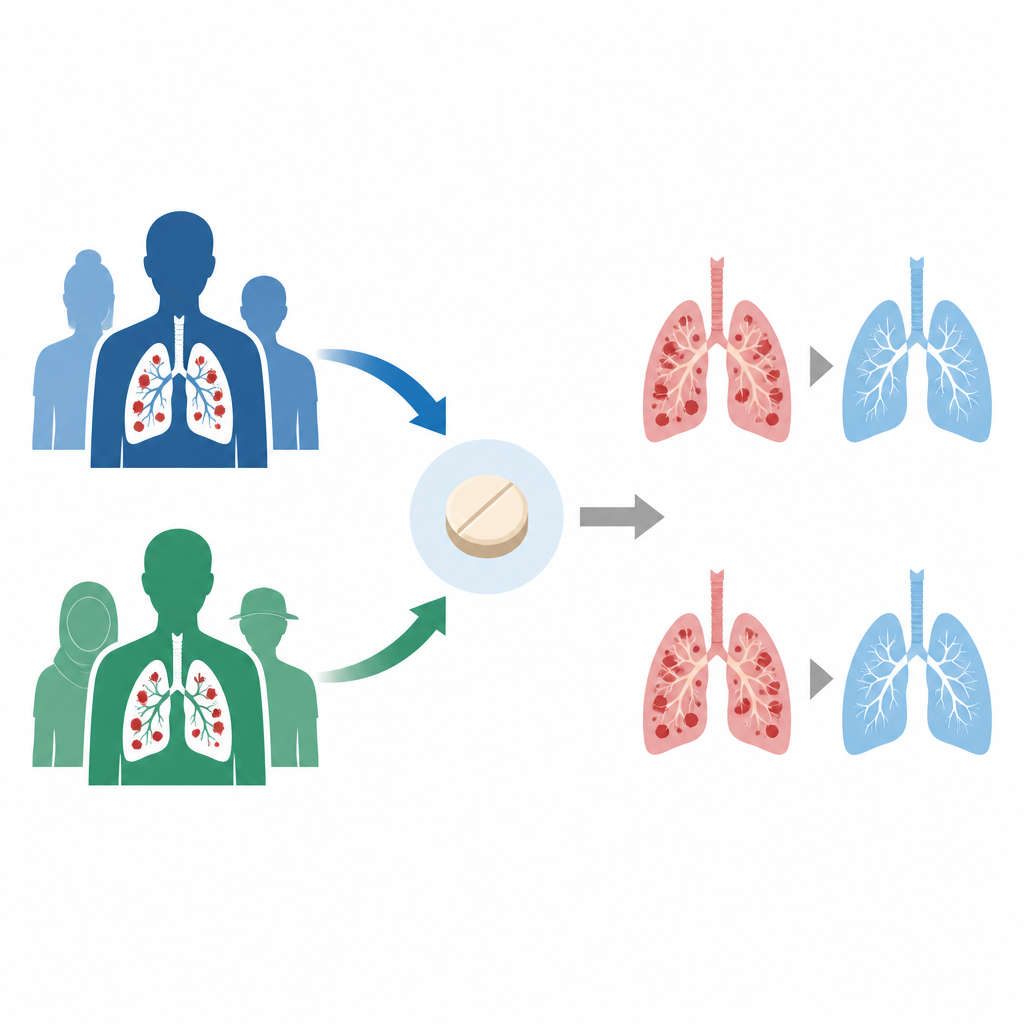
Tuberculosis that resists standard drugs is a growing threat worldwide. Doctors now use a shorter all-oral treatment that includes a medicine called pretomanid for rifampicin-resistant TB. This study asks a practical question that matters to patients and health programs alike: does the usual pretomanid dose actually give most people enough medicine in their blood to reliably help clear the infection, without making them take more pills than they need?
Looking at how the drug moves through the body
The researchers followed 94 adults with rifampicin-resistant TB in South Africa and Belarus who were treated in the TB-PRACTECAL trial. Everyone received a daily 200 mg tablet of pretomanid as part of modern combination regimens with other TB drugs such as bedaquiline and linezolid. Over six months, the team took nearly one thousand blood samples at set times, measured pretomanid levels using a sensitive lab method, and used computer models to describe how quickly the drug was absorbed, distributed, and cleared from the body in real-world clinic conditions.
How much pretomanid patients actually received
The analysis showed that a simple model with one main body compartment and first order absorption and elimination described the data well. On average, patients cleared pretomanid from their bodies at about 3.1 liters per hour, in line with earlier smaller studies. Typical daily exposure, captured as the area under the concentration curve over 24 hours, and the highest and lowest levels between doses were all within expected ranges for a 200 mg dose taken with food. Differences in body build mattered somewhat: scaling drug behavior by fat free mass improved the fit, whereas factors like sex, race, HIV status, or the exact companion regimen did not meaningfully change pretomanid levels.
How strong the bacteria were against the drug
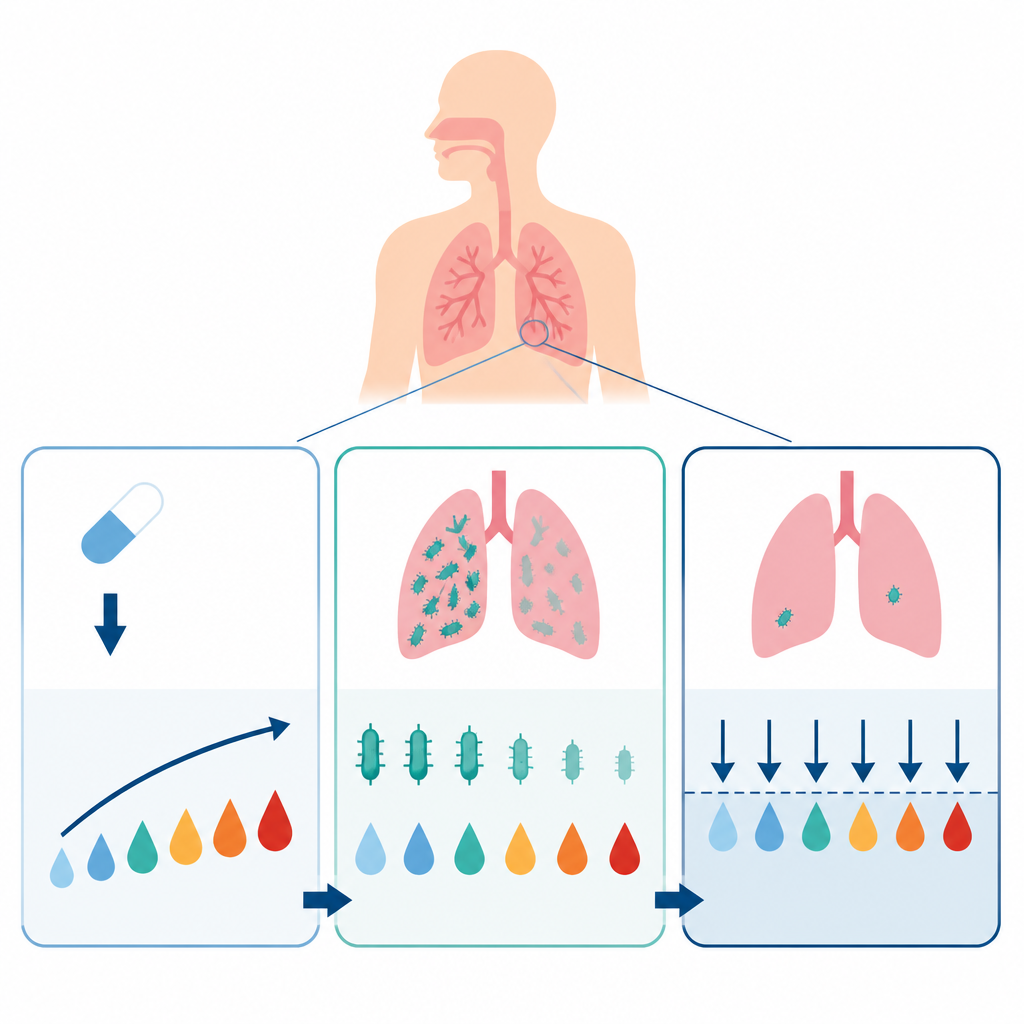
To understand whether these drug levels were high enough, the team also studied how sensitive Mycobacterium tuberculosis samples were to pretomanid. They tested isolates from 478 trial participants and found that nearly all had low minimum inhibitory concentrations, meaning the bacteria were stopped by small pretomanid amounts. The typical value was 0.125 mg per liter, and all but two samples stayed below internationally proposed cut offs for resistance. This confirmed that, at baseline, the infecting strains were generally quite susceptible to pretomanid.
Which measure of exposure really matters
The key question was whether patients reached recognized “targets” that link drug exposure to killing bacteria. Using computer simulations, the authors compared two ways of judging this: how long free drug levels stay above the bacterial threshold during a day, and the ratio between total daily exposure and that threshold. Almost all patients met the time based target, meaning their free pretomanid levels stayed above the necessary value for a large share of each dosing interval. This matched the good clinical performance of the regimens in the parent trial. In contrast, only about half met the higher ratio based target that had been suggested from preclinical work, especially once protein binding in blood was taken into account.
What this means for TB care
For people living with rifampicin-resistant TB, these findings are reassuring. A daily 200 mg dose of pretomanid, combined with other recommended drugs and taken with food, appears to give most patients enough exposure for the drug to do its job, including those with HIV on modern antiretroviral therapy. The study suggests that how long pretomanid levels stay above the bacterial threshold is more relevant in patients than the stricter ratio target. However, it also highlights that some widely cited targets may not directly apply to people receiving combination therapy, and that further work is needed to refine them rather than simply increasing the dose.
Citation: Nyang’wa, BT., Motta, I., Moodliar, R. et al. Population pharmacokinetics and target attainment of pretomanid in rifampicin-resistant tuberculosis patients. Sci Rep 16, 15255 (2026). https://doi.org/10.1038/s41598-026-46217-2
Keywords: pretomanid, rifampicin resistant tuberculosis, drug exposure, pharmacokinetics, TB treatment