Clear Sky Science · en
Integrative immunogenomic strategy for designing a multi-epitope vaccine against Zika and Dengue viruses
One Shot to Tackle Two Mosquito Threats
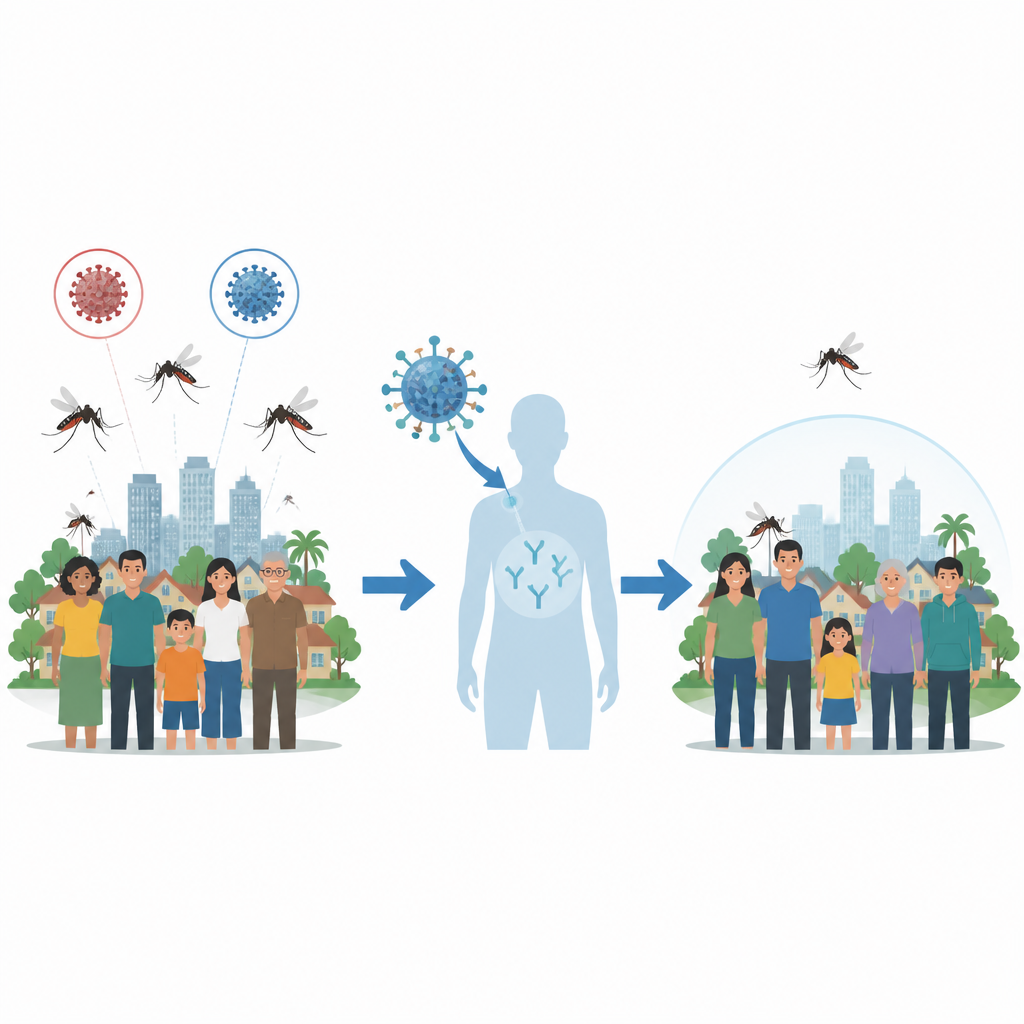
Dengue and Zika are mosquito borne viruses that worry doctors and families alike, from severe flu like illness to birth defects in babies. This study explores a computer designed vaccine that aims to train the immune system to recognize both viruses at once, potentially simplifying protection in regions where they circulate together.
Why Mosquito Viruses Are So Hard to Control
Dengue and Zika belong to the same virus family and share the same main mosquito carrier, Aedes aegypti. Dengue alone infects hundreds of millions of people each year, and Zika is linked to Guillain Barré syndrome in adults and microcephaly in newborns. Existing tools rely mostly on mosquito control, which is costly and difficult. The only licensed dengue vaccine has safety and effectiveness concerns, especially in children who have never had dengue before. Making matters worse, antibodies from a past infection with one dengue strain, or even Zika, can sometimes help the virus rather than stop it, leading to more severe disease.
Building a Smarter Target for the Immune System
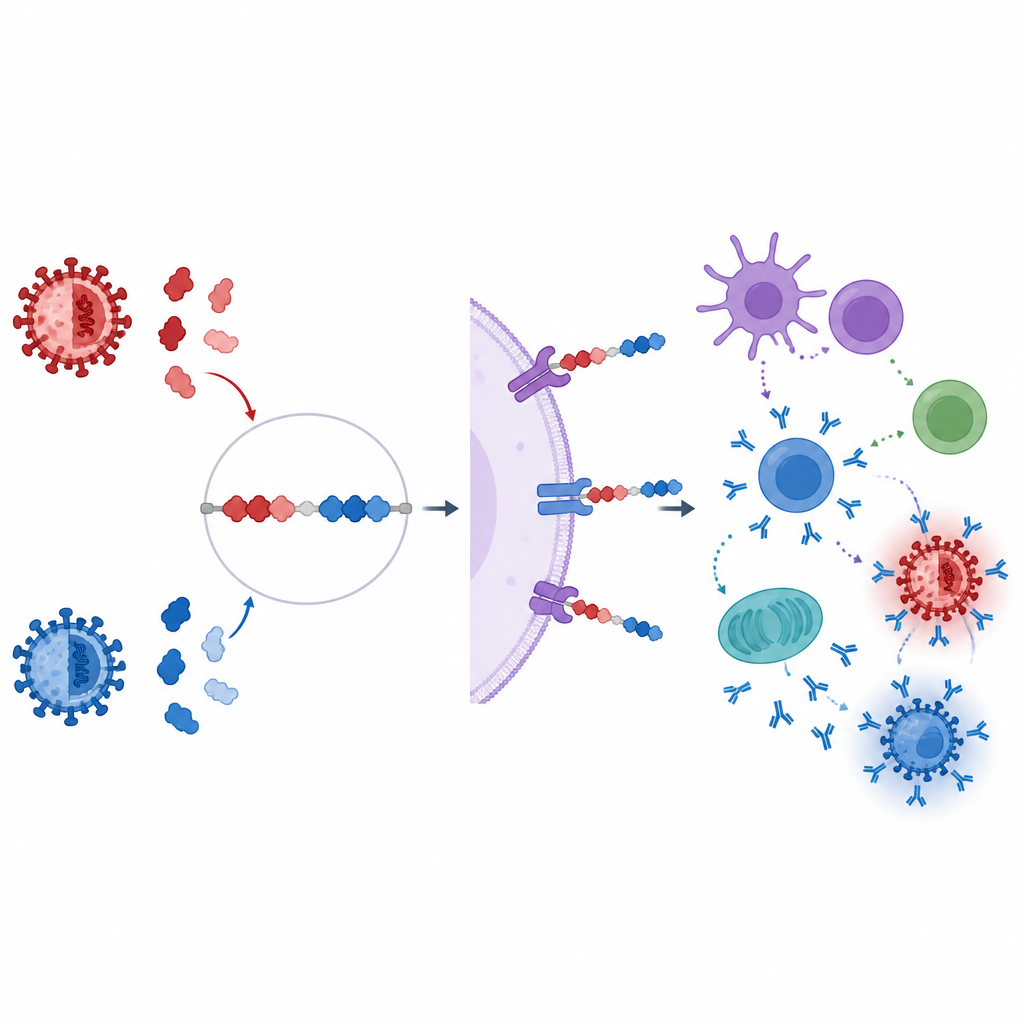
Instead of relying on whole weakened viruses, the researchers used an approach called immunoinformatics to design a multi epitope vaccine. Epitopes are short stretches of viral protein that immune cells recognize. The team gathered complete genome sequences for all four dengue virus types and for Zika, then aligned their proteins to find regions that are highly similar across both viruses. From these conserved regions, they selected eleven epitopes for killer T cells, twelve for helper T cells, and five for B cells, aiming to cover many human genetic backgrounds around the world.
Assembling the Digital Vaccine
Once the epitope list was defined, the scientists stitched them together into a single artificial protein using short linker segments that help each piece keep its shape and be processed correctly by the immune system. They also added an immune boosting segment at one end to act as an adjuvant. Computer tools predicted that the resulting 567 amino acid protein would be stable, dissolve well, and behave as a strong antigen without triggering allergy or toxicity signals. The team then modelled the protein’s three dimensional structure, refined it, and checked its quality using standard structural tests, which suggested a reasonable and coherent fold.
Testing Interactions with the Immune System in Silico
To work, the vaccine must be noticed quickly by innate immune sentinels and must drive a strong adaptive response. The researchers used docking simulations to see how their construct might bind to two human toll like receptors, TLR7 and TLR5, which help kick start immune defenses. The models showed tight and stable binding to both receptors. Next, they ran immune response simulations that mimicked two vaccine doses given four weeks apart. These virtual experiments predicted strong waves of antibodies, robust helper and killer T cell activation, and healthy levels of key signaling molecules, all of which are hallmarks of a protective response.
Checking Stability and Practical Production
Because proteins flex and move, the team used several kinds of computer based molecular dynamics analyses to see whether the vaccine structure and its complex with TLR7 would remain stable over time. Measures of structural drift, compactness, and flexibility suggested that the complex settled into a steady state with normal motion rather than falling apart. Energy calculations also pointed to a favorable and persistent interaction. To prepare for eventual laboratory work, the researchers optimized the genetic code of the vaccine for high level production in Escherichia coli bacteria and mapped how it could be inserted into a standard plasmid used for protein expression.
What This Could Mean for Future Protection
For non specialists, the bottom line is that this study delivers a detailed computer blueprint for a single vaccine protein that may help the immune system recognize both dengue and Zika viruses, without relying on full live or weakened viruses. The work does not yet show that the vaccine protects people or animals, since all testing so far has been virtual. However, the predicted strong immune activation, good safety profile, and stable behavior suggest that this multi epitope design is a promising candidate to take into laboratory and animal studies as a potential combined vaccine for two major mosquito borne diseases.
Citation: Zubair, A., Aldehri, M., Shahani, M.Y. et al. Integrative immunogenomic strategy for designing a multi-epitope vaccine against Zika and Dengue viruses. Sci Rep 16, 15581 (2026). https://doi.org/10.1038/s41598-026-46213-6
Keywords: dengue, Zika, multi-epitope vaccine, immunoinformatics, mosquito-borne viruses