Clear Sky Science · en
Investigating the impact of electric vehicles on increasing the reliability of the distribution system using the enhanced gray wolf evolutionary algorithm model
Electric Cars as a Hidden Backup for the Power Grid
Electric vehicles are usually seen as new gadgets that plug into the grid and draw lots of power. This study flips that picture. It shows how, if we plan carefully, parked electric cars can act like thousands of tiny power plants and backup batteries. By charging at the right times and feeding electricity back when needed, they can make neighborhood power grids more reliable, cleaner, and cheaper to run.
Turning a Challenge into an Opportunity
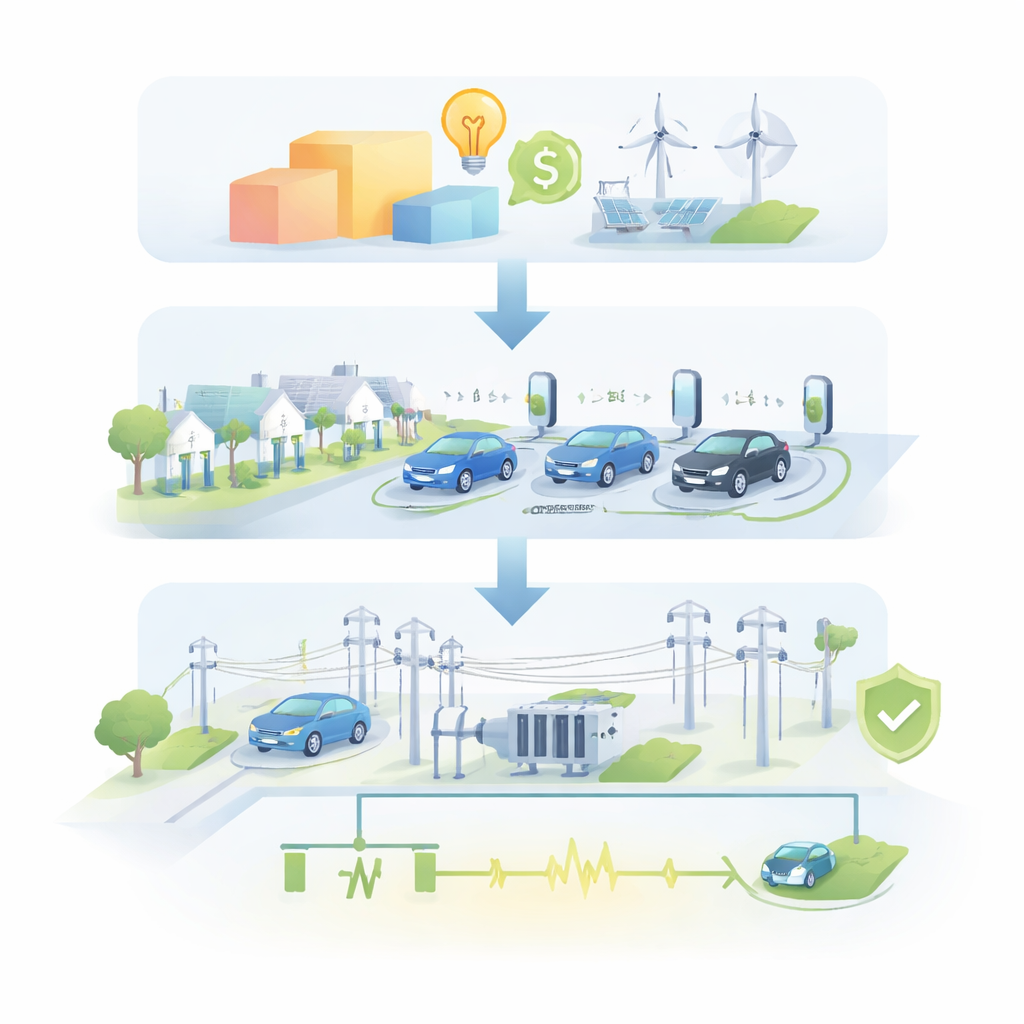
As more drivers switch to electric cars, local power lines face a tough test. If everyone plugs in at once after work, voltages can sag, equipment can run hot, and failures become more likely. But those same car batteries store a lot of energy that is often sitting idle while vehicles are parked. Using a concept called vehicle-to-grid, the study treats each parked car as a flexible resource that can either draw power or send it back, depending on what the grid needs at that moment. The key question the authors ask is: how should we decide where to build charging stations, how big to make them, and when cars should charge or discharge so that the entire system becomes stronger instead of weaker?
Three Layers of Smart Decision-Making
The researchers build a planning system with three tightly linked layers. At the top, long-term decisions are made about how many charging stations to install, where to put them in a 33-bus test network, and how much capacity each should have, all under a fixed budget. In the middle, a day-ahead schedule decides when each of 150 electric cars should charge or discharge, taking into account electricity prices, driver arrival and departure times, and limits that protect battery life. At the bottom, a detailed network model checks whether the lights stay on under many "what if" situations, such as sudden jumps in demand and single line or transformer failures. The three layers constantly exchange information: investment choices shape operating options, while the quality of day-to-day operation feeds back into which plans are considered worthwhile.
Smarter Algorithms for a Complex Problem
Because these layers interact in complicated ways, ordinary planning tools struggle to find good solutions. The authors adapt a nature-inspired search method called the gray wolf algorithm and enhance it with several tricks: chaotic starting points to explore more possibilities, controlled random changes to escape dead ends, long exploratory jumps called Lévy flights, and local fine-tuning once a promising plan is found. This enhanced algorithm evaluates thousands of combined station layouts, charging patterns, and network responses, gradually hunting down sets of decisions that keep costs low while sharply improving reliability.
What Happens to the Grid When Cars Help Out
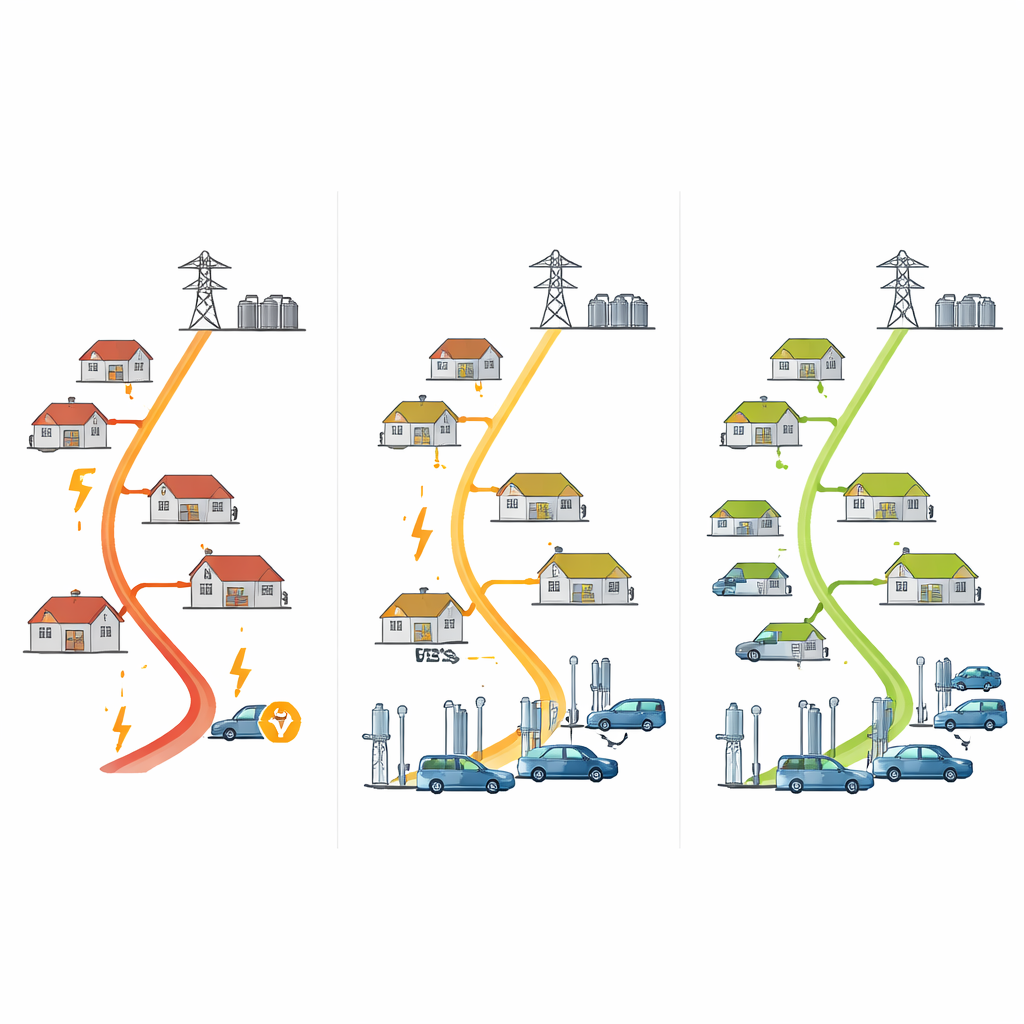
When the method is applied to a standard test network, the results are striking. The optimized plan selects five charging stations with a combined capacity of 1.55 megawatts and assigns 150 vehicles among them. With coordinated charging and discharging, the lowest voltages in the system rise by just over 4%, and overall voltage fluctuations are cut by more than half, keeping customers closer to ideal power quality. Energy lost as heat in the lines drops by about 23%, meaning less electricity needs to be generated in the first place. Most importantly, the amount of energy that cannot be supplied to customers during failures falls by about 70%, and a combined reliability score more than doubles. Under simulated line and transformer outages, the need to cut loads is reduced by two-thirds or more because nearby cars step in to support the grid.
Why the Economics Also Work
For planners and investors, technical gains matter only if the numbers add up. Here, they do. Even after paying for stations, maintenance, electricity for charging, and extra battery wear, the study finds that the benefits from avoided outages, lower losses, and reduced demand charges are so large that the five-year net present value is about 7.9 million US dollars. The benefit–cost ratio exceeds 17, and the simple payback time is only a few months in the base assumptions. The authors stress that these figures depend on how much value utilities and regulators assign to reliability, but sensitivity tests show the project remains attractive even with less generous assumptions and higher costs.
What This Means for Everyday Life
For a non-specialist, the takeaway is that electric cars can do much more than move people around: when parked, they can quietly support the neighborhood grid. With thoughtful planning of charging station locations, smart control of when cars take and give power, and modern optimization tools to tie it all together, EVs can help keep lights on during equipment failures, smooth out peaks in demand, and lower overall costs. Rather than being a strain on the grid, large numbers of electric vehicles—if coordinated well—can become a cornerstone of a more reliable and efficient power system.
Citation: Naeimi, M., Samiei Moghaddam, M., Azarfar, A. et al. Investigating the impact of electric vehicles on increasing the reliability of the distribution system using the enhanced gray wolf evolutionary algorithm model. Sci Rep 16, 10666 (2026). https://doi.org/10.1038/s41598-026-46206-5
Keywords: electric vehicles, vehicle-to-grid, power grid reliability, charging infrastructure, metaheuristic optimization