Clear Sky Science · en
Codon usage patterns and phylogenetic analysis of chloroplast genomes reveal evolutionary insights into Asphodelaceae species
Why these desert plants matter
Many familiar plants such as aloe and daylilies belong to the Asphodelaceae family, which includes succulents used in skin gels, ornamentals that brighten gardens, and hardy species that anchor dryland ecosystems. This study looks deep inside their leaf cells, into tiny green structures called chloroplasts, to see how their genetic code is written and how that writing style can reveal hidden family ties and guide future crop improvement.
How living cells spell with four letters
DNA works with a simple alphabet of four chemical letters arranged in three-letter words that tell cells which building blocks to use when making proteins. For many of these words, more than one spelling has the same meaning, yet species often favor certain spellings over others. This habit, called codon preference, can affect how efficiently proteins are produced, how well an organism adapts to its environment, and even how we design genes for biotechnology.
Peering into green genomes
The researchers examined the chloroplast genomes of 13 Asphodelaceae species, including several Aloe, Hemerocallis (daylily), Eremurus, and other ornamentals. Using public DNA databases, they pulled out hundreds of protein-coding genes from each species and measured how often each three-letter word appeared. They then compared these patterns with the overall mix of DNA letters, focusing on the third position in each word, which is especially free to vary without changing the protein produced.
A shared writing style across the family
The chloroplast genes of all 13 species turned out to be remarkably alike in composition and spelling habits. Their DNA words strongly favored endings rich in the letters A and T rather than G and C, especially at the third position. Each species shared the same set of 30 frequently used spellings and had a modest number of especially favored ones, almost all ending in A or T. Overall, the bias was gentle rather than extreme, suggesting that these plants are not locked into a narrow set of spellings but still show a clear family-wide style.
Nature’s hand in shaping the code
To find out what shapes these preferences, the team used several graphical tests that compare how observed spelling patterns line up with what would be expected if random DNA changes were acting alone. In most genes, the observed patterns drifted away from the neutral expectation, pointing to natural selection as the main sculptor. Random mutation and the basic letter makeup of the genome also played roles, but weaker ones. In simple terms, it appears that selection gently nudges these plants toward spellings that help chloroplasts work efficiently under their environmental conditions.
Family trees hidden in spelling patterns
Next, the scientists asked whether spelling habits track with evolutionary kinship. They grouped species based on how similarly they used synonymous spellings and also built traditional family trees from shared chloroplast genes. Both approaches split the 13 species into two main lineages and placed close relatives, such as different Aloe species, next to one another. Although a few species shifted position between the two trees, the broad agreement suggests that codon preferences can serve as an independent clue to relatedness, complementing standard DNA sequence comparisons. 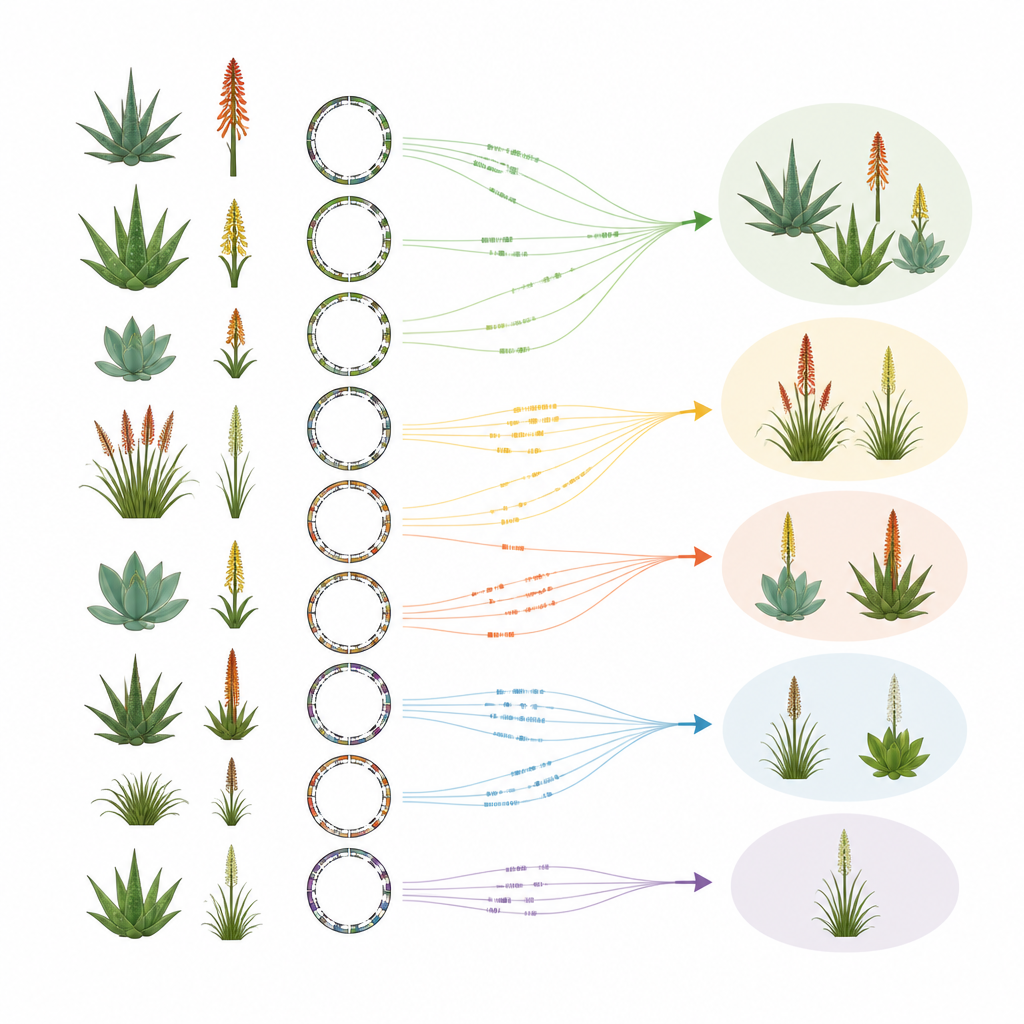
Why this matters for future plants
Because codon preferences influence how smoothly proteins are made, knowing the favored spellings in Asphodelaceae chloroplasts can help scientists design genes that these plants read more easily, improving the chances that introduced traits will be expressed well. At the same time, comparing such patterns across species gives another window into how plant families have diversified over time. 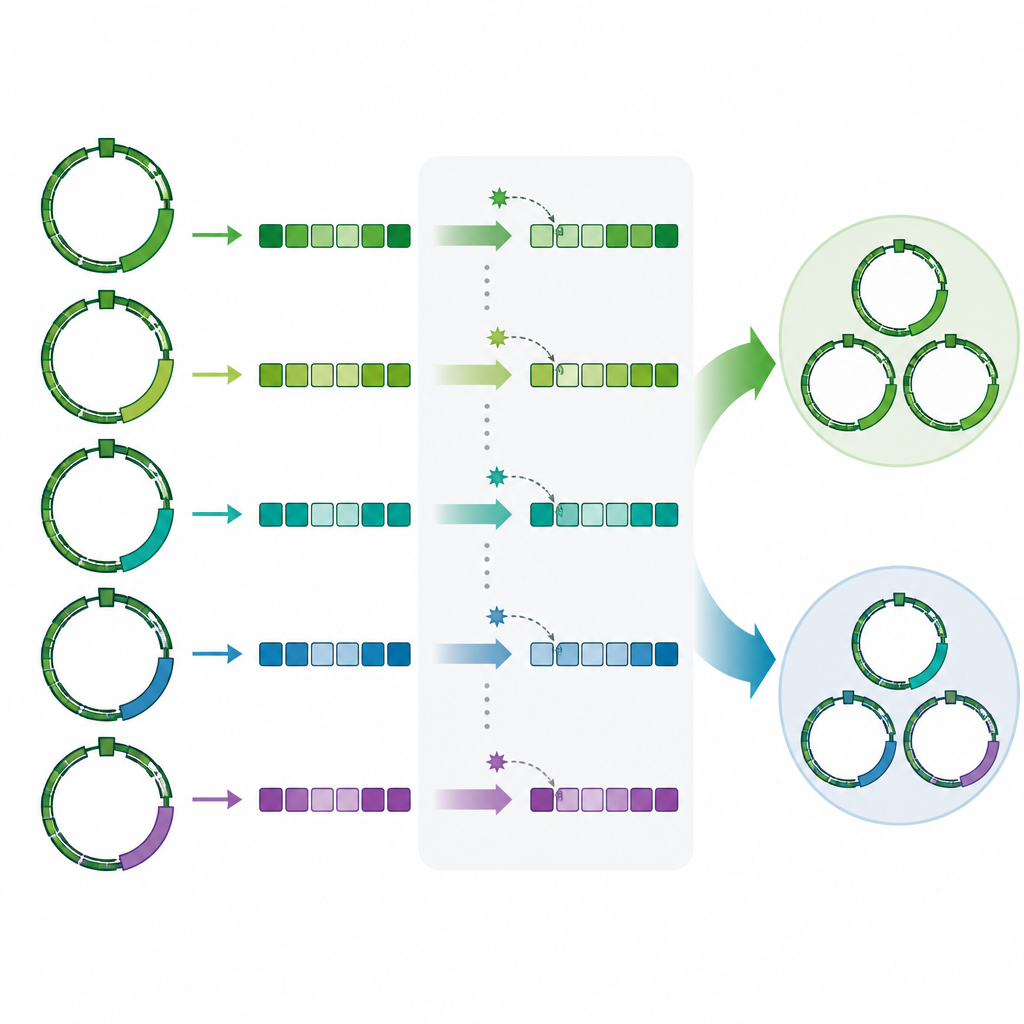
The big picture takeaway
By tracking how Asphodelaceae chloroplasts prefer to spell their genetic words, this study shows that a subtle but consistent writing style runs through the family, shaped mainly by natural selection with help from random mutation and basic DNA composition. These patterns both illuminate the plants’ evolutionary relationships and provide practical guidance for fine-tuning genes in future breeding and bioengineering efforts.
Citation: Zhang, K., Li, K., Feng, J. et al. Codon usage patterns and phylogenetic analysis of chloroplast genomes reveal evolutionary insights into Asphodelaceae species. Sci Rep 16, 15608 (2026). https://doi.org/10.1038/s41598-026-46203-8
Keywords: chloroplast genome, codon usage bias, Asphodelaceae, plant evolution, phylogenetics