Clear Sky Science · en
Characterisation of thigh-based electrocardiography (ECG) across different pathologies
Checking Your Heart Without Changing Your Routine
Heart disease is the world’s biggest killer, yet most of us only get our hearts checked during brief clinic visits. This study explores a surprisingly simple idea: what if your toilet could quietly record your heart’s electrical activity every time you sit down, without any wires or extra effort? By turning a familiar bathroom object into a health sensor, the researchers show how everyday habits might become powerful tools for early warning and remote medical care.
A Smart Seat That Listens to Your Heart
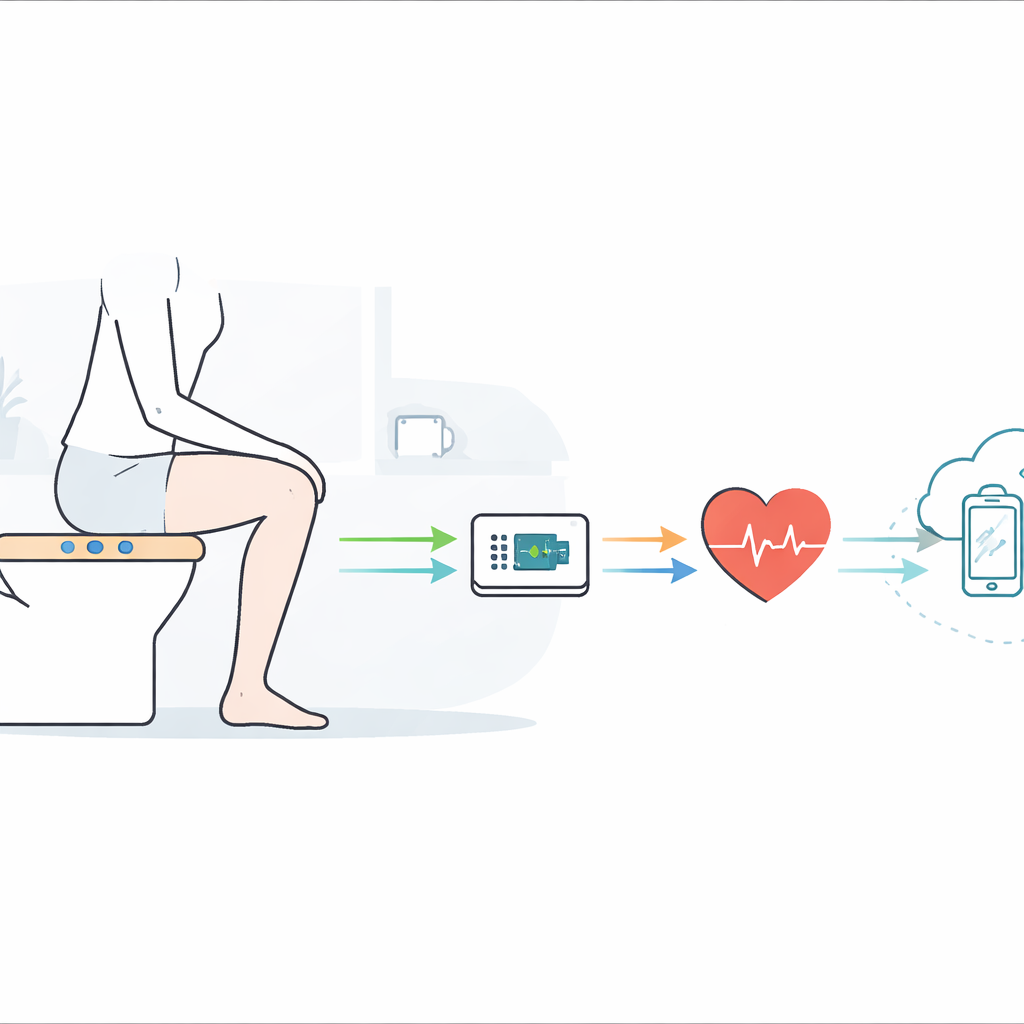
The team designed a toilet seat with two small metal-like pads positioned where the backs of the thighs naturally rest. These pads act as dry electrodes, picking up the same type of electrical signals that doctors usually record from sticky patches on the chest and limbs. Each person sat on the seat for about one to two minutes, mimicking real bathroom use. At the same time, conventional recordings were taken when possible, allowing the researchers to compare the strange new thigh-based readings with the standard approach and check whether the key features of a normal heartbeat were preserved.
Testing the Seat on Real Patients
Unlike many gadget tests that focus on young, healthy volunteers, this study deliberately recruited hospitalised adults with real heart problems. Thirty patients with a wide range of conditions—such as narrowed heart valves, heart failure, coronary artery disease, structural abnormalities, and previous surgery—used the smart seat. Their data were compared with recordings from 86 people without diagnosed heart disease. Because toilet use is not a controlled lab activity, the recordings varied in length and quality. To deal with this, the team used strict automatic checks to discard noisy or distorted beats, keeping only signals with clear heartbeat patterns for further analysis.
What the Thigh Signals Revealed
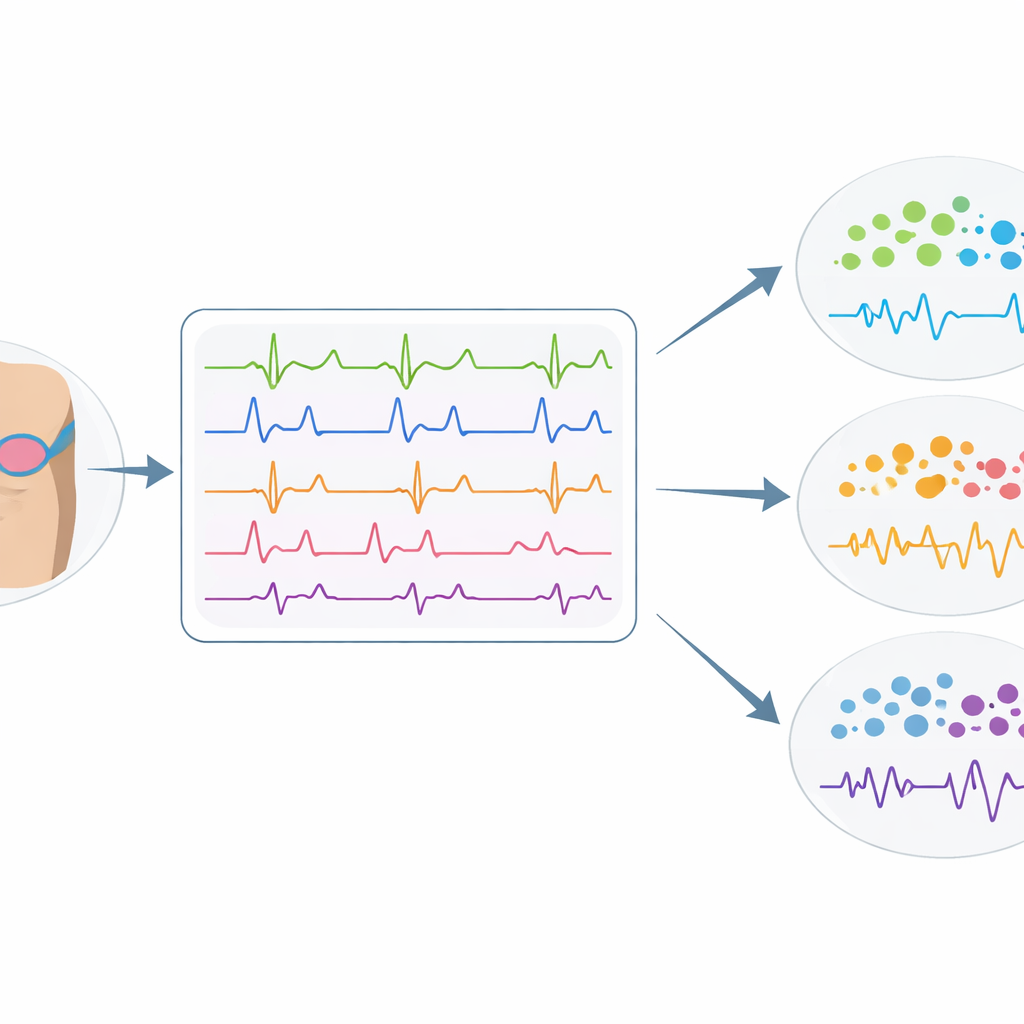
Even from this unusual vantage point, the seat produced clear heartbeats with the familiar rise and fall seen in medical electrocardiograms. From these signals, the researchers measured both the shape of the waves and how steadily the heart beat over time—a property known as heart rate variability, which reflects the tug-of-war between the body’s stress and relaxation controls. They then used mathematical tools to see how different diagnoses clustered together. Some conditions, such as acute and unstable forms of coronary artery disease, formed tight groups, suggesting they leave similar fingerprints in the signals. Others, particularly severe valve problems and certain inflammatory conditions, stood far apart from normal hearts, reflecting major disruption of blood flow and heart muscle strain.
Sorting Diseases by Their Hidden Patterns
By reducing dozens of measurements into simplified maps and tree-like diagrams, the team could see which patient groups looked alike and which stood out. People who had undergone successful repair of the main body artery, for example, had patterns surprisingly close to those of healthy participants, hinting at near-normal heart behaviour. In contrast, patients with severe narrowing of the main heart valve or with serious fluid or pressure around the heart showed the largest departures from normal patterns. The way the pauses between beats fluctuated also differed: some valve problems were linked to very rigid, low-variability rhythms, while certain combined valve faults produced highly irregular timing, consistent with a strained control system.
Why This Matters for Everyday Health
For non-specialists, the key takeaway is that a simple act—sitting down on a toilet seat—can provide information similar to that gathered with conventional wired heart tests, even in people with complex heart disease. While this study is still exploratory and involves relatively small groups, it shows that thigh-based recordings are good enough to separate broadly normal hearts from those with serious problems and to hint at which types of disease might be present. In the future, such unobtrusive systems could quietly watch over people at home, flagging worrisome changes long before symptoms become obvious and making comprehensive heart monitoring as routine as using the bathroom.
Citation: dos Santos Silva, A., Correia, M.V., da Costa, A.G. et al. Characterisation of thigh-based electrocardiography (ECG) across different pathologies. Sci Rep 16, 10766 (2026). https://doi.org/10.1038/s41598-026-46201-w
Keywords: smart toilet ECG, unobtrusive heart monitoring, cardiovascular screening, wearable health technology, heart rate variability