Clear Sky Science · en
Comprehensive genomic identification of essential genes required for Brucella melitensis intracellular survival during macrophage infection
Why this hidden farm germ matters
Brucella melitensis is a sneaky germ that spreads from farm animals to people, causing long lasting fevers, joint pain, and pregnancy problems. It hides inside our own immune cells, making it hard to clear with drugs or vaccines. This study asks a simple but crucial question: which bacterial genes are absolutely required for this germ to stay alive inside our defender cells, and could those weak points be turned into future ways to control infection?
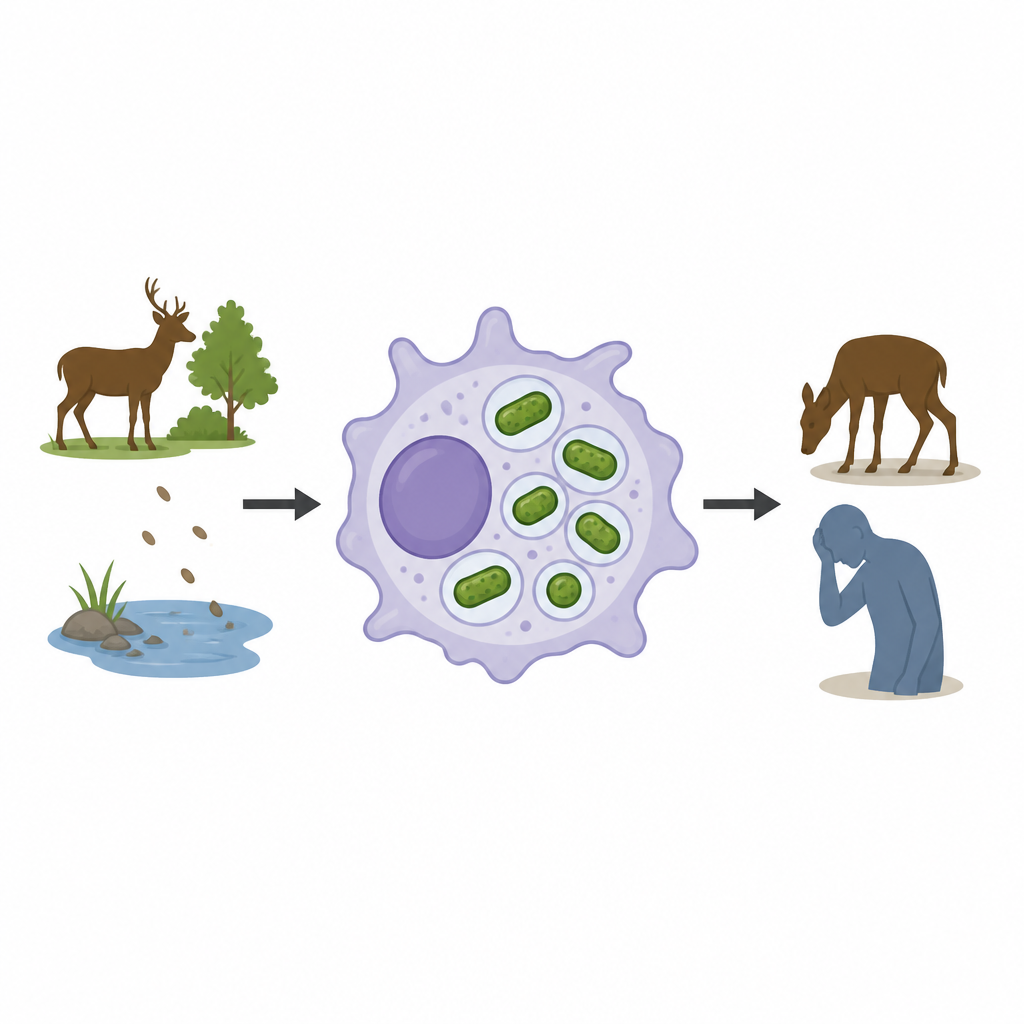
Finding the germ’s survival toolkit
The researchers focused on how Brucella survives inside macrophages, the immune cells that normally swallow and digest microbes. Instead of studying one gene at a time, they used a high throughput method that scattered tiny DNA “roadblocks” across almost every gene in the Brucella genome, creating over forty thousand mutant bacteria. This giant pool of mutants was first grown in lab broth to remove strains that were simply poor growers, and then used to infect mouse macrophage cells. By comparing which mutants were abundant before and after infection, the team could spot which genes were truly essential for surviving the harsh conditions inside immune cells.
Sorting hundreds of important genes
After deep DNA sequencing and statistical analysis, the team identified 374 genes that were strongly linked to Brucella’s ability to resist being killed by macrophages. Many of these genes fell into everyday biological themes: building and maintaining the cell surface, importing nutrients, running energy and building block metabolism, and adjusting to stress. The fact that several already known virulence genes appeared in the list gave confidence that the screen was working. To go beyond numbers, the researchers picked ten representative genes from key functional groups for closer study by deleting them and watching how the mutant strains behaved.
Cracks in the germ’s armor
Several of the highlighted genes turned out to be central to the strength and resilience of the bacterial surface. Two genes, named cydDC and BME_RS07715, help shape the cell envelope and manage damaging molecules such as acids and oxidants. When these genes were removed, Brucella became far more sensitive to acidic conditions, salt changes, and oxidizing chemicals similar to those used by immune cells to kill invaders. One mutant also became more easily damaged by a surface targeting antibiotic, suggesting its outer barrier was weakened. At the same time, the cydDC mutant triggered stronger inflammatory signals from macrophages, hinting that a damaged surface may expose hidden features the immune system can recognize more easily.
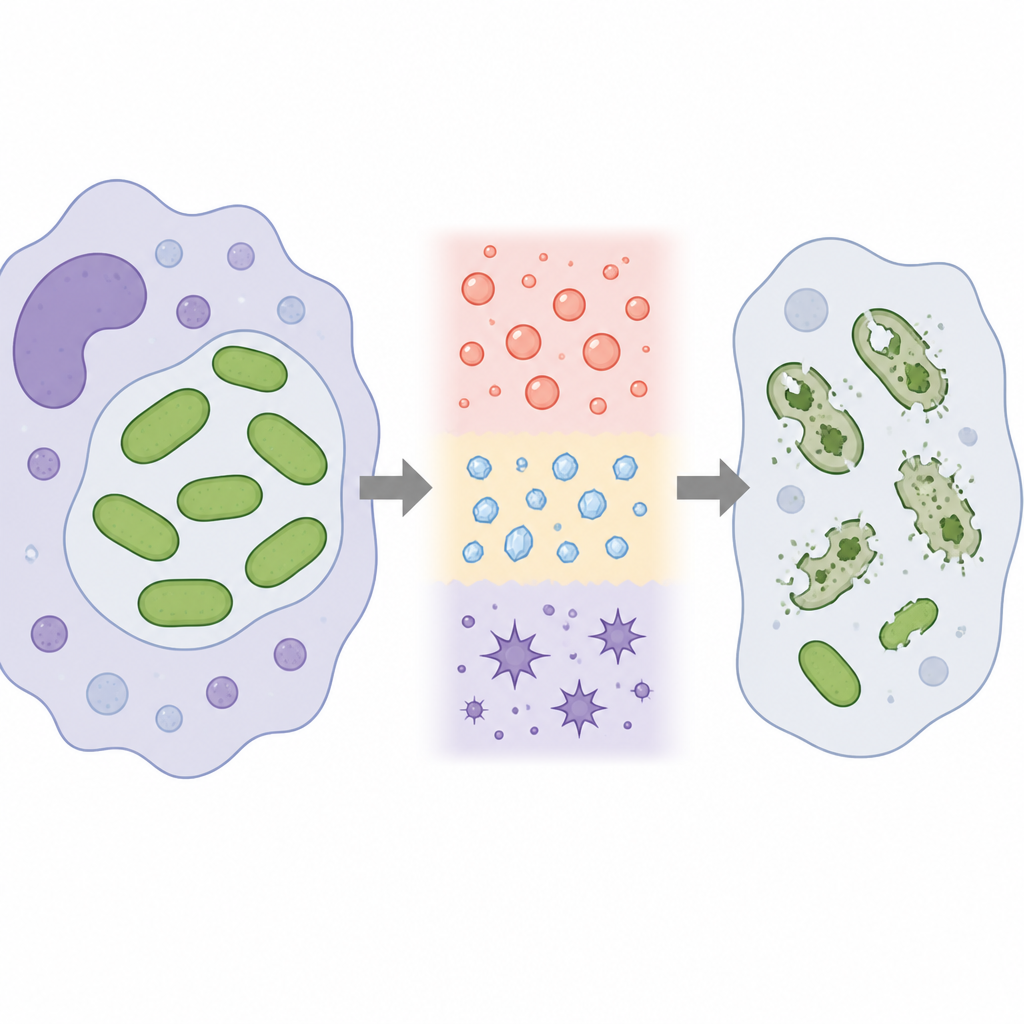
Fuel and control systems inside the germ
The study also revealed that Brucella’s internal “fuel economy” is critical for survival in cells. A metabolic gene called ptsP, which helps the bacterium take up and use sugars, proved important for growth on several carbon sources and for multiplying inside macrophages. When ptsP was removed, the bacteria grew poorly on key nutrients and were less able to colonize immune cells. Another gene, BME_RS00125, appeared to act as a control switch that links metabolism with survival. Mutants lacking this gene not only survived less well in macrophages but also produced much lower levels of enzymes involved in core energy cycles and fatty acid use, suggesting that they could not properly power or rebuild themselves in the stressful cellular environment.
What this means for future control
In everyday terms, this work maps out the main tools Brucella needs to hide and persist inside our immune cells. Its protective coat, transport systems, stress defenses, and fine tuned metabolism all work together to keep the germ alive where many others would be destroyed. By pinpointing specific genes like cydDC, BME_RS07715, ptsP, and BME_RS00125 as especially important, the study offers a starting list of weak spots that might be targeted when designing new drugs or weakened vaccine strains. While many of the newly flagged genes still need detailed follow up, this genome wide approach provides a clearer picture of how a difficult pathogen survives inside the very cells meant to eliminate it.
Citation: Jiang, Z., Gao, J., Liu, M. et al. Comprehensive genomic identification of essential genes required for Brucella melitensis intracellular survival during macrophage infection. Sci Rep 16, 15520 (2026). https://doi.org/10.1038/s41598-026-46186-6
Keywords: Brucella melitensis, intracellular survival, macrophages, bacterial virulence genes, TraDIS screening