Clear Sky Science · en
Engineering p-n heterostructure in MgO-Al2O3-CuO ternary metal oxide composites for sonocatalytic removal of pollutants
Why cleaner dye water matters
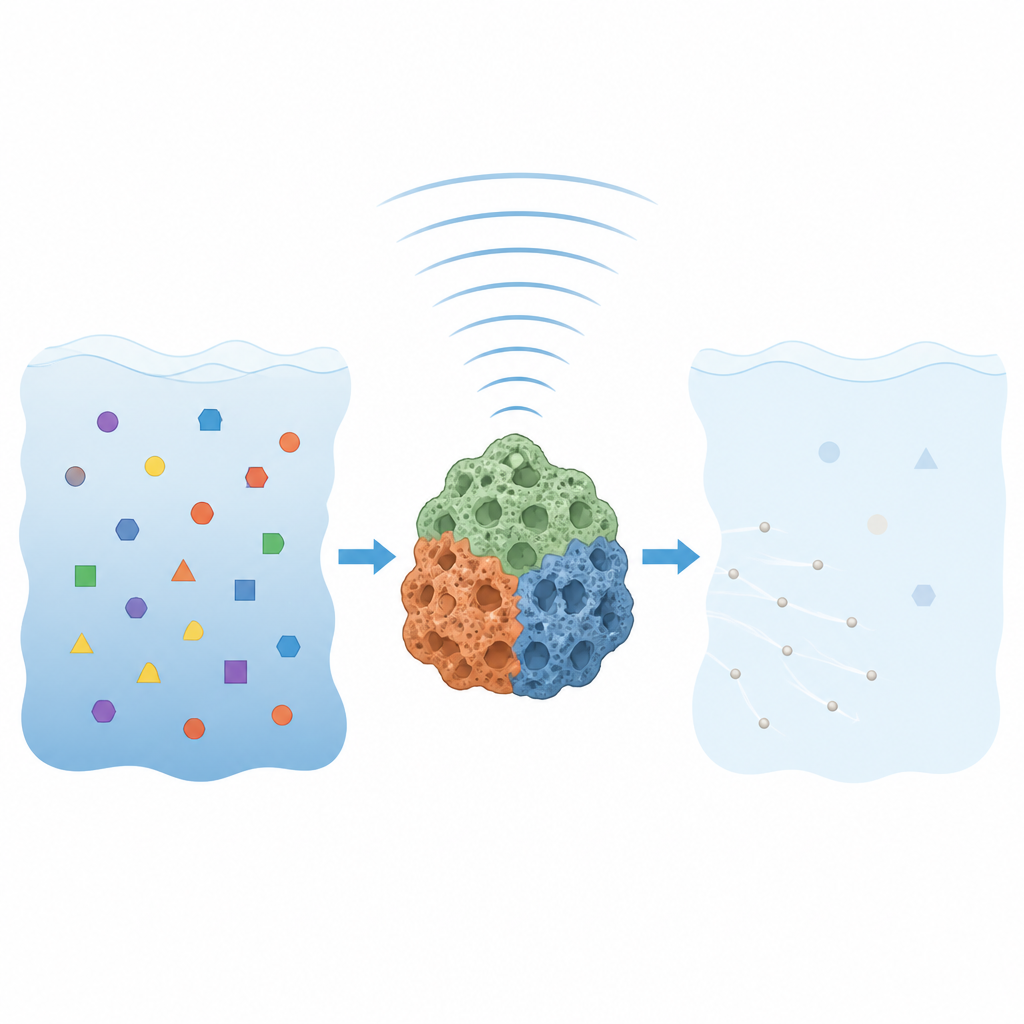
Colorful dyes make our clothes, cosmetics, and printed materials more appealing, but they can leave behind stubborn pollution in rivers and lakes. One widely used dye, methylene blue, is difficult to break down and can harm human health at high levels. This study explores a new way to scrub such dyes from water using sound waves and a specially designed powder, offering a potential tool for safer, cleaner wastewater treatment without relying on harsh chemicals.
A new sound powered cleaning helper
The researchers created a new powder based on three common metal oxides: magnesium oxide, aluminum oxide, and copper oxide. By carefully adjusting the amounts of each ingredient and using a simple sol gel auto combustion method, they formed tiny mixed particles only about 20 nanometers across. Inside these particles, copper oxide behaves like a p type material and aluminum oxide like an n type material, together forming a p n junction, while magnesium oxide provides a high surface area support. This internal structure helps electrical charges move in a preferred direction instead of canceling each other out, which is crucial for driving chemical reactions that break down pollutants.
How sound turns bubbles into cleaners
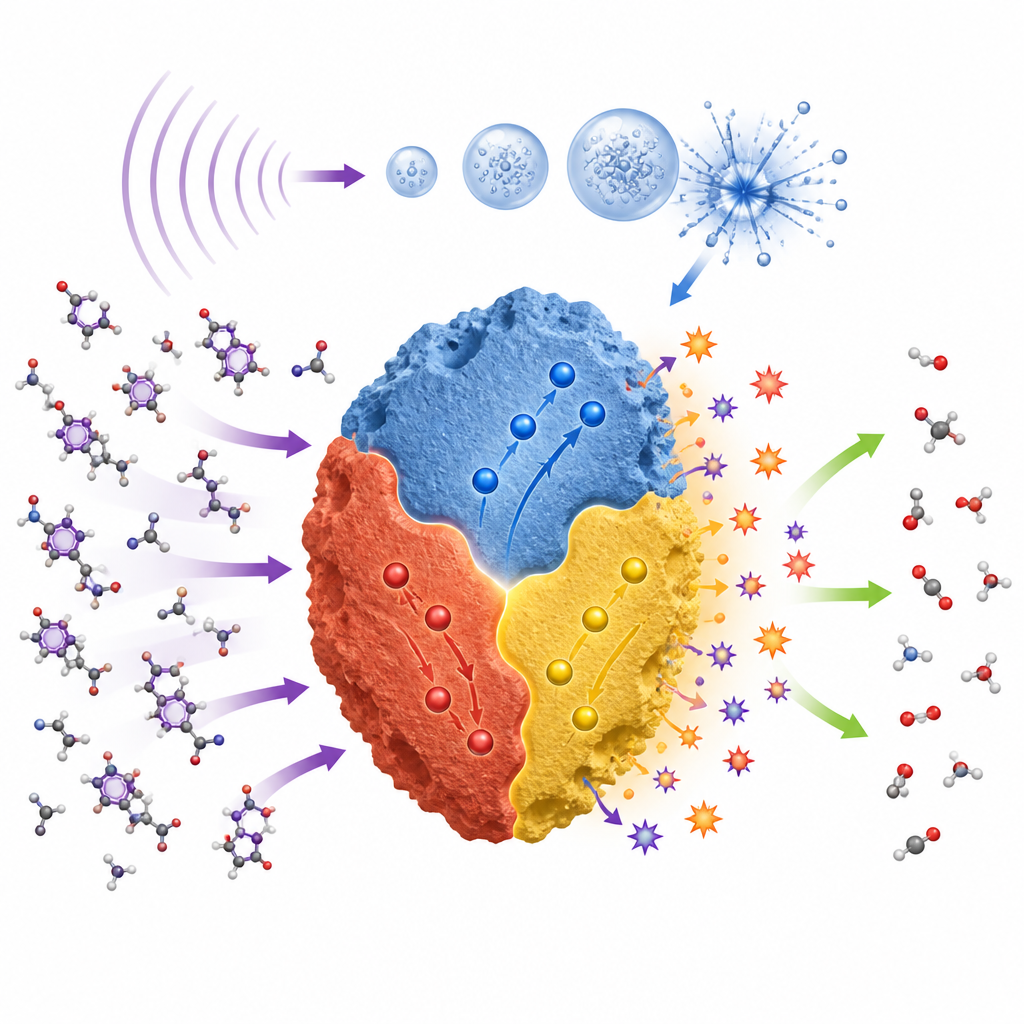
Instead of shining light on the catalyst, the team used high frequency sound waves in water. These waves create countless tiny bubbles that rapidly grow and collapse, briefly producing extreme temperatures and pressures. Under these conditions, water is split into very reactive fragments known as radicals, especially hydroxyl radicals, which can attack dye molecules. When the new MgO Al2O3 CuO particles are present, their rough, porous surfaces help bubbles form and collapse more effectively and also generate separated charges within the solid. Together, these effects boost the production of radicals around the particle surface, turning the powder into a powerful partner for the sound waves.
Putting the new powder to the test
The scientists tested several versions of the composite with different metal ratios by tracking how fast they could remove methylene blue from water. The best performer, containing magnesium, aluminum, and copper in a 1:2:2 ratio, showed a narrowed energy gap and the smallest particle size, which together increased activity. Under carefully chosen conditions, including near neutral pH, a catalyst dose of 0.8 grams per liter, and 100 watts of ultrasound power, this material removed about 85 percent of the dye in one hour. That was roughly 12 times better than using sound alone and about seven times better than relying only on the powder without ultrasound. Tests with additives that either enhanced or blocked radicals confirmed that hydroxyl radicals were the main active species.
Understanding speed, cost, and reuse
To better grasp how the process behaves, the team analyzed how quickly the dye vanished at different starting concentrations. The results followed a pattern known as pseudo first order kinetics, which can be explained by a surface reaction model where dye molecules first stick to the particle and then are broken down. The researchers extracted two key numbers that describe how strongly the dye adsorbs and how fast it reacts on the surface. They also evaluated how much electrical energy the system would need and found that the optimized composite required less energy and lower operating cost than the other versions. Equally important, the catalyst remained highly active over seven cleaning cycles and released only tiny amounts of metal into the water, suggesting that it could be reused many times without major performance loss.
What this means for future wastewater treatment
In simple terms, this work shows that carefully building a three part particle with a built in internal junction can make sound driven water cleaning much more effective. The best MgO Al2O3 CuO mixture used in this study works with ultrasound to generate many reactive species that rapidly break apart a tough dye while consuming modest energy and holding up over repeated use. Although more testing is needed with real factory wastewater and continuous flow systems, the approach points toward practical, scalable devices that could help textile and related industries reduce the impact of colored effluents on the environment.
Citation: Abin, A., Nikoo, A., Abedi, P. et al. Engineering p-n heterostructure in MgO-Al2O3-CuO ternary metal oxide composites for sonocatalytic removal of pollutants. Sci Rep 16, 15240 (2026). https://doi.org/10.1038/s41598-026-46178-6
Keywords: sonocatalysis, methylene blue, heterostructure catalyst, dye wastewater, metal oxide composite