Clear Sky Science · en
Co-delivery of cisplatin and Bmi1 siRNA via nanocapsules overcomes chemoresistance in ovarian cancer
Why this research matters
Many women with ovarian cancer initially respond well to chemotherapy, only to face the heartbreak of the disease coming back and no longer responding to treatment. This study explores a new way to make a long-used drug, cisplatin, work again against stubborn tumors by pairing it with a genetic "off switch" packaged inside tiny delivery capsules.
The problem of stubborn cancer cells
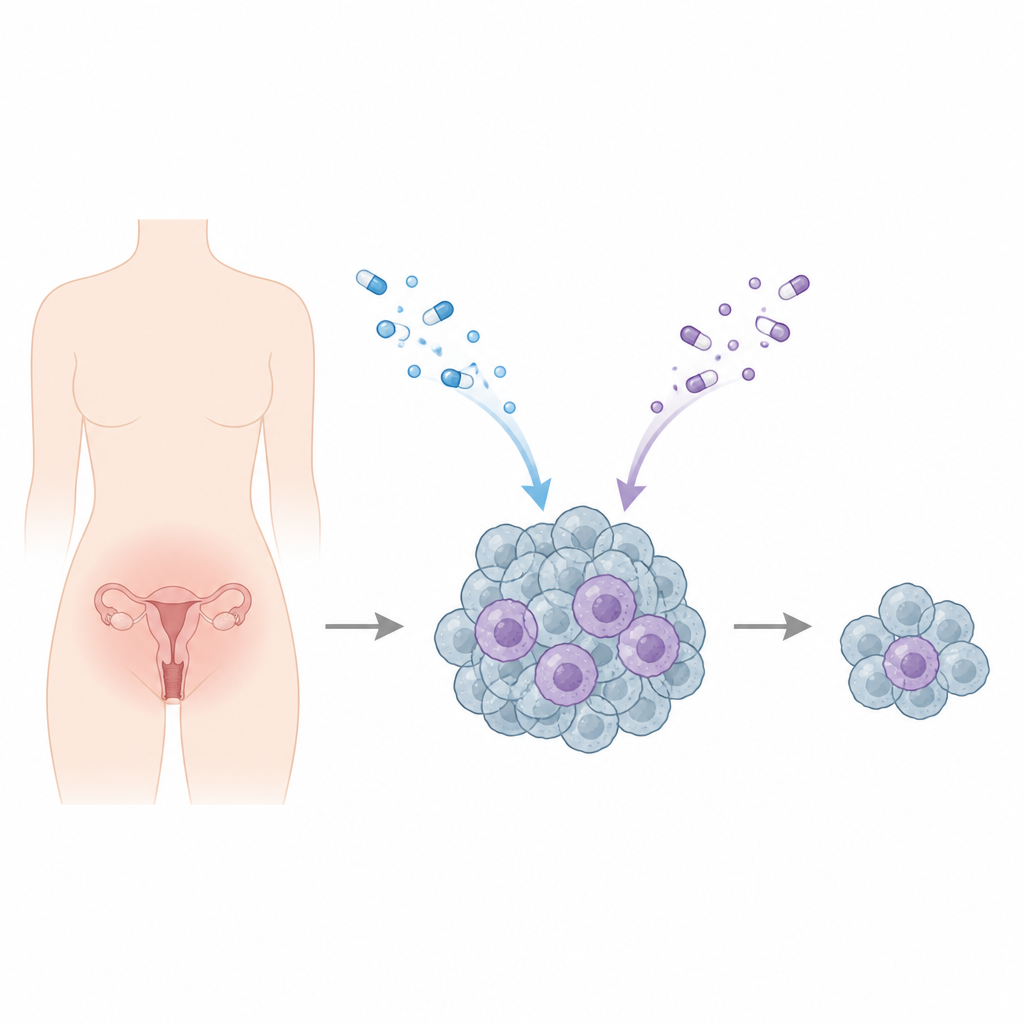
Ovarian tumors are not made of identical cells. A small group of cells behaves more like seeds than leaves, with the ability to self-renew, survive harsh treatment, and restart the tumor later. These cancer stem like cells are strongly linked to drug resistance and relapse. A protein called Bmi1 helps these cells stay in a stem like, survival focused state, and high levels of Bmi1 in patient samples are associated with worse outcomes and shorter survival.
A clever two in one treatment strategy
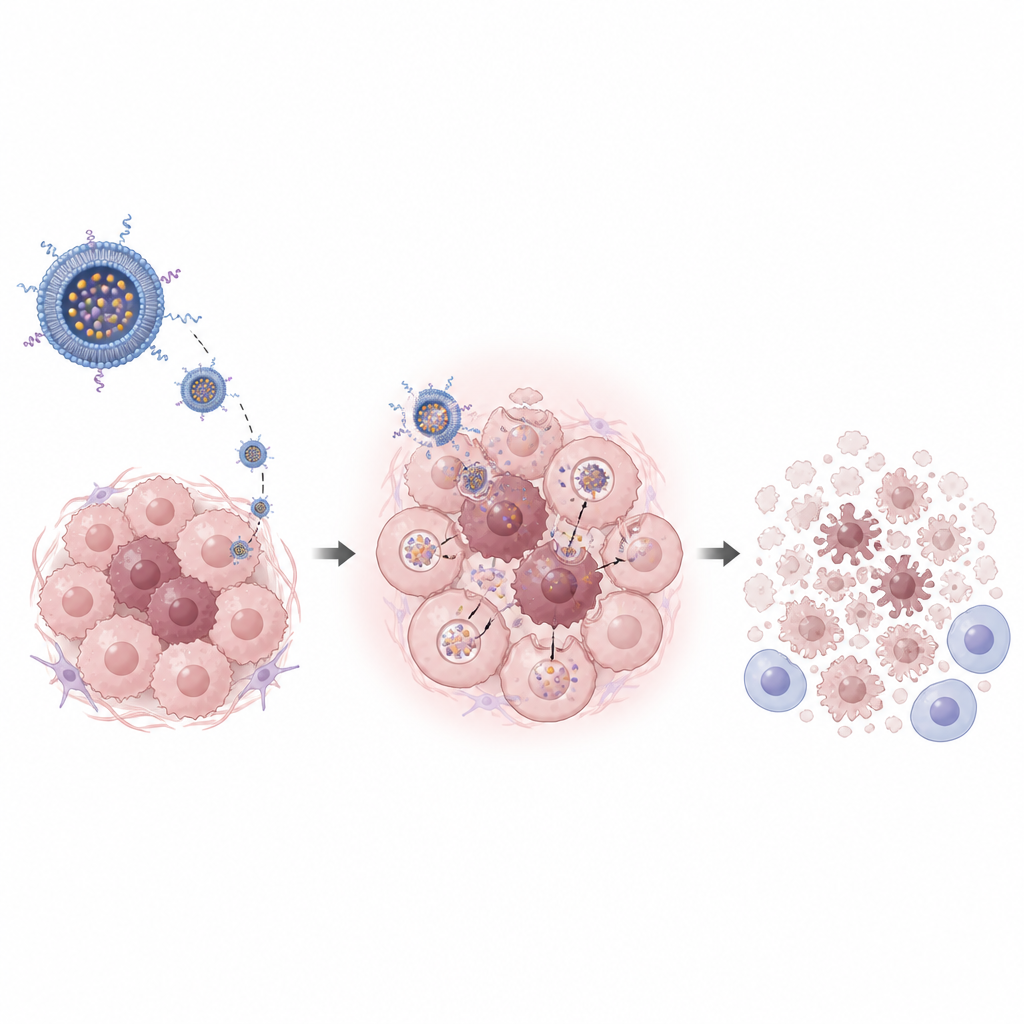
The researchers designed a tiny capsule built from calcium carbonate and coated with a fatty outer layer, a structure that can safely carry drugs in the bloodstream. Inside the core they placed a modified form of cisplatin, while the outer surface holds small pieces of genetic material called siRNA that are designed to silence the Bmi1 protein. The goal is for cisplatin to kill regular tumor cells, while the siRNA weakens the stem like cells by turning down Bmi1, attacking the tumor on two fronts at once.
Smart delivery tuned to the tumor environment
These nanocapsules are engineered to respond to the mildly acidic environment that is typical around tumors but not in most healthy tissues. In laboratory tests, the capsules released little platinum at normal blood pH, but released much more as the acidity increased to levels found near cancer cells. The particles were about 150 nanometers across, evenly sized, and remained stable for days in conditions that mimic blood. When added to cisplatin resistant ovarian cancer cells, the capsules entered the cells efficiently and delivered far higher levels of platinum than free drug alone.
Stronger tumor killing in cells and in mice
In dishes of cancer cells, the combined capsule carrying both cisplatin and Bmi1 silencing siRNA sharply reduced the growth of resistant ovarian cancer cells, restored their sensitivity to cisplatin, and caused many more cells to undergo programmed cell death. It also pushed cells into a blocked stage of the cell cycle, stopping them from dividing. In mice that carried either implanted tumors or tumors grown directly in the ovary, treatment with the co delivery capsules led to much smaller tumors than cisplatin or single component capsules. Tumors from treated mice showed fewer dividing cells, more dying cells, lower levels of Bmi1 and stem cell markers, and reduced amounts of proteins that pump drugs out of cancer cells.
Clues to how the treatment works inside cells
To understand what was changing inside the resistant cancer cells, the team studied global gene activity after treatment. They found widespread shifts in the activity of many genes, with strong effects on a signaling route controlled by the messenger molecule cAMP, which has been linked to cancer cell survival and resistance. The pattern suggested that shutting down Bmi1 helps turn down this survival signaling and makes cells less able to withstand chemotherapy.
What this could mean for patients
This work shows that packaging a long used chemotherapy drug together with a genetic tool that targets cancer stem like traits can overcome resistance in ovarian cancer models, while causing little harm to major organs in mice. Although more studies are needed before this approach can be tested in people, the results suggest that future treatments could revive the power of existing drugs by combining them with smart, targeted delivery systems that disarm the most resilient tumor cells.
Citation: Liu, M., Liu, X., Heng, J. et al. Co-delivery of cisplatin and Bmi1 siRNA via nanocapsules overcomes chemoresistance in ovarian cancer. Sci Rep 16, 15302 (2026). https://doi.org/10.1038/s41598-026-46162-0
Keywords: ovarian cancer, chemoresistance, cisplatin, nanoparticles, cancer stem cells