Clear Sky Science · en
Dynamic neural representations of scene beauty are relatively unaffected by stimulus timing and task
Why beauty in everyday scenes matters
When you scroll through photos or look out a window, some scenes strike you as beautiful right away. This study asks what happens in the brain at the moment we sense that beauty, and whether those brain signals depend on how long we see a picture or what we are asked to do while looking at it. The results suggest that our brains mark certain scenes as beautiful quickly and reliably, even when we only glimpse them briefly or focus on another task.
How scientists probed quick impressions
To explore this, the researchers recorded brain activity from volunteers while they viewed 100 photographs of natural scenes, such as coastlines, city views, and landscapes. Earlier work had shown that some areas of the brain respond differently to scenes people judge as beautiful. That earlier study used long viewing times and asked people to rate beauty on every trial. The new work repeats the approach but changes how long the scenes appear and what kind of rating people give, to see whether the brain signals for beauty are tied to slow, deliberate judgment or arise more automatically. 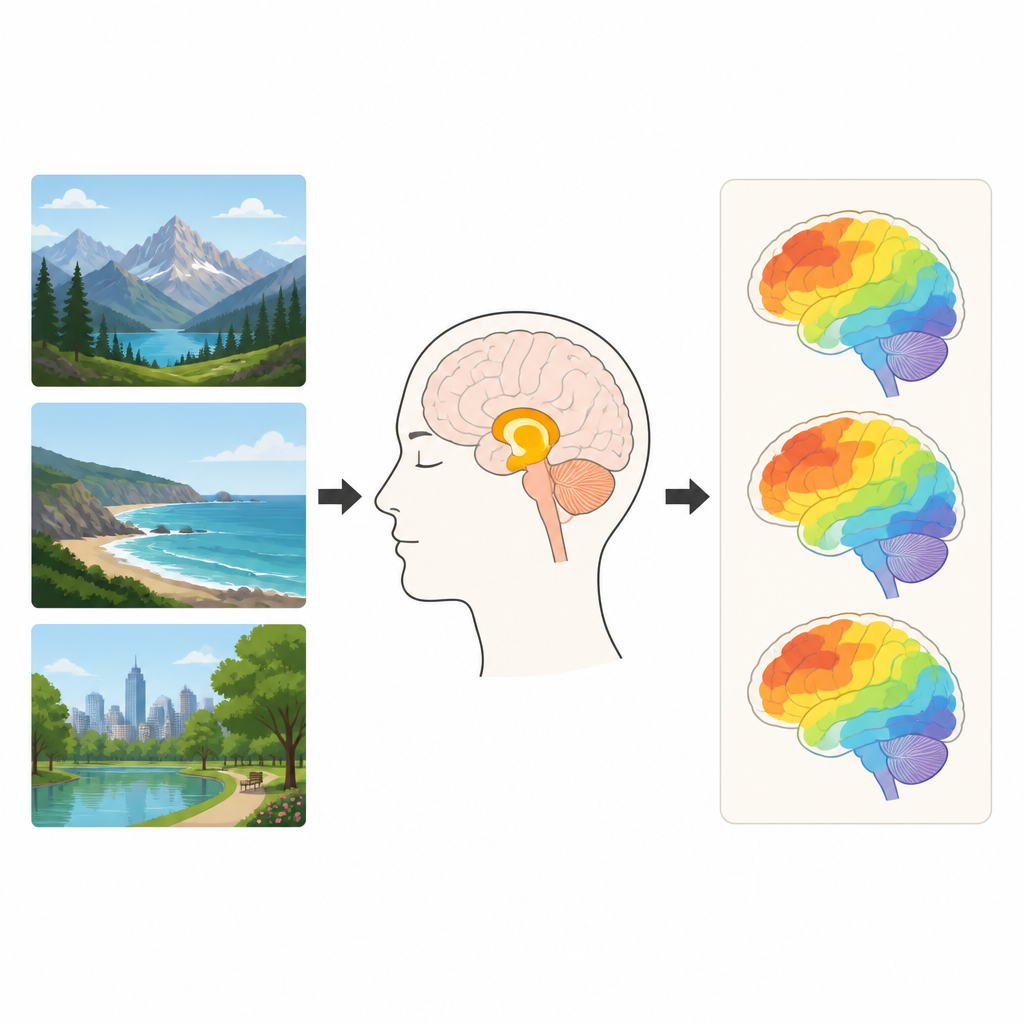
Testing brief glances at landscapes
In the first experiment, scenes were flashed for just one tenth of a second, far shorter than in the earlier study, and participants still rated how beautiful each picture looked. The team then used a method that compares patterns of brain activity across all the pictures and relates them to how similarly people rated their beauty. They found that, as in the earlier work, the brain began to distinguish more beautiful from less beautiful scenes within about two tenths of a second after the picture appeared, and this difference stayed present over time. Shortening the viewing time did not weaken or delay these patterns, suggesting that the brain’s response to scene beauty does not depend on prolonged study of the image.
Beauty that appears even during another task
In the second experiment, the scenes stayed on the screen for the longer duration again, but now participants ignored beauty and judged the time of day shown in each photograph. Beauty ratings for the same images, collected in the previous work, were used as a separate reference. Even though people focused on a different question, the brain activity still tracked how beautiful the scenes were rated, starting at roughly the same early moment and lasting across later time points. This effect remained even after taking into account how people judged the time of day, suggesting that it was truly related to perceived beauty rather than to some simple feature linked to both tasks. 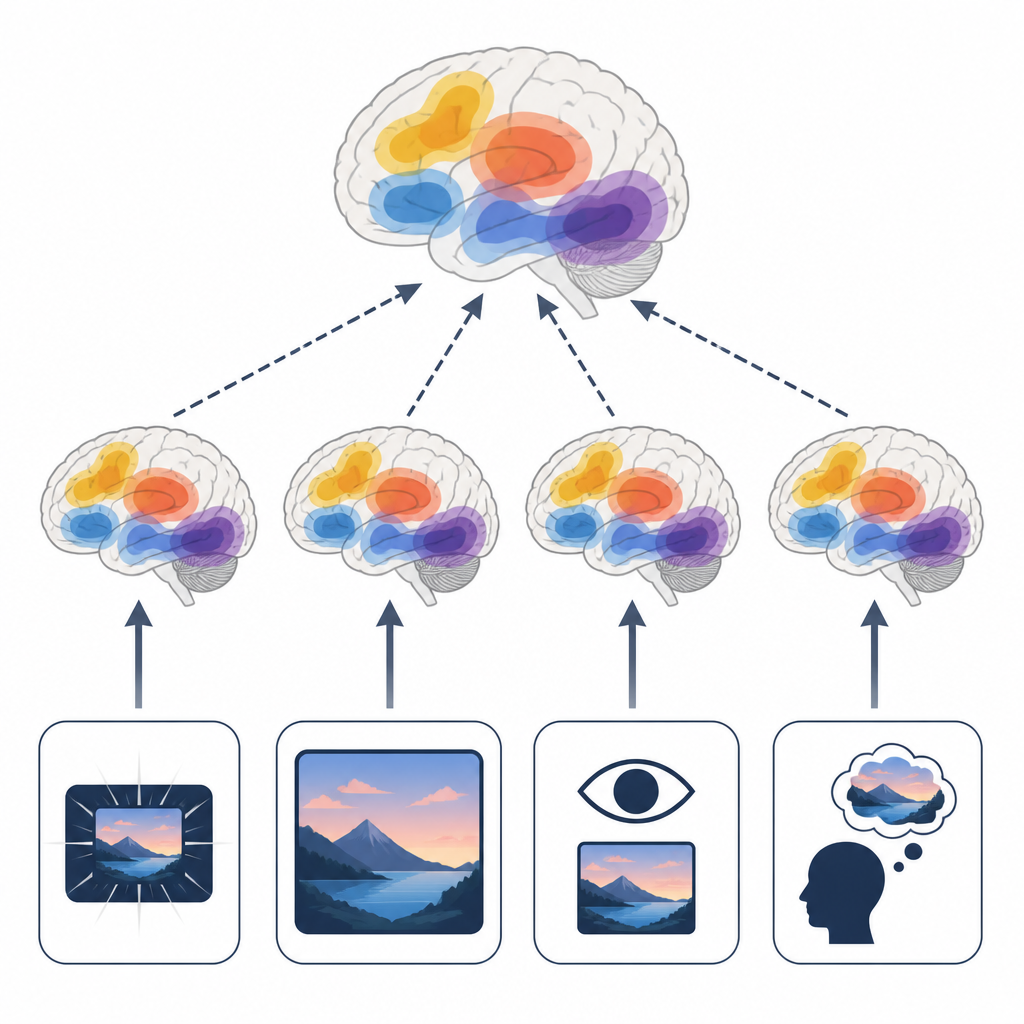
What the patterns reveal about automatic liking
When the researchers compared the new experiments with the earlier study, they found no meaningful differences in how strongly or how long the brain patterns related to beauty were present. Neither shortening the glimpse to 100 milliseconds nor switching to a task unrelated to beauty noticeably changed the timing or strength of these signals. This stability hints that the brain’s response to a beautiful scene is triggered quickly by visual features and carries on without much regard for how long we look or what we are explicitly asked to judge.
What this means for everyday experience
For a lay reader, the takeaway is that our sense of beauty in natural scenes seems to arise swiftly and with little conscious effort. The brain appears to treat beauty as a built in response to certain visual qualities, lighting up in a similar way whether we stare at a photo, glimpse it in passing, or concentrate on another detail. While more complex artworks or harder tasks might change this picture, these findings suggest that much of our everyday appreciation of scenic beauty is a spontaneous product of how our visual system is wired, rather than something we construct only through slow reflection.
Citation: Nara, S., Becker, L., Hillebrand, L. et al. Dynamic neural representations of scene beauty are relatively unaffected by stimulus timing and task. Sci Rep 16, 15217 (2026). https://doi.org/10.1038/s41598-026-46149-x
Keywords: brain and beauty, natural scene aesthetics, EEG study, visual perception, neuroaesthetics