Clear Sky Science · en
Decoding garden design language via semantic segmentation for social aesthetic interaction
Why Gardens and Algorithms Belong Together
Most of us know when a garden feels peaceful, lively, or cluttered. Yet putting that feeling into clear, sharable rules has long challenged designers and researchers. This study shows how modern image analysis and public opinion data can work together to “decode” the visual language of gardens, revealing which patterns of trees, water, paths, and buildings tend to look beautiful to people. 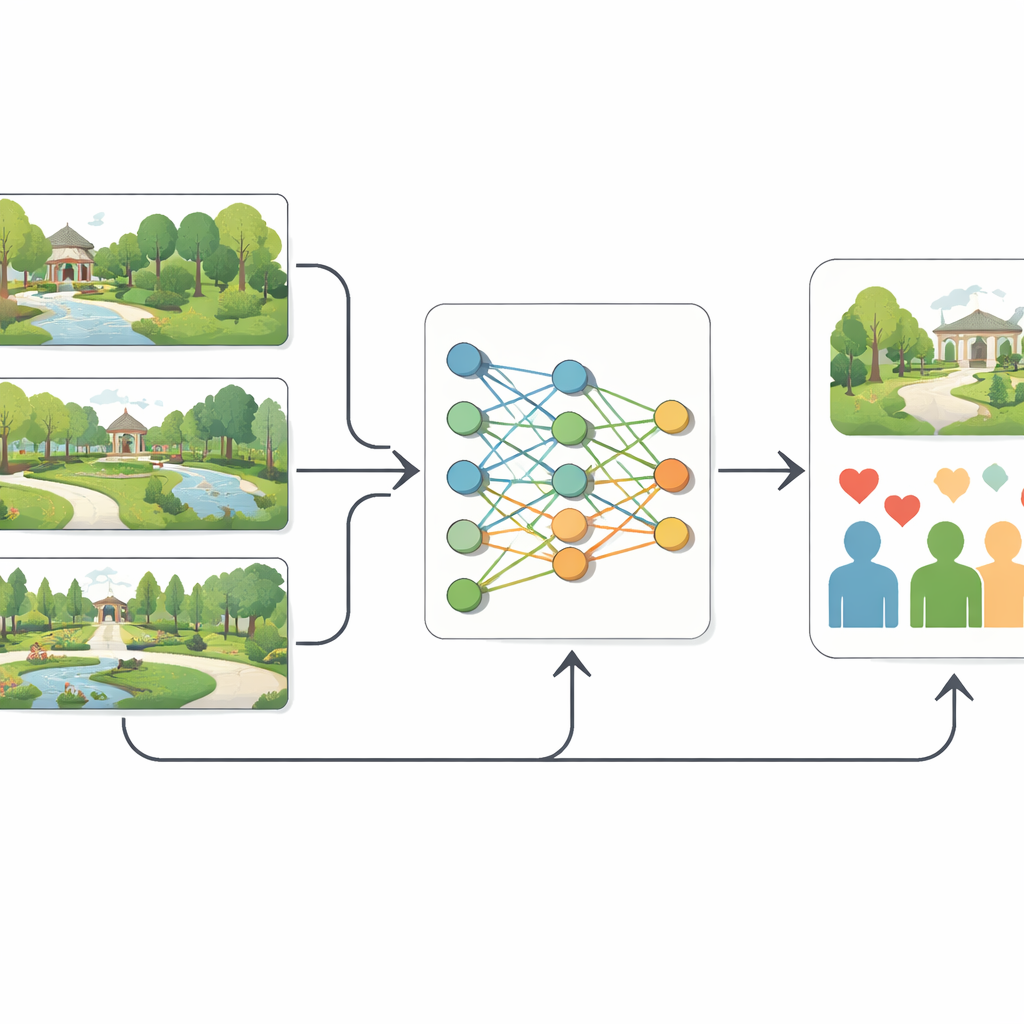
Looking at Gardens as Visual Sentences
The authors start from the idea that a garden is more than a collection of objects; it is a composition, like a sentence made of visual words. Trees, ponds, bridges, lawns, and pavilions are the basic terms, but what really shapes our experience is how these elements are arranged: what sits next to water, how paths guide the eye, and how open or enclosed the space feels. Traditionally, landscape architects have described these relationships with sketches and prose, which makes it hard to compare many sites or test ideas systematically.
Teaching a Computer to See Garden Structure
To turn garden scenes into data, the team assembled more than 2,000 photos from classical Chinese gardens, European ecological parks, and North American urban green spaces. Experts carefully marked every pixel in each image as vegetation, water, built structure, or other element. A deep-learning model, nicknamed DesignSegNet, learned from these annotated images to automatically separate each new photo into its main components. From these pixel maps, the researchers calculated simple but powerful measurements: how much area each element covers, where it tends to sit in the frame, how scattered or concentrated it is, and how often different elements touch along their boundaries. These numbers capture the underlying “grammar” of the design. 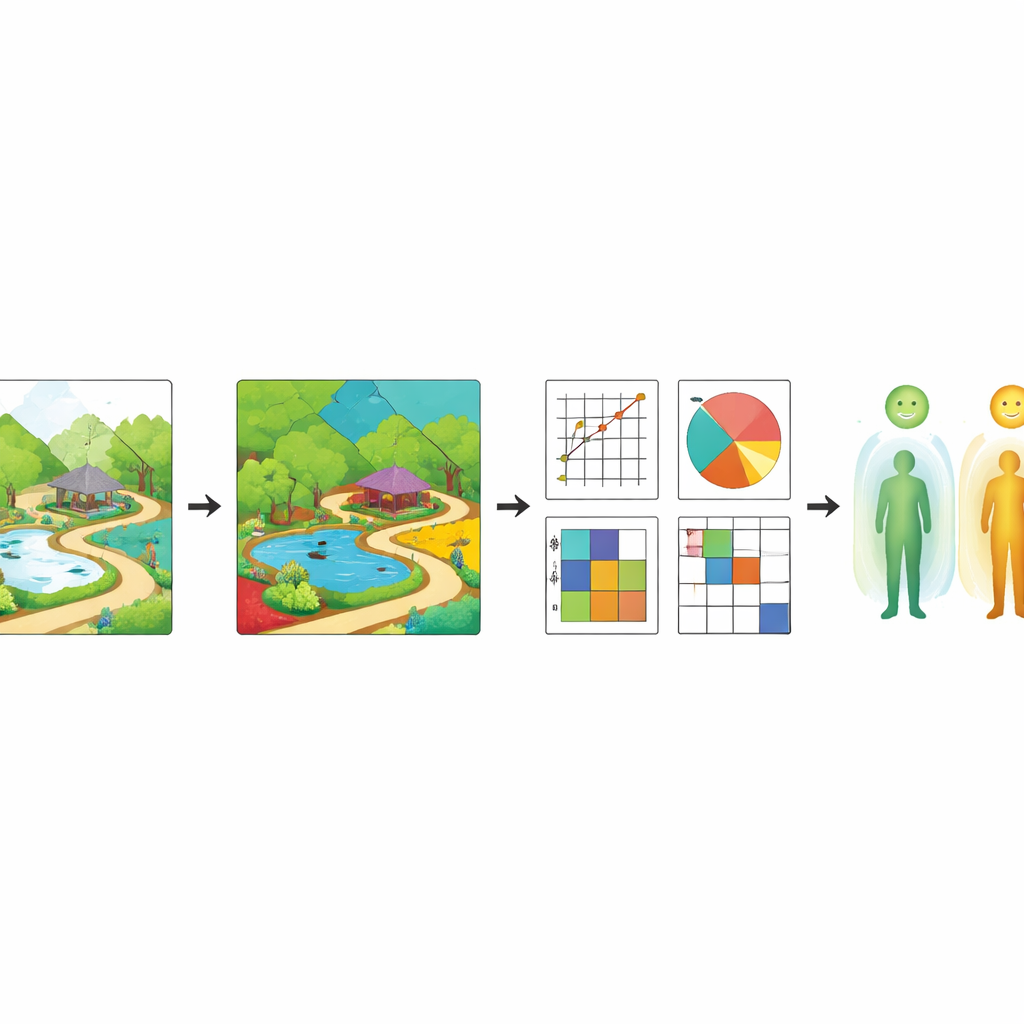
Bringing in the Public’s Sense of Beauty
Visual structure alone does not explain why a garden feels harmonious or chaotic. To connect composition with perception, the authors gathered over 3,000 image ratings from park visitors in several Chinese cities, asking them about harmony, naturalness, balance, visual interest, and overall beauty. They also collected more than a thousand written descriptions and design documents, then used language-processing tools to identify recurring themes such as natural harmony, architectural elegance, seasonal change, and sense of enclosure. By combining these survey scores and text themes with the compositional measurements, they could see which spatial patterns lined up with positive reactions.
What Makes a Garden Scene Appealing
The analysis uncovered consistent links between certain design patterns and higher aesthetic scores. Scenes with a generous share of vegetation and clear, direct contact between water and greenery tended to be rated more beautiful. Arrangements where key elements formed cohesive clusters, rather than being scattered across the view, also scored better, suggesting that people favor legible, organized spaces over fragmented ones. Classical gardens typically showed higher proportions of water and built structures, echoing their traditional emphasis on framed views and symbolic architecture, while modern urban parks leaned toward continuous green cover and open lawns. The specialized neural network not only matched or outperformed other advanced image-segmentation systems, it also produced features that clearly separated these styles and highlighted the areas of each scene most responsible for perceived beauty.
How This Helps Designers and Visitors Alike
In simple terms, the study shows that computers can learn to read gardens somewhat like humans do, recognizing not just “there is a tree” but “this tree is embracing the water” or “these paths knit the space together.” By tying these compositional patterns to public preferences, the framework offers designers a new way to test whether a plan will feel calm, natural, or engaging before it is built, and helps researchers move beyond vague talk of “good design” toward measurable, testable patterns. While the work focuses on images and a specific set of garden types, it points toward future tools that could support more welcoming, culturally resonant parks and gardens around the world.
Citation: Wang, Y., Zhai, Y., Qu, C. et al. Decoding garden design language via semantic segmentation for social aesthetic interaction. Sci Rep 16, 10571 (2026). https://doi.org/10.1038/s41598-026-46120-w
Keywords: garden design, landscape aesthetics, computer vision, semantic segmentation, public perception